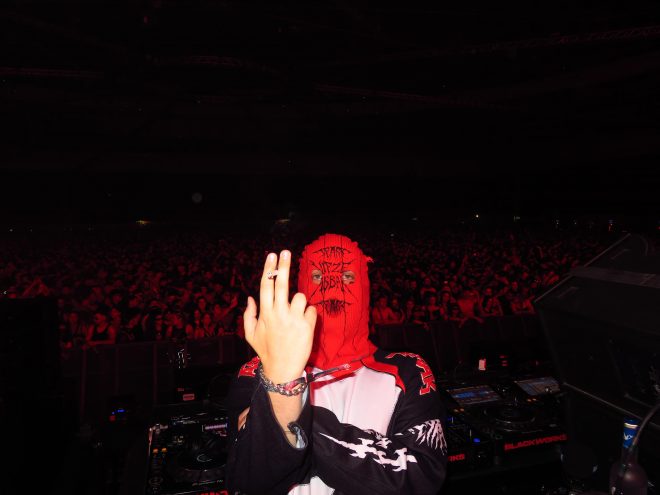


VIEZE ASBAK | NL 2026 #07
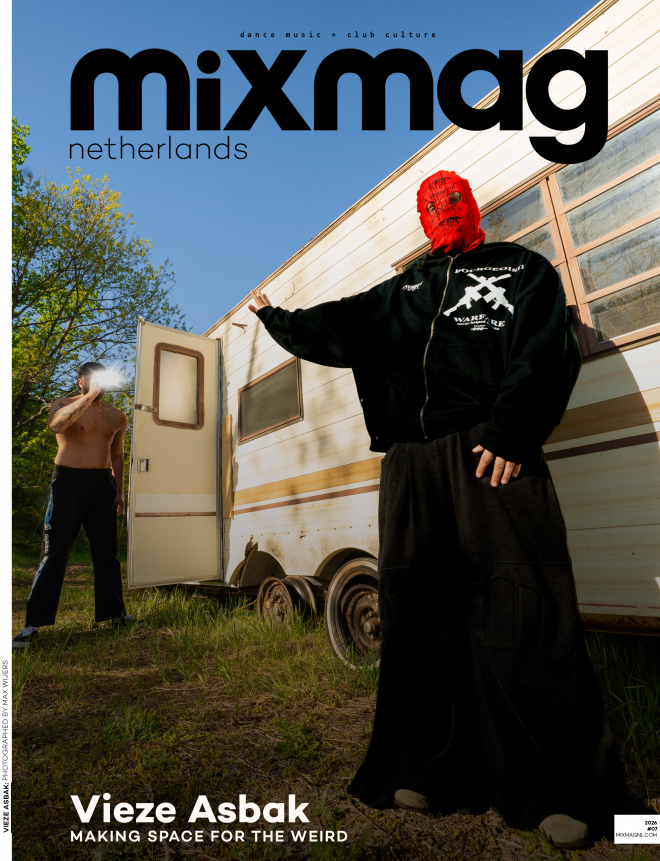
There is something almost accidental about the rise of Vieze Asbak. Before the festival stages, the streaming numbers, and the endless viral clips, the project existed as an inside joke between friends. There was no carefully constructed artist identity, no long-term strategy and certainly no expectation that a producer named “Dirty Ashtray” would become one of the most recognizable names in Europe’s new wave of hard dance music.
That lack of calculation remains one of the defining characteristics of the project. While many artists spend years trying to engineer success, Vieze Asbak still speaks about his beginnings as if they happened to someone else.
“Vieze Asbak was never intended to be well known. When I started, I made songs that my friends and I could listen to at hangouts. They would often give me remixes and original ideas. At some point, I started putting these songs on Spotify so we could listen to them more easily, and it just blew up because people found it. I think my songs were very stream-friendly and fast-paced, perfect for house parties during Covid. I guess people also just enjoyed the weird songs I made during those times.”
The word “weird” comes up repeatedly throughout our conversation. Not as a marketing tool or a carefully manufactured aesthetic, but simply as the most honest description of how he approaches making music. In a dance music landscape that has often become increasingly polished and image-conscious, Vieze Asbak believes originality still depends on the willingness to ignore expectations.
“A lot of artists are too scared to really just put whatever they feel like out there, afraid of what the big crowd would think. But I get that you want to appeal to the big crowd. At some point, I also had to decide where my project was going. Maybe it was becoming too eclectic. Someone once told me that sometimes the most creative approach is to first let people get comfortable in a certain lane, then play with their expectations. It’s cool to be weird, especially in hard techno, where most feel like copies of each other.”
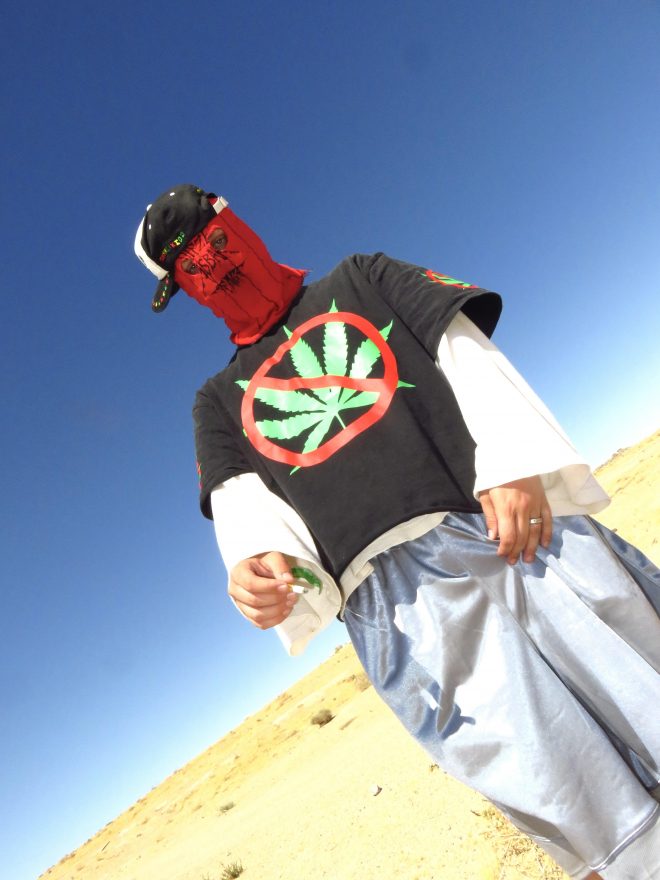
Irony has always been part of the Vieze Asbak universe. The name is absurd, the edits are exaggerated, and the productions often refuse to take themselves too seriously. Yet somewhere along the way, the audience stopped treating the project as a meme and began to embrace it as something much more genuine.
For him, that shift wasn’t measured by streaming statistics. It happened in front of crowds.
“When everybody started screaming ‘ASBAAAK’ to my song ‘Asbak Anthem’, that feeling is still so unreal to me and I feel so blessed. Also, when Polska Jumpstyle blew up after like two years from its original release. At the time, that song was not really meant for a techno crowd, but now it fits in perfectly. I got booked for techno events outside of the Netherlands before I was playing techno events in the Netherlands. My name, translating to ‘Dirty Ashtray’ was not really something they wanted on the posters. Now that I am playing big festivals all over Europe, I really love that my silly name is going international.”
Hard techno itself has changed dramatically over the past five years. What was once a relatively niche movement has become one of electronic music’s fastest-growing genres, bringing with it bigger audiences, festival main stages and an inevitable flood of imitation. Vieze Asbak has watched that transformation from inside the scene, and while he welcomes its growth, he also believes the bar for originality has become much higher.
“I think we already came a long way since I started Vieze Asbak in 2020. Back then it was all so stiff and nothing even remotely unserious felt tolerated by others. Now hard techno has become so mainstream that, like other bigger EDM genres, it has to become more appealing to a bigger crowd. A simple rave stab and a kick is not gonna do it anymore. A track needs to really be unique to even have a chance of becoming a hit.”
Through the record Friesenjung, the cultural phenomenon he co-produced alongside Tantu Beats, reached audiences far beyond electronic music, he looks back on it less as a career-defining breakthrough than as a unique chapter that evolved alongside his own performances.
“I co-produced Friesenjung together with Tantu Beats. I’m not sure how much this did for my DJ career at the time. I think this song didn’t really fit the vibe of my sets. After the original song I made a sped-up version, which fitted way better. Then Lil Texas and me made an uptempo remix, which I still play sometimes. Joost Klein even performed this song at Coachella, legendary. I am still very honoured that I could be a part of such a big song.”
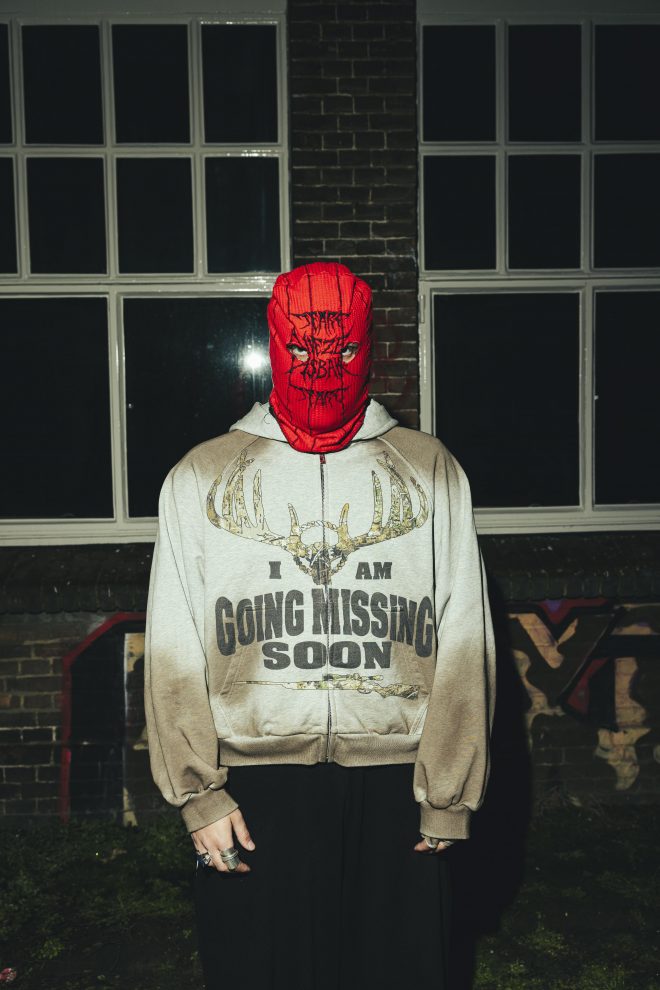
That openness to experimentation extends naturally into collaboration. Rather than thinking in genres, Vieze Asbak is more interested in ideas. His catalogue moves comfortably between hardcore, techno, rap, internet culture and bass music because he rarely begins with the question of where something belongs.
“Genres are constantly evolving, and techno as well. I don’t think I even make ‘hard techno’. I don’t know what to call it. I just know when I like something, I would love to work with that. When working with artists outside of the scene, I get so many new insights and creative ideas. I think hard techno needs to get super creative now. It has not reached its limit. I can’t wait to see it.”
Like many artists of his generation, Vieze Asbak has built an audience through social media. Viral clips, streaming platforms and short-form content have all played a role in introducing his music to listeners around the world. Yet he is also aware of what has been lost along the way.
“Yes, social media is a great way to find music, artists and art that you like. Amazing artists maybe would have never gotten the recognition they deserve if they weren’t on social media. On the other side, I feel like maybe social media has killed the excitement of finding something new when going to a rave. When I went to festivals myself a few years ago, I loved finding random stages with new artists that I had never heard of.”
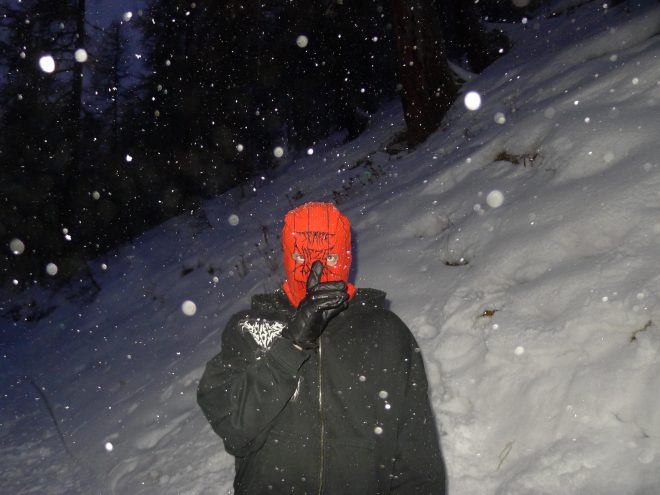
The current appetite for faster BPMs and increasingly extreme sounds has prompted endless debate about the psychology of a new generation of ravers. Some see it as a response to social pressure, digital overload or wider cultural anxiety. Vieze Asbak offers a far simpler explanation.
“I can’t talk for everybody, but for me, hard music gives me such a big energy boost. I love extreme music such as hardcore, industrial, metal and other experimental stuff. I don’t think it says much about the world I live in. It’s just a personal taste. I like to go crazy. This is easier when this music is playing instead of maybe house music.”
The Netherlands has repeatedly shaped the future of harder electronic music, from gabber and hardstyle to today’s hard techno explosion. For Vieze Asbak, that influence comes less from national identity than from simple proximity. When hard dance music surrounds you, innovation becomes part of everyday life.
“I think the Netherlands is one of the few countries where hard dance music is everywhere. We have so many hard dance events and, of course, many huge artists. It’s easy to get into this music when it’s all around you. When many artists start making this music, I feel like it’s normal that eventually new trends are mostly getting created by these people.”
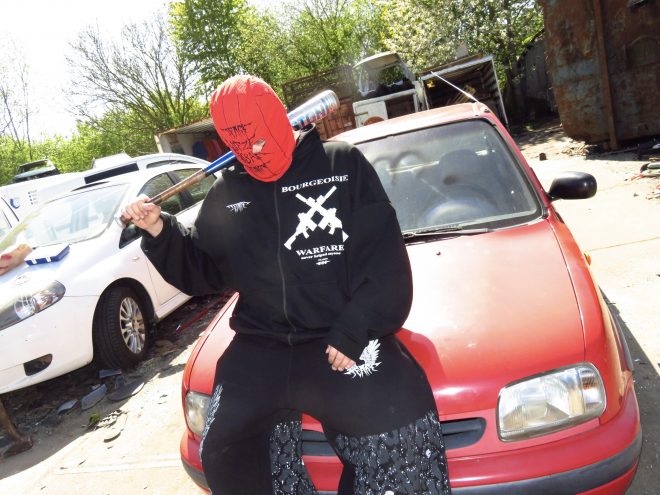
As our conversation comes to a close, the focus shifts away from streaming numbers, sold-out festivals and social media. Those moments inevitably fade. What remains is the work itself and the influence it leaves on the artists who come next.
Vieze Asbak doesn’t talk about legacy in terms of records broken or milestones reached. Instead, he hopes the next generation feels free to make stranger music, ignore expectations and resist the temptation to fit neatly into predefined categories.
“Hopefully people will enjoy the music I have made and see me as an inspiration, maybe. I hope people will have fun creating music that they love, and try not to just fit into a box or a genre. I hope the music gets weirder and the people who make it crazier. I can’t wait to see what kind of music will be made in 20 years.”
If there is a thread running through everything Vieze Asbak has created so far, it is permission. Permission to be unconventional. Permission to embrace humor without sacrificing quality. Permission to ignore the invisible rules that so often define electronic music from the outside.
The irony is that a project built around not taking itself too seriously has become one of the clearest reminders that originality still matters. In a scene increasingly shaped by algorithms and familiarity, Vieze Asbak continues to argue, simply by existing, that the weirdest idea in the room is often the one worth following.
MY THOUGHTS
Dance music has always had room for humor, parody and irreverence. Maybe as quirks or collateral characteristics, But, what feels different is that Vieze Asbak´s success arrived without abandoning those qualities as a core. These days, visibility is increasingly tied to consistency, optimization and carefully managed identities; but Asbak has built an audience by refusing to smooth out the rough edges.
His answers reveal something about hard techno’s current moment. The conversation is no longer about whether the genre has become mainstream. That debate is already over. The real question is: What happens after success? Every underground movement eventually reaches a point where repetition becomes more profitable than experimentation. Vieze Asbak’s instinct is to push in the opposite direction, arguing that the next chapter will belong to artists willing to become strangers rather than safer.
Perhaps that’s why his perspective resonates beyond the music itself. Throughout our conversation, he consistently resists the temptation to over-explain his work. He doesn’t romanticize rave culture, intellectualize harder sounds or claim to represent an entire generation. Sometimes the answer is simply that the music makes people feel something. Sometimes the best ideas begin as inside jokes. Sometimes the weirdest track in the folder is the one that changes everything.
If there is a lasting legacy to projects like Vieze Asbak, it may not be measured in streams, festival appearances or viral moments. It will be measured by the producers who stop asking whether an idea fits neatly into a genre and start asking whether it excites them instead. Electronic music has always evolved through people willing to ignore convention. Judging by the direction this new generation is taking, the future may well belong to those who are prepared to make it even weirder.