


Tinlicker release fourth album “dreams of the machine”
Out February 27 via Remember The Future / [PIAS]
Focus track: “Choosing Life”
UK/EU tour begins March 3
A machine can simulate emotion. It can generate melody, mimic a voice, predict the chord change that feels right. What it cannot do, at least not yet, is hesitate. That pause, that human flicker between doubt and conviction, is where Tinlicker have built their fourth album.
Dreams Of The Machine arrives at a cultural moment obsessed with speed and automation, yet the record itself feels patient. It lingers in melody. It allows vocals to breathe. It builds tension not only for release, but for reflection. If earlier Tinlicker records were about refining their sound for bigger stages, this one feels concerned with something subtler: preserving emotional texture in a world that increasingly smooths everything out.
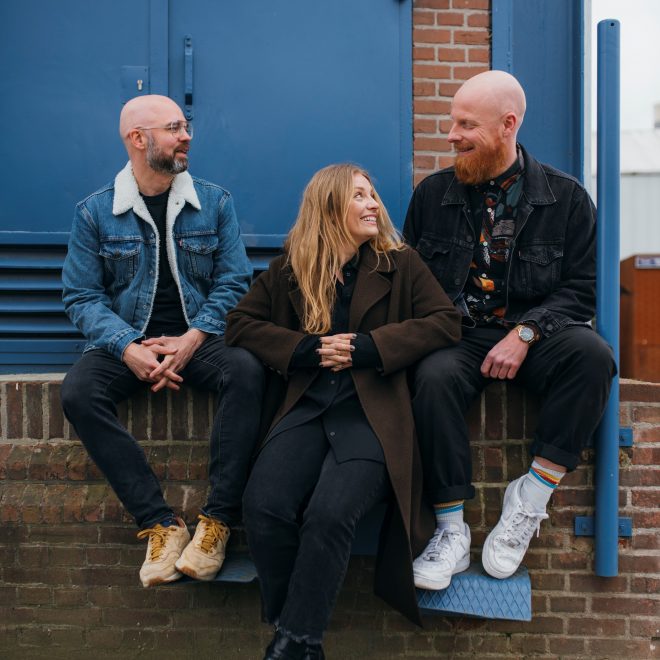
Out February 27 on Remember The Future / [PIAS], the 14-track LP is the group’s fourth album and their first as a formal live NL/UK trio, with vocalist Hero Baldwin now a permanent member. The shift is structural as much as symbolic. This is no longer a producer duo featuring collaborators. It is a band, writing in real time, shaping songs from start to finish together.
“This album era looks at technology and where it’s taking humans. It’s a metaphor for computers or AI having human dreams and emotions, the machine wanting to be human, while people behave more like robots. There’s a shift happening. I hope the music helps people wake up to our humanity, that computers can’t do what we do.”
Tinlicker have long balanced peak-time propulsion with introspection, but here the emotional spectrum widens. Some tracks stretch toward club catharsis; others step into songwriting territory, where voice and lyric carry equal weight with rhythm. The coherence does not come from uniform tempo or genre consistency. It comes from mood.
“At the core, it’s still us. Our sound is hard to describe, but this album has a different palette of emotions. Some songs are danceable, others are more like songs. An album is like a human being, no one is always happy or always angry. Every track has its own vibe, and the coherence comes from that emotional range.”
Working as a trio altered not just the sound, but the process. Previous records often involved building instrumentals first and sending them outward, waiting for lyrics to return. This time, Hero was in the room. Songs were written face to face, revised in conversation, and rebuilt without delay.
“Usually Micha and I create several songs and then bring in people we want to work with, sending tracks back and forth. This time Hero joined us in the studio for several days at a time. We could make a song from start to finish instead of creating an idea and waiting weeks for lyrics.”
That immediacy led to deeper revision. Nothing was protected simply because it existed first.
“Most songs changed, especially sonically. When you have time, you can really shape them. One song, ‘Choosing Life’, was finished, then taken off the tracklist, and we changed the melodies, the structure, and the arrangement. Now it’s a completely different song we all like.”
The focus track, “Choosing Life,” captures the album’s tension in miniature. Hero Baldwin’s vocal rejects passive fear, urging agency within a digital culture that can feel increasingly synthetic. Beneath it, a low-frequency bass hums with unease while breakbeat percussion pushes forward, and sharp melodic synth stabs answer the vocal like a second voice in debate. It feels urgent, but not frantic. Determined, not didactic.
Elsewhere, the record moves fluidly between high-energy momentum and reflective songwriting. Previously released singles sketch different contours of the era: “Release” as dancefloor ignition, “Reborn” nodding toward late-90s Eurodance uplift, “I Want My Freedom” as a declaration of independence, and “God In You” steeped in dub techno atmosphere and 90s synth weight. The remaining tracks expand outward, folding in indie guitar textures, piano motifs, and moments where rhythm gives way to lyric.
Underneath the thematic framework sits something simpler. A refusal to write what is expected.
“I don’t like being comfortable. When I’m too comfortable, I start questioning things. I can’t do the same stuff over and over. I like to challenge myself. The basis is that we have to like the music. I have to find joy in it. If I find joy, hopefully other people do too, but it’s always a surprise.”
That surprise, the unpredictable resonance between artist and listener, remains central to Tinlicker’s relationship with their audience. The band often describe their connection to fans as an emotional exchange rather than a performance transaction. Listeners bring their own histories into the music, and the songs return to the stage charged with new meaning.
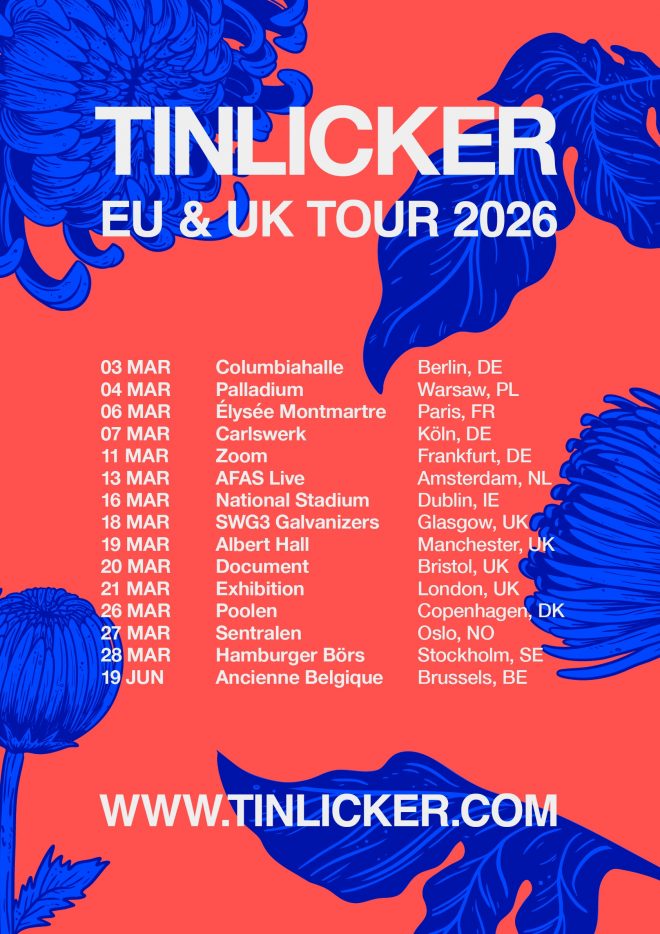
With the album landing February 27, Tinlicker step into a dense touring schedule. A UK and EU run begins March 3, with North American dates to follow. Having already tested several new tracks live, including “I Want My Freedom,” the trio describe a different energy in this era, more physical, more immediate, and more cohesive as a band.
If Dreams Of The Machine asks whether technology can imitate feeling, Tinlicker’s answer is not theoretical. It is embodied. In melody that breathes. In lyrics written face to face. In hesitation, in revision, in the human decision to choose life over automation.
