


Panteros666: The Rave Is Still A Place For Hope
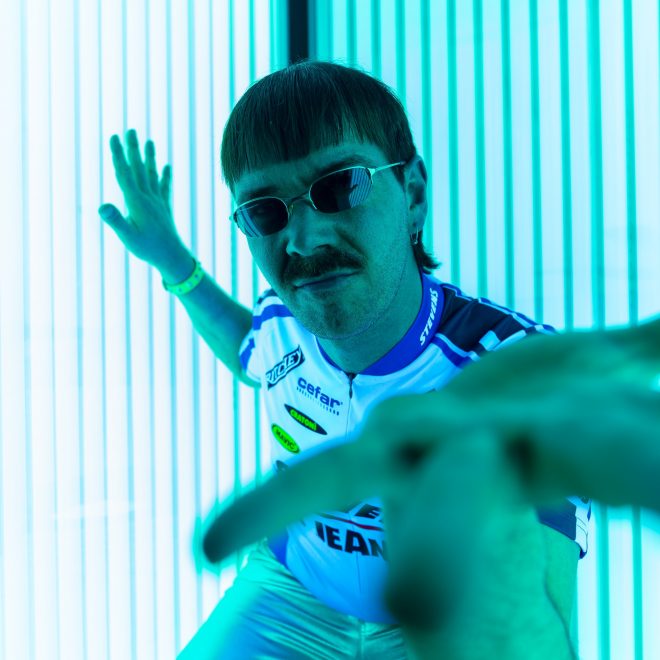
Long before Eurotrance and Y2K imagery returned to club culture, Panteros666 was building a world around both. As he brings a new live show to ADE, the French producer talks about staying strange, finding joy on harder dancefloors and holding on to an optimism the internet has made harder to defend.
Panteros666 has been making music long enough for someone else to divide his career into eras. There were the Bromance Records years and Club Cheval, followed by increasingly elaborate experiments with digital imagery and the high-speed, euphoric sound he plays today. He has less interest in drawing a line between those periods. Ask him what has fundamentally changed since Baby F-16, and he starts with a video game.
“To be honest, I still haven’t taken the time to reflect upon my different eras yet! I’m like Mario on Game Boy, I can only go forward. Inside I feel I’ve remained pretty much the same. I started producing back then with the same obsessions for rave music, dolphins, infectious synth melodies and my moustache. The music I make today is what I’ve always dreamt of doing: fast Y2K-inspired dance music with furious production. Over the years I had to get better at writing melodies, mastering synth synthesis and trusting my artistic vision to always surprise the crowd with euphoric bangers.”
For years, some of the things that made his work recognisable also made it difficult to place. Blue hair, CGI landscapes and an affection for Eurodance hardly amounted to a safe club aesthetic a decade ago. Their return to prominence has given Panteros666 the unusual experience of watching a scene move towards ideas he had already spent years defending. One encounter at a festival offered him a particularly satisfying measure of that shift.
“This has been one of the happiest surprises in my artistic journey. I was totally frowned upon 10 years ago with my obsession for Y2K 3D landscapes and blue hair. To me, I felt it perfectly matched a neo-rave renaissance. I tried my best to never mind the critiques. It took a lot of effort. My message has stayed the same: be free, be yourself, be original, which is now society’s dominant discourse. More than a decade ago, life’s imperative was more about obeying norms and conforming to the white-collar paradigm. Anyway! Last year, I bumped into French house pioneer Étienne de Crécy at Madame Loyal festival. He told me that at first he thought I was a bizarre character, but with time he realised I was visionary. So I’ve got that going for me!”
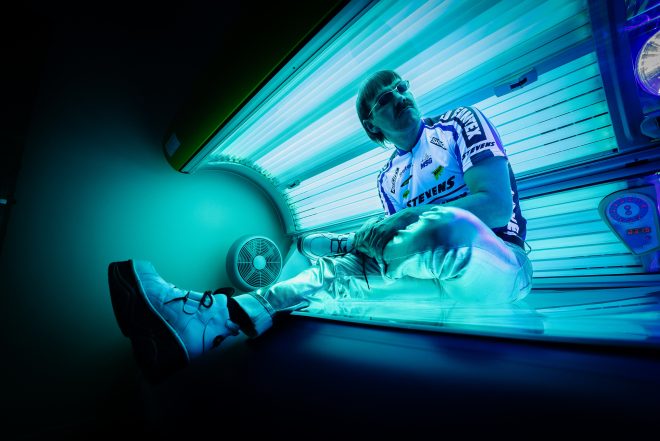
The joke at the end is characteristic. Panteros666’s music can be loud and fast, but it rarely asks the crowd to look intimidating while dancing to it. Melody remains central even as his sets move through hard house, Eurotrance and techno. On lineups built around increasingly severe sounds, he knows his approach can seem out of place.
“My music blends the adrenaline-pumping essence of Y2K dance with ultramodern production. That way I can create tracks that sound both familiar and totally refreshing. Having melody at the centre of my creative process, there is no way I can compete with today’s hard techno or hardcore DJs that are on the same lineups. Sometimes I feel like a lost unicorn in a hellish world, but it’s fine. I have groove and positivity as special skills. My mission as a DJ is to radiate happiness.”
That mission leaves room for feelings other than happiness. Tracks such as “Pow”, “Twizzy”, “Let UwU Go” and “Chaotic NRG” use powerful beats to draw people in, then let the synths pull the mood somewhere less predictable. Panteros666 traces part of that instinct to the records and gigs that shaped him as a teenager. He wants the dancefloor to have permission to be absurd, and to feel something deeper when the moment calls for it.
“I’m always looking to get the balance right between a rock-solid rave beat, built to make massive crowds dance with euphoria, and adding the bliss supplement with synth melodies. In my sets or production, I like to navigate between silliness and melancholia. 2000s hard house acts like Club Caviar or Klubbheads are my silly gurus. Allowing yourself to be silly was big in the 2000s. I was that kid doing pogos in nu metal concerts with 12 hairs on my chin, trying to grow a goatee to look like System of a Down. This is liberating and it feels good to lose yourself to hard beats. But a good rave night also needs to activate your brain cells, so I often counterbalance this with epic classic trance that plunges you into numeric dystopia and blue emotions. I define my sound as fast-paced beats and melodies taking you on an emotional rollercoaster.”
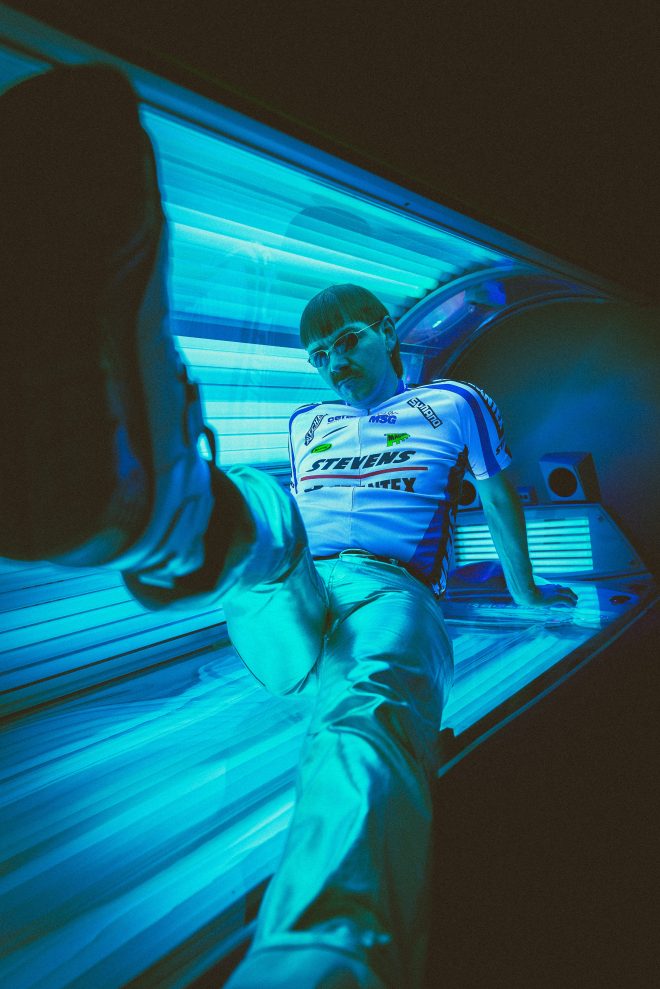
His early years in French electronic music gave him the space to follow those combinations. Around Brodinski’s Bromance Records and Club Cheval, with Myd, Canblaster and Sam Tiba, he encountered artists intent on finding their own sound. The records he was learning from reached well beyond that immediate circle. Looking back, what stays with him is how little pressure there seemed to be to explain every turn a DJ took.
“This period seemed wild! The techno industry was not as visible and democratised. Everyone was working on their own unique sound, pushing the boundaries of what was club music. No one cared about genres, it seems. You could blend IBM, electro house, early dubstep and Baltimore club in the same set and no one would bat an eye. It feels like all my favourite DJs were multigenre. I was learning music with the classic rave mentors like Yves Deruyter, PUSH and anything from Bonzai Records, and mixing it with releases from Numbers, Night Slugs or R&S. So I learnt to free myself from the pressure of trends and believe in my sound.”
Taking that sound on tour has shown him how much can travel without explanation. At Boiler Room, Teletech, EDC Las Vegas, Defqon.1 and Dour, the setting and the crowd may change, but he keeps his own productions and edits at the centre of a set. He adjusts its weight to the room without giving up the moments that make it his. Sometimes that means placing a familiar Eurodance hook between records far harder than it.
“I mostly play my music and my own edits to have a solid DJ set architecture and, most importantly, to not sound like the other DJs’ sets. I like to surprise the crowd with my personal joyful hard trance vibe. People’s reactions have been insane. Of course I’ll play a harder set when I’m between two heavy-hitting hard techno DJs at Teletech, but I’ll still play ‘Pow’ or any ’90s Eurodance edit I made recently, like Vengaboys’ ‘Up & Down’, 666’s ‘Amok’, ATC’s ‘La La La’ or Sash!’s ‘Ecuador’. The list is endless! Even in China or the USA, where people may not understand the reference to the classic trance or Eurodance sounds, people feel the joy and
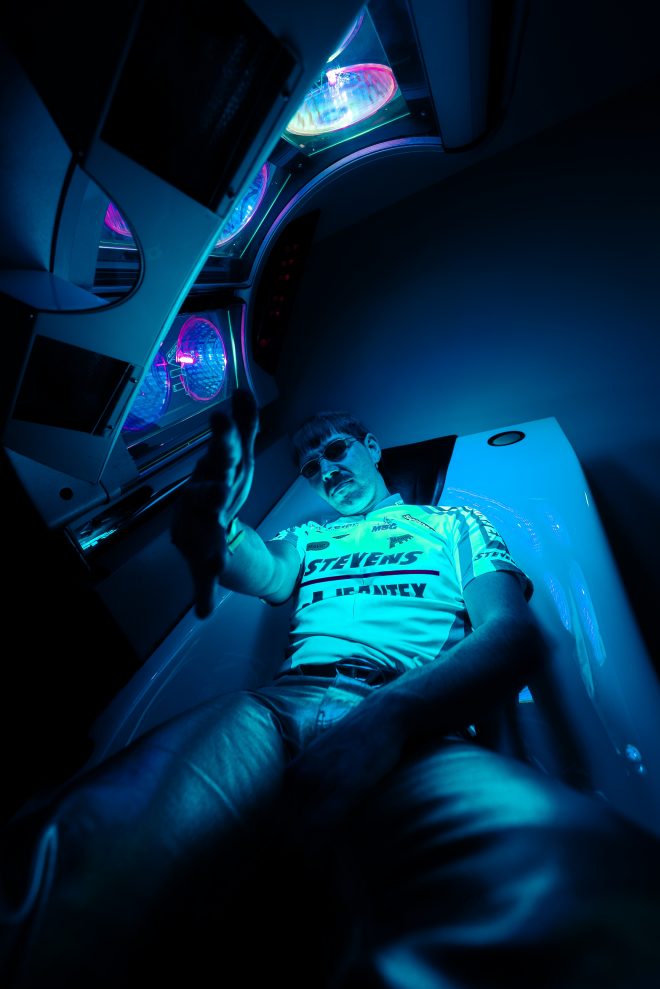
His faith in what happens when people share a dancefloor makes his relationship with technology more complicated. Digital worlds have been part of Panteros666’s work since he built an audiovisual show with a Kinect and After Effects in 2013. The tools have become vastly quicker, while the internet’s effect on life outside the club has grown harder to celebrate. He still loves the imagination of the Y2K era; he is less certain about the future its early optimism seemed to promise.
“I knew this was coming! The very beginning of the internet carried the seeds of today’s digitisation of self. As a child of the Y2K era, I played around with concepts of reality and virtuality to illustrate my club music. I first used a Kinect and After Effects to make my first A/V live show in 2013. It took me more than a year to do what can be done in two hours today. Nevertheless, the technological optimism of the Y2K ethos is becoming harder to defend each day. Social web and smartphones were supposed to bring us together, unite us all under one sky. However, we witness the opposite: meaningful social life is challenged by the omnipresence of screens, and cultural clashes are what drive the algorithms most efficiently. Having said this, I stay true to the Y2K ethos that I keep very close to my heart, so the core foundation of my music will always be hope.”
That belief is taking a bigger physical form this year. Panteros666 has begun touring 100% Eurotrance, a new audiovisual live show that brings dancers and MCs into the digital world he has spent years building. He is also making room for other artists through DopamineWIFI. With ADE bringing his friends and collaborators to Amsterdam, the next chapter has an appropriate setting: a crowded city and the chance to experience it together, in person.
“I just started touring with my new A/V live show, 100% Eurotrance, my love letter to the Y2K era featuring immersive 3D visuals, my ultimate playlist of Eurotrance bangers, MCs and dancers! This is a new chapter. I’m relaunching my label DopamineWIFI to put light on new artists that explore the Eurotrance sound as well. Also this year, I feel blessed having releases on the renowned trance labels Armada, Dreamstate or Kontor, which for a French producer has always seemed out of reach. I’m also super stoked to host ADE parties with a lot of friends like JSTJR from the USA, Lawton from the Netherlands, LB aka Labat from France or Jokesonyou from Australia. Come party with us at ADE to see all this happening IRL!”
