

On a different frequency: neurodivergence and electronic music
According to a survey by the AFEM (Association For Electronic Music), 58% of electronic music professionals identify as neurodivergent. Meanwhile, Northwestern Medicine estimates that neurodivergent people make up between 15 and 20% of the global population. These are large numbers, but when read correctly, they trace the coordinates of a map that gives us the right directions to understand something more about the connection between electronic music and neurodivergence.
Stepping away from what increasingly seems like a trend, let’s approach the topic with a fascinated and curious gaze – one that tries to investigate what lies within an obsessive kick drum, a modular synth that demands hours of hyperfocus, or the darkness of a club where the body can move freely without having to speak.
My interest in this subject sparked in recent years because more and more friends or acquaintances I met in clubs and in the electronic music world started telling me about their experiences after receiving a neurodivergence diagnosis. Today, it’s not hard to find investigations and articles discussing this connection, trying to answer one question: why do so many neuroatypical brains feel at home here, and not elsewhere? It doesn’t seem like a coincidence, but rather chemistry and sensory architecture, expressed as a kind of creative survival.
“Neurodivergent” is not a diagnosis, but an umbrella term: it includes ADHD, autism, dyslexia, Tourette’s, sensory processing disorders, and others. In this piece, we’ll focus on ADHD and autism – not because they’re the only ones, but because they appear most often in interviews and data about the electronic scene.
ADHD (Attention Deficit/Hyperactivity Disorder) involves altered dopamine regulation, which leads to difficulty sustaining attention on under-stimulating tasks, but also incredibly powerful hyperfocus on things that are genuinely interesting. Autism is defined as a spectrum and involves atypical sensory processing (hypersensitivity or hyposensitivity to sounds, lights, touch), monotropic thinking (a single focus of attention at a time), and a strong need for predictability and routine.
They are neither “superpowers” nor “tragedies” – rather, they are different ways of functioning. And electronic music, for reasons we’ll explore, aligns with them in a truly fascinating way. So instead of asking “why are neurodivergents overrepresented?”, let’s flip the question: what does electronic music have that other genres and environments don’t?
Let’s start with rhythmic predictability as an anchor. Think of a 4/4 kick drum, a repeating loop, a house or techno structure. For an autistic or ADHD brain, this constant repetition is like an elastic carpet. By reducing the sensory load, it creates a kind of sound cage within which one can relax or move without being constantly surprised. Many people describe the feeling as a world that is finally not chaotic.
Then consider hyperfocus – it’s easy to see it as the producer’s engine. The producer who spends 14 hours carving a sound out of a modular synth isn’t “disorderly” or “obsessive”. They are simply using their autistic monotropism or their ADHD-driven dopamine-seeking to enter a flow state that others struggle to reach. For many neurodivergent artists, production isn’t a job – it’s the only time their brain finally feels aligned.
This need for alignment takes shape in a daily and often underrecognised practice: sonic stimming. Stimming (self-stimulatory behaviour) is a repetitive behaviour that helps regulate the nervous system. When sound becomes the regulator, it manifests in very specific ways. It can mean listening to the same song on repeat for hours without ever getting tired, seeking very high volume because the sound pressure “turns off” intrusive thoughts, or repeating a beat, white noise, or a phrase to calm anxiety. Other times, it means wearing noise-cancelling headphones even without music, just to reduce sensory overload. For a neurodivergent brain, none of this is a vice or a strange behaviour – it becomes a sensory survival strategy. Sonic stimming works because a predictable, repetitive stimulus – a kick drum, a delay, a drone – creates a sonic cage that reduces mental chaos, turning music into a biological anchor, not just an aesthetic one.
In the club, this balance finds its natural stage. On the dancefloor, you don’t need to maintain eye contact, you don’t need to make small talk, you don’t need to decode ambiguous facial expressions – you just have to move. The club becomes one of the few social spaces where the rules are explicit (you dance, you listen, sometimes you nod) and social judgment is suspended. Let’s be clear: this is not an accusation or a generalisation. We are not saying that all neurodivergent people love electronic music, nor that the scene is a problem-free paradise. But the numbers and testimonies suggest a deep attraction, rooted in the very functioning of the brain.
A study for the UK’s Department for Digital Culture, Media and Sport added another data point: over 20% of the overall creative workforce is neurodivergent. But in electronic music, the figure shoots upward. Why? Because it’s a sector that has historically attracted outsiders – people who didn’t recognise themselves in the linear paths of music schools or marketing offices.
Harold Heath, a writer and DJ diagnosed with AuDHD (ADHD+autism), puts it clearly: “We’re not exceptions – we’re the silent norm. For years, many of us hid our neurodivergence for fear of not being taken seriously. Now the numbers prove us right.”
It would be romantic and false to say that being neurodivergent in electronic music is only an advantage. There are real barriers, but talking about them (just as Harold Heath does with his awareness campaigns) isn’t about pity – it’s about understanding where we can improve.
One of the main issues for those living with these conditions is periods of total creative block alternating with explosions of hyperfocus. It’s not easy to manage, especially when you have deadlines, gigs to prepare, or record contracts to honour. Experts suggest several methods for dealing with creative block, such as designing chaos instead of fighting it – avoiding rigid schedules and instead making them flexible to give rhythm to the day without suffocating it. Time-boxing with themed blocks (“creativity”, “administration”, “rest”) that respect the brain’s natural attention waves is also a valid alternative. Another strategy is to make the abstract concrete: breaking a giant idea into tiny tangible steps can turn paralysis into action, emptying the mind onto a notebook or an app to avoid overload. To break inertia, you can try body doubling – working in the physical or virtual presence of another person helps overcome procrastination linked to executive dysfunction. Finally, if the block is accompanied by emotional fatigue and apathy, it might be creative burnout rather than a simple block. In that case, the only way is to stop, take real breaks, and reassess your expectations – because forcing creativity in that state only makes things worse.
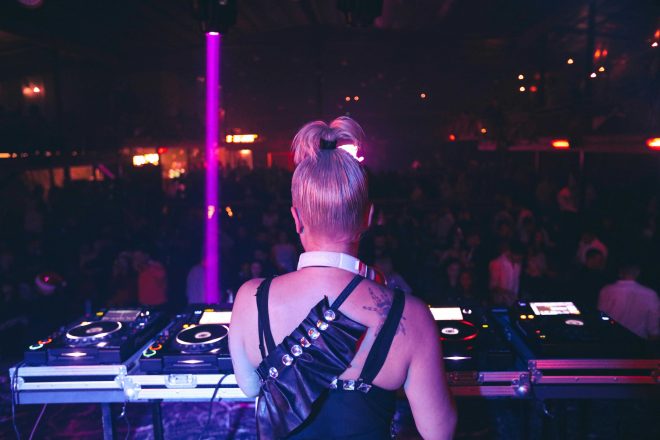
As mentioned earlier, for many neurodivergent people the club is not a problem at all. In fact, for many autistic and ADHD individuals, the dancefloor environment – with its hypnotic repetition, the darkness that protects from others’ gaze, and the freedom to move without speaking – is precisely what makes it unique and irreplaceable. However, precisely because neurodivergence is a spectrum, what is a life-saving anchor for some can become a barrier for others. Strobe lights and lasers, for example, are an immediate sensory overload for many. Mandatory networking (after-shows, backstage, dinners with other artists) is a nightmare for those with social anxiety or difficulties with nonverbal communication.
No accusation, just an observation: the scene is already full of neurodivergent people, but it’s not yet designed for all of them. Fortunately, the response – as often happens – comes from the ground up. In Bristol, for example, Disco Neurotico (founded by autistic DJ Byron Vincent) rewrote the rules: venue tours before the event, a silent disco with a dedicated channel for brown noise, multiple spaces like gaming, crafting, and a recovery room. No surprises, no overload.
Milan is also a pioneer of innovation in this field. Since 2020, UnìSono – A Rave for All has brought the model to Italy with meticulous attention: lights not too low, music not excessively loud, a decompression room, and guidelines on acoustics, lighting design, timings, and security written with the help of neurologists and psychologists. The project, supported by the Municipality of Milan, organises 4–6 inclusive nights per year. And that’s not all: the Disabled Ravers Network has built a database of disabled and neurodivergent artists, while venues like The Yard in Manchester offer braille signage, audio loops, lowered bars, and sensory rooms. Things that seem obvious, but that almost no clubs have yet.
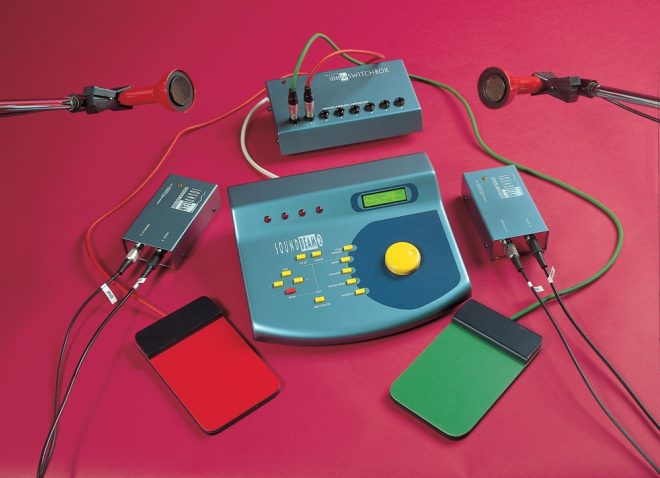
But accessibility doesn’t stop at sensory rooms and reduced volumes. There is another, even more radical frontier: one where the body becomes the instrument. Soundbeam, for example, is a sensor that translates movement into sound. Even a person with profound physical disabilities can create music by moving a finger or their head. It has been used in therapeutic contexts with autistic children and adults with spinal cord injuries, and the results have been surprising: not only improvements in motor skills, but also a new form of emotional expression.
The duo of Cicanoise (an autistic musician with motor difficulties) and Atau Tanaka pushed the concept even further: electromyographic (EMG) sensors placed on the body turn signals from the nervous system into MIDI data to control modular synthesisers.
These are not isolated experiments. A systematic review published in Psychiatry Research in 2025 analysed dozens of studies on music therapy and assistive technologies for children and adolescents with ASD and ADHD. The evidence shows moderate to large effects in improving psychological and social functioning, especially when using interactive musical interfaces, virtual reality, and neurofeedback systems. Then there are purely artistic projects like “Spectrum Sounds” by autistic composer Andrew Hugill, who lives with synaesthesia and asymmetric hearing loss. He created seven pieces associated with the colours of the spectrum, using the BBC’s Audio Orchestrator to allow listeners to control the listening environment – adjusting volume, reverb, and equalisation. These are all demonstrations of how making art can show another way of existing.
The magic of all this is that many solutions already live within the scene. The next time you hear a hypnotic kick drum, a modular synth unfolding for minutes, a drop that pulses in your chest, think about who programmed it. Maybe their brain simply works… on a different frequency. And maybe that’s exactly why the music sounds so good.