


Modeselektor: the art of creating a moment only to destroy it
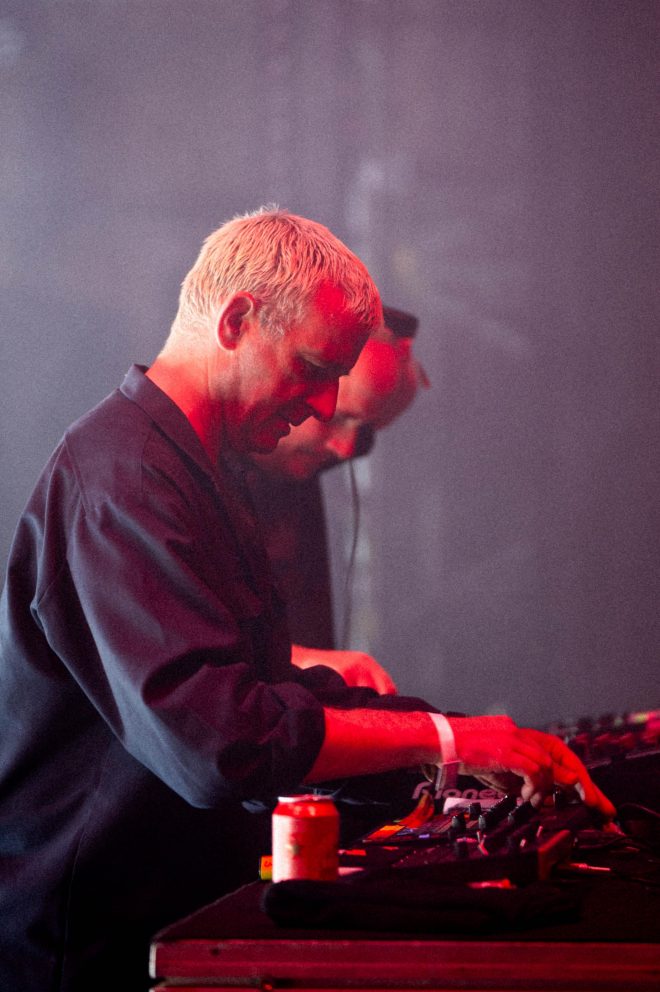
We met Sebastian Szary of Modeselektor on a rooftop in Barcelona during Sónar to talk about music, inspiration and vision.
The Berlin-based duo of Gernot Bronsert and Sebastian Szary are one of those rare acts who, as the years go by, seem to drift further and further away from any form of predictability. Having found their musical roots in the underbelly of post-Wall Berlin, growing up amidst illegal acid parties and an unwavering resistance to any form of genre purism, Modeselektor have built a career that zigzags constantly between IDM, glitch, electro, hip-hop and rave. And just when you thought you’d figured them out, they shift perspective.
At Sónar 2026, they returned with a completely new live set – their first in over six years. I met Sebastian Szary in the lobby of the Nobu Hotel in Barcelona, where he was staying. Despite being tired from hours of travelling after the Solstice Festival, from which they had just arrived, Sebastian welcomed me with disarming kindness and a smile brimming with energy and a desire to talk about his love for music and for what he does.
We moved up to the rooftop – me with a beer, him with a Fernet and Coca-Cola. The Barcelona air, the blazing sun, and him beginning to talk, in a spontaneous and playful way, with the air of someone who has never stopped having fun over the last thirty years.
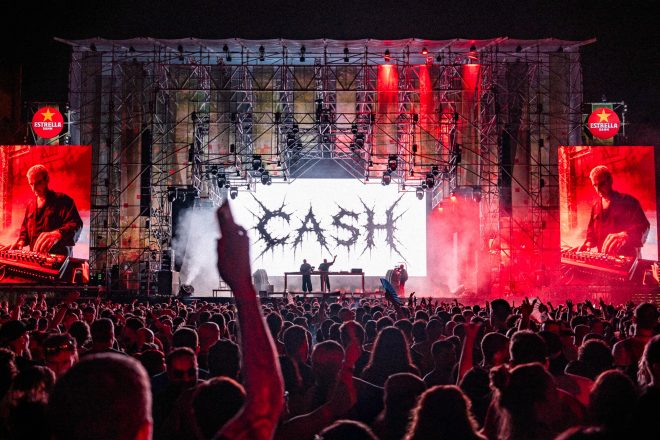
The new live show stems from the chance discovery of an old PC from the early 2000s.
“It grew out of the work we did last year, rediscovering old tracks we’d produced in the early 2000s, from our first and second albums. So we tried to reconstruct them and reimagine them for these years – 2025, ’26, ’27...”
Not simply a reissue, but a genuine reinterpretation, a dialogue between who we were back then and who we are today. On stage, the approach is deliberately minimalist: a computer, a TR-808 drum machine, a Korg synthesiser. A folding chair on which Sebastian begins the show, smoking a cigarette and perhaps sipping a coffee from a paper cup (or perhaps a Fernet and Coke).
“When we started working on the live show, the idea was: ‘OK, let’s play a set consisting solely of old tracks.’ So you can use a drum machine, you can use old synthesisers or new ones that sound like the ones from back then. But you know, it’s not just about reproducing the tracks, but also about the chance to preserve that moment and, sometimes, to destroy it.”
This seems to be the philosophy that has always defined the duo, but one that Sebastian also extends to life in general. At one point I point this out to him and he nods:
“Yes, I mean, in a live show or in life as a whole: it’s the same.”
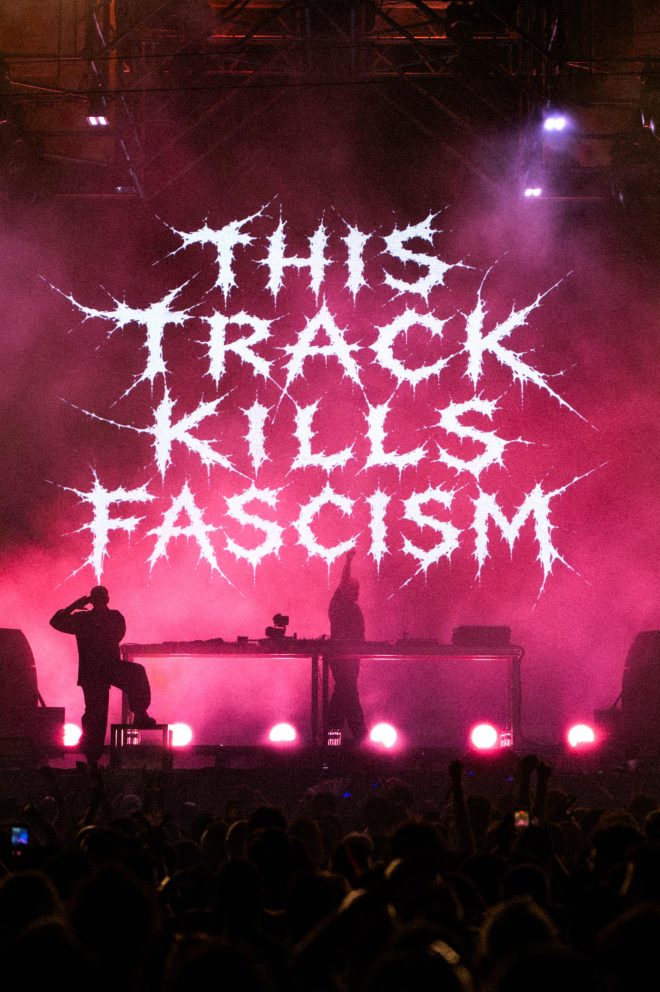
Nothing is straightforward, nothing can be taken for granted. Their relationship with Sónar is long-standing and deep: Sebastian first came here in 2000, and since then they’ve become something of a resident act, both with Modeselektor and with Moderat. He remembers when the festival was still held at the Fiera, in what he describes as ‘a no-man’s-land’. But now it’s different. Now, if you decide to go to the main hall, “it’s like going to a rave. Or at least, that’s more or less the feeling I had earlier during the soundcheck. It’s all very defined, but also with edges that are just blurred enough to make you lose yourself and find yourself again. And ultimately, it’s a choice each person makes for themselves,” he says.
On the subject of change and choices, between sips of beer and Fernet and Coke, I ask him today – after a career spanning more than thirty years in music – what still inspires him.
He pauses to consider the present moment, intrigued and particularly drawn to this hidden challenge I’ve set him, asking me again, “You mean, especially today?”, as if that very definition of time encapsulated the full difficulty of making music in such a terribly distorted era.
“You see, I need to think about inspiration. It’s true, I need to keep my blood pressure up because I’m really tired. But that’s not the point. That’s another matter… If you’re asking me as a soloist, as a solo artist, I often say that I can’t talk about music because… Let me give you an example: we can listen to this track in the background and they might say to you, ‘OK, it’s bar music or something like that.’ But as for my music, or even, let’s say, Modeslektor, I’m not the person who can talk about where I draw my inspiration from. Perhaps that’s you?”
He smiles, passing the ball to me, with the humility of an artist who has become a point of reference for a movement spanning generations, without knowing exactly how, simply by doing what comes naturally to him.
“When I’m right in the middle of the studio production process, starting work on a track always seems easy. Then, looking back, I realise how far from easy it actually is. You build layer upon layer of elements that people are unlikely to notice. That’s where the inspiration comes from – from whatever element you decide to include. I’m not sure I’ve answered your question…”
In a way, in his abstract manner, Sebastian answers my question perfectly. Then, however, he moves on to a decidedly more concrete example.
“A bit like the Sagrada Familia, isn’t it? They’ve finally finished it, and it’s been a process of layering that’s lasted a century. Architecture, for me, is a source of inspiration in its own way: there are patterns in buildings, and you can even transform them into rhythm or melodic patterns, into actual sequences of notes...
It’s a question so full of answers that I can’t even find one. Perhaps, after tonight, I’ll find it and I’ll answer you.”
He smiles.
Let’s put the idea of inspiration aside for a moment and have a chat about his view of the scene today. I’m intrigued by his perspective. I never really stop to think that we’re currently experiencing a unique historical moment for electronic music and that, perhaps now more than ever, we can hear a multitude of different generations all at the same time.
“I think the scene in general spans a wide range of ages. Sometimes you’ve got parents and children listening to the same artist; sometimes the parents listen to their children’s music, or the children listen to their parents’.
As for me, for example, I’ve got three teenagers at home; they love music and are also at that stage where I can play them the music I like, so they can discover it for themselves. It has to be said, though, that nowadays, with all these social media platforms – Instagram, TikTok and so on – you’re constantly jumping from one loop to the next. So the younger generations perhaps struggle a bit to find a genre or something they can identify with. It’s all incredibly fast-paced; there’s little time spent actually listening, and people don’t linger on what they might discover beyond the first 15 seconds. I believe it’s our job to try and help them explore and discover new things.”
We then pause to reflect on the meaning behind all this music in Reels or social media content; young people no longer seek out music because they don’t need to. They have it all concentrated in a device that offers them an infinite amount of it, without them even having to choose. It’s neither right nor wrong; it’s certainly just different from when he started out.
On the subject of music and the times we live in, at one point my curiosity turns to the age-old debate: analogue versus digital. After discussing how vinyl has now reached crazy prices – due to pressing costs, but also to the current trend (which, as we know, may already be on the wane) – Sebastian surprises me once again with an aspect of digital music I’d never considered.
“You know, when you have a track in your streaming app, there’s this thumbnail cover on the screen, but you’ll never know what’s on the back. If, on the other hand, you decide to buy it as a physical copy, like a vinyl record, when it arrives in your hands you feel this irresistible urge to turn the cover over, to see what’s on the back and what’s inside and… Oh my God, the amount of information you discover on record covers. To me, it’s still an incredible thing.”
His genuine love for music also shines through in this reflection – one that, perhaps because of my generation, I’d never really given much thought to before. The unknown that lies beyond what we stop to look at.
“For both Gernot and me, buying vinyl is still incredible. It makes us happy. He uses records a lot when he’s playing his sets. It’s a love we carry within us, unconsciously.”
Sebastian and I stay a little longer, chatting and looking out over Barcelona from the rooftop where we’re standing. From there, he points out the places in the city where he’s played or that mean something to him. The thoughtfulness with which he took the time for me, despite being tired from the gig at the Solstice Festival the night before and having had little sleep, is a precious memory that I’ll cherish in my heart. That Sebastian, whom I’d been a huge fan of as a teenager – and whom I’d always imagined as a wild artist who defied easy categorisation – revealed himself to me in a completely unexpected light: sensitive, kind and thoughtful.

Jokingly, I took a few photos of him with the Barcelona skyline as a backdrop, and I realised that his German sense of humour – the one I never quite understood when I lived in Berlin – was there, ready to strike.
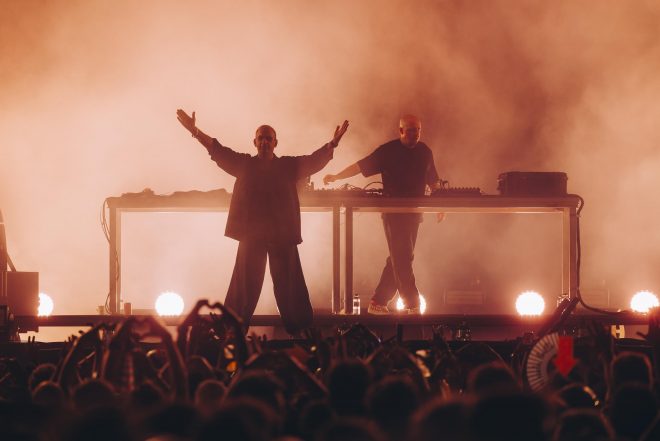
In the evening, I enjoyed the whole live set at the Sónar Village stage by Estrella Damm. From 2.15 to 3.35, it was a burst of energy, an incredible journey that kept me – and the whole crowd – completely captivated. Explaining their style is practically impossible: they take you to the edge of a precipice, they’re about to push you over, but then they catch you with a huge, warm hand that squeezes you tight and makes you feel right at home. Their music is this and much more, of course.
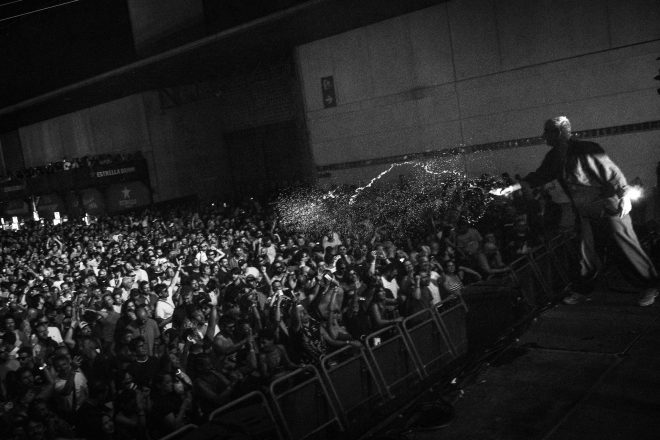
The sonic narrative they craft is directly proportional to the entire show they build on stage. Their approach is ultra-minimalist, dictated by their manipulation of the machines they use to play. Lights, effects, shadows: nothing is left to chance, especially the political messages. “This track kills fascism”, sung by Sebastian – who, for a moment, left the DJ booth, walking past it to get closer to a mesmerised crowd – is one of those moments that reminded me why – each in our own way – we do what we do with music.
The whole live stream got me thinking about the in-depth chat Sebastian and I had that afternoon, and although there are at least a billion things I didn’t get round to asking him, during that hour and a quarter of the live stream he answered my questions 100 per cent.
Perhaps that’s exactly what music does. It raises questions that find answers as our minds wander freely, shifting the focus not on the response, but on our own evolution during that journey. Just as Sebastian and Gernot did, breathing new life into their productions from over 20 years ago, which they found on an old PC, through this live stream.
