


Miguel De Bois: Opening the Vault

Miguel de Bois’ music does not present itself as a fixed sound. It behaves more like a transmission, shaped by where it passes through.
Over the past few years, his tracks have circulated across different contexts: clubs, radio shows, festival sets, late-night rooms, and small listening spaces. Each environment left a mark. What emerges on his debut album is not a singular aesthetic, but a collection of pressures, tempos, and emotional weights accumulated along the way. The record does not try to resolve those influences. It lets them coexist.
“With this album, I wanted to break away from what I’d been producing recently and push myself into new territories, different genres, different BPMs, different moods. I wanted to challenge my own limits and stay inspired,” Miguel explains.
“The album moves through house, 90s trip hop, some breaks, some non-club tracks, and other surprises, but it still sounds like me.”
This becomes clear when listening across the twelve tracks. Club-focused material sits next to slower, more introspective pieces. Rhythms tighten, then loosen. Breaks appear where momentum might usually peak. Some moments feel designed for large rooms, while others ignore dancefloor logic entirely. Rather than smoothing these contrasts, Miguel treats them as part of the same language. Genre functions here as reference, not structure.
As he puts it, “For me, genres are just reference points to help describe a track, but what really matters is how it makes you feel.”
That openness reflects how the album came together. The collaborations were not assembled to extend reach or define direction, but emerged through proximity and shared sensibility. Friends and peers entered the process without hierarchy. Experience levels were irrelevant. What mattered was whether the exchange produced something unexpected. Each collaboration slightly altered the record’s internal balance, adding new angles rather than reinforcing a single narratiReleasing the album independently was a natural extension of that mindset. De Bois chose his own label, RTF, not as a fallback but as a necessity. Creative freedom is non-negotiable. In an ecosystem where many labels impose invisible rules, format expectations, or aesthetic boundaries, independence became the only space where the project could exist fully intact.act.
RTF itself reflects a broader philosophy. For De Bois, music is still about feeling and the art itself, not metrics. Likes, follower counts, and algorithmic success are irrelevant if the work is compromised. The label exists to offer something increasingly rare: a real chance. It is a space where artists are not asked to wait indefinitely, dilute their ideas, or fit into pre-approved frameworks.
That sensitivity to feeling was sharpened by movement. Long before Europe became his home, it existed as an idea. As a teenager, De Bois dreamed of living there, discovering new scenes, expanding his musical language. At the start of his DJ and production career, playing European clubs felt distant, almost abstract. Life intervened. He met his girlfriend in Mexico while she was traveling, and after a year together in Mexico City, they made a decision that would reshape everything. They moved to Amsterdam and committed fully to building his career in one of the world’s most demanding electronic music environments.
The beginning was difficult. No network. No shortcuts. He reached out to radio stations, showed up at clubs, introduced himself repeatedly. Slowly, connections formed. What surprised him most was not competition, but generosity.

“The Dutch electronic community is incredible,” he says.
“The Netherlands has such a deep history in electronic music, and people here are very passionate and dedicated. That motivated me to keep going, even when I didn’t have many gigs at first. Before I became known in the Netherlands, I started building a small fanbase in France thanks to early support from Belaria, Kendal, and Pablo Bozzi,” he recalls. “They were among the first to play my music at big festivals in France.”
Raving became a form of education. Moving through European dancefloors exposed Miguel de Bois to musical structures and emotional registers he had not encountered growing up in Mexico. Longer arcs, slower builds, unexpected tempos, and a different relationship between crowd and DJ reshaped how he listened and eventually how he produced. The experience did not just broaden his references; it recalibrated his instincts.
Certain spaces crystallised that shift. Club RAUM emerged as a recurring point of reset, a room where adventurous programming and attentive crowds consistently pushed him back toward curiosity. Mondo Disko held greater personal significance. From his first appearance there, the space's trust allowed him to explore freely, without pressure to conform to a single narrative or function. K-Bar Powiśle stood apart for its intimacy. A room defined less by spectacle than by listening, where people come to engage deeply rather than consume passively.
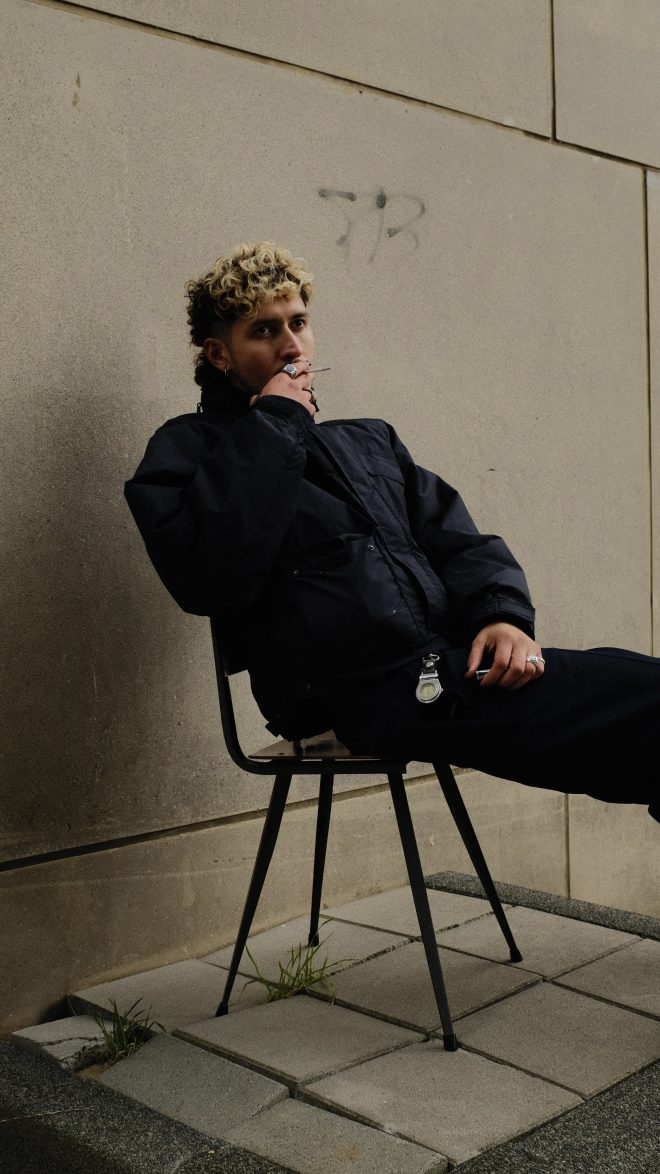
Together, these environments did more than inspire individual tracks. They informed a way of thinking about music as something elastic, responsive, and emotionally driven. Not bound to peak moments or genre expectations, but shaped by context, patience, and presence.
Radio played an equally formative role. In Europe, De Bois discovered a broadcasting culture that felt largely absent in Mexico. Online stations offered space for DJs and live artists to experiment beyond club functionality. Radio became a laboratory for identity, a place where he could explore different moods and themes without the pressure of peak-time expectations. Early shows on Operator Radio leaned toward non-club music filtered through his own sensibility, and that freedom proved essential in shaping his sound.
Across all these environments, one constant remains. Emotion. Whether high-energy or restrained, his productions carry nostalgia, sentimentality, and an emotional undercurrent that resists neutrality. For De Bois, success is simple. If the crowd feels what he felt while making the track, the music has done its job.
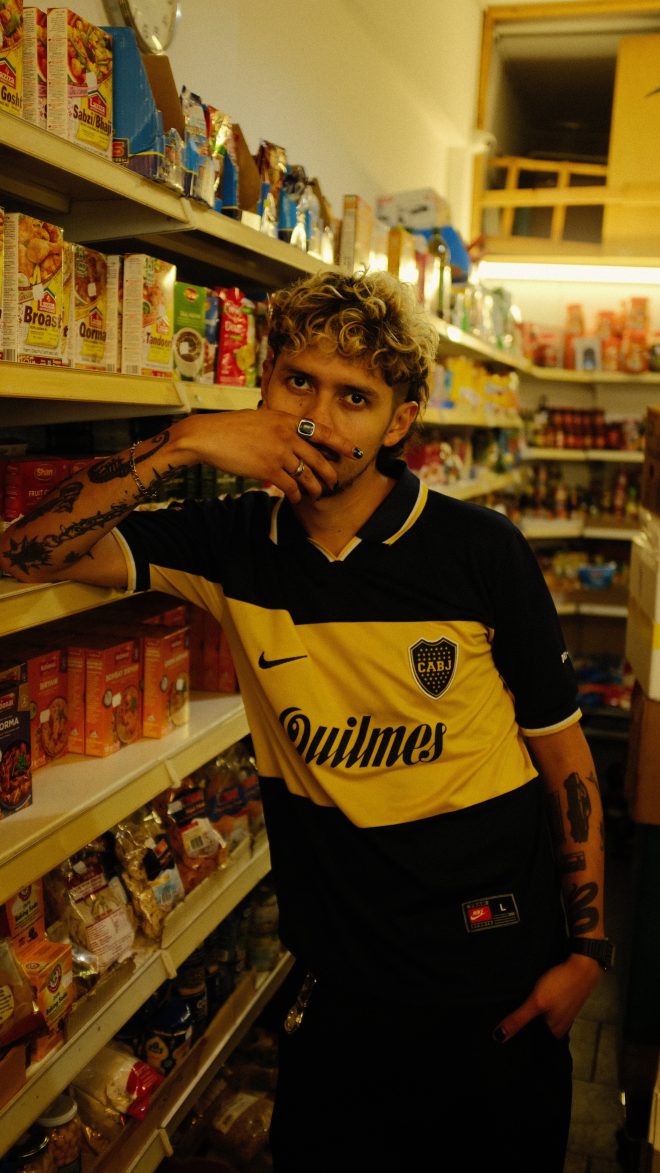
“It took a long time to gather all these tracks and shape the concept, and I’m really proud of the result and excited to finally share it. To me, progress means continuing to make more and more music, learning new production techniques, exploring new genres and atmospheres, and creating from a real, honest place. I don’t really care about fame or trends. I just want to keep making music for the rest of my life.”
Spending time with Miguel de Bois reveals a person shaped by attention and care. He moves through conversations with a quiet focus, listening closely and responding thoughtfully, as if every exchange deserves to be fully present. There is an ease in how he relates to people, grounded and sincere, that makes time with him feel unhurried.
He approaches life with the curiosity of someone who remains open to being changed. New places, new relationships, new routines are absorbed gently, without urgency. Gratitude surfaces naturally when he speaks about the people and communities that have welcomed him, and that sense of appreciation seems to guide how he builds connections in return.
At his center, Miguel is oriented toward continuity. He values consistency, learning, and the slow accumulation of meaning through daily practice. His decisions reflect a desire to create a life where making music, building relationships, and staying true to himself can coexist over time. It is a way of moving forward that feels intentional, steady, and deeply human.
