


Marie Vaunt: Frequency, Force, and the New Shape of Acid Techno
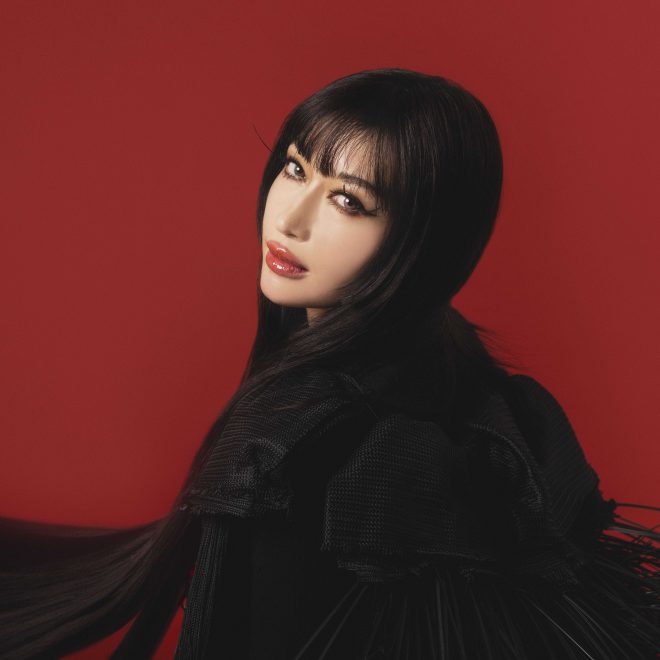
Over the past year, Marie Vaunt has moved from being a respected name within the harder edges of techno to becoming a defining force within its contemporary evolution. Her rise to becoming one of Beatport’s highest-selling female Techno artists in 2024 did not come through compromise or trend-chasing, but through a deliberate return to instinct. Hard acid lines, physical pressure, and an unfiltered sense of intent have become the backbone of a sound that prioritises bodily reaction over intellectual distance.
Now based in Los Angeles and operating across global scenes, Vaunt stands at a crossroads between scale and depth. Her forthcoming release on Eli Brown’s Arcane signals not only a new label chapter but a broader statement of purpose, one rooted in physicality, cultural identity, and independence. From her Japanese heritage and interest in traditional instrumentation to the community-driven ethos behind Kurai Records, Vaunt’s work reflects an artist shaping her world from the inside out.
We sat down with Marie Vaunt to talk about the shifts that defined 2024, the philosophy behind Let The Bass Kick In, acid as a living language, and the balance between tradition, technology, and total dancefloor surrender.
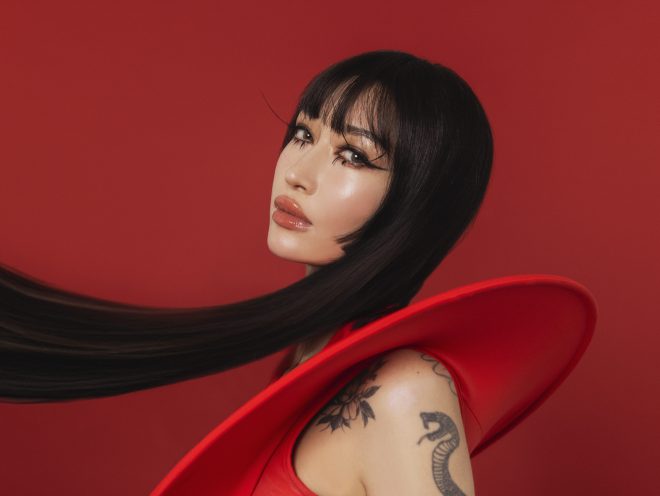
Over the past year, you became one of Beatport’s highest-selling female Techno artists. When you look back at 2024, what do you think truly shifted for you, creatively or personally, that allowed your music to connect on that scale?
I think 2024 was the year I finally stopped trying to “solve” the music and just started feeling it. It’s quite common to get caught up in the technical side of things or trying to fit a specific mold, but lately I’ve embraced a much more raw and honest approach. Creatively, I leaned into the harder, more aggressive acid tones that I actually love to play. Personally, I think that authenticity is what people connected with. There is a certain frequency you hit when you’re making music that genuinely excites you, and I think the fans can feel that subtext energy.
Your upcoming single on Arcane marks a new chapter, with Let The Bass Kick In setting the tone. What made this project feel like the right moment to collaborate with Eli Brown’s label, and what does this release represent in your wider artistic evolution?
Eli Brown has built something incredible with Arcane. It’s a label that really understands that sweet spot between underground grit and massive, festival energy. I’ve always felt a synergy with that vision because my music thrives in that very environment. Let The Bass Kick was the right track to kick off this collaboration because it’s bold and unapologetic, and perfectly embodies what both Arcane and I stand for.
It also carries a powerful physical energy: stomping rhythm, heavy bass, and a commanding female vocal. When you were building the track, what feeling were you trying to unlock on the dancefloor, and how intentional is that sense of physicality in your productions?
The physicality is very intentional. I want my music to be felt in the chest before it’s even processed by the brain. When I was making Let The Bass Kick, I was chasing that feeling of total surrender where the bass and rhythm are so heavy that you don’t have a choice but to move. The call and response between the vocal and acid line is also very intentional and pulls you deeper into the track with the constant back and forth.
Your Japanese heritage has become an increasingly visible part of your artistic language. How has reconnecting with your cultural roots influenced the way you think about rhythm, texture, and storytelling in Techno?
Reconnecting with my roots has completely changed how I look at the empty space in a track. In Japanese culture, there’s a deep appreciation for simplicity and the idea that every single element should have a purpose. It’s influenced me to be more disciplined with my textures. Instead of just layering sounds for the sake of it, I’m looking for rhythms that tell a story and actually add something to the overall experience. There is a certain shadow and light aspect to Japanese aesthetics and philosophy that fits perfectly with the dark nature of techno.
You have spoken about your interest in incorporating traditional instruments such as the shamisen and koto, as well as Japanese percussion and vocals. What excites you about blending these elements with modern Techno, and what challenges come with translating tradition into a club context?
What excites me most is the collision of worlds. You have these ancient, organic sounds that carry thousands of years of history, and then you’re slamming them against a cold, hard 303 acid line. The contrast is just unique. The biggest challenge is definitely the technical side of things because traditional instruments like the koto have such delicate frequencies. Making those stand up against a massive techno kick drum without losing their soul takes a lot of care in the mix. You want to honor the tradition while making sure it has enough body to work in a dark warehouse or a big festival.
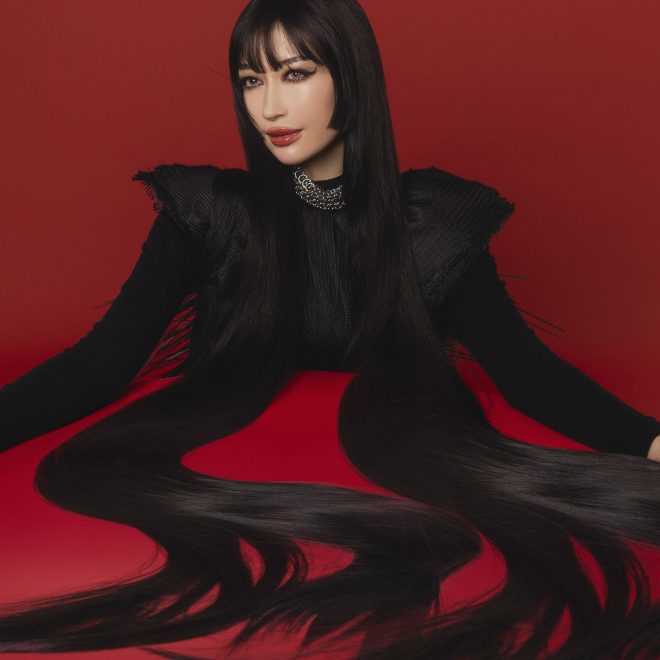
Now based in Los Angeles, you operate between different cultural and musical ecosystems. How has living in the US shaped your sound and mindset, especially in contrast to your roots and your experiences touring globally?
LA is such a fast-paced and ambitious city, and that hustle definitely feeds into my work ethic. There is a cinematic quality to life here that has probably made my music feel a bit more widescreen and epic. It definitely has impacted its intensity, because LA is unforgiving. At the same time, being in Japan and touring in places like Europe or Australia gives me a broader perspective on just how much techno has become a global language, and I can feel my sound becoming more widespread and universal the more I tour and interact with local scenes.
Acid Techno plays a key role in your musical identity, yet you approach it in a way that feels contemporary rather than nostalgic. What does Acid mean to you today, and how do you see its role evolving within modern Techno culture?
To me, acid is the ultimate form of sonic rebellion. Its very origin is a tale of working within constraints and succeeding because of them. It’s a sound that is inherently alive because of how the filters and resonances move, how many frequencies on the spectrum it covers. Acid is to electronic music what electric guitars are to rock and metal. I try to avoid the nostalgia trap by focusing on modern sound design and much heavier, cleaner tones than what you’d hear in the 90s. I think acid is moving away from being a sub-genre and is becoming a main ingredient in music in general. It’s a sound that I believe will always be relevant because it’s so tactile and visceral.
Through Kurai Records, you are building your own platform alongside your releases as an artist. What was the original intention behind launching the label, and how does it reflect your values beyond just the music itself?
I launched Kurai Records because I wanted to create a home for all the incredible artists I get to meet during my shows who have not yet been given a chance to show their music to the world. As for Marie Vaunt, I wanted a place where I could release music that was maybe too dark or too unconventional for other labels. The word “Kurai” means dark in Japanese, and that aesthetic is very central to everything we do. Beyond the music, it reflects my value of independence. I want to empower other artists, especially female producers and rising talents, to stay true to their sound without feeling like they have to compromise to fit a certain chart. It’s about building a community that values art over algorithms.
Your touring schedule continues to expand, from major club shows to festivals like Don’t Let Daddy Know at Ziggo Dome, as well as upcoming dates across the US and Australia. How does the energy of different crowds feed back into your studio work?
The feedback loop is everything. Playing a place like the Ziggo Dome is a massive lesson in scale. You see how a specific synth line or a certain type of kick drum can unite thousands of people in an instant. When I go back to the studio, I’m constantly thinking about those faces in the crowd. I’ll remember a moment where the energy dipped or where a specific sound made everyone erupt, and I’ll apply that to what I’m producing. My tracks are essentially tested in my head on those big stages before I even finish the arrangement.
Looking ahead to 2026, what are you most curious to explore next, sonically, culturally, or personally, as Marie Vaunt?
I’m really enjoying making tracks with harder acid tones, and I’ve been experimenting with some crossovers that I think will work really well during my sets. Culturally, I’m planning to spend more time in Japan and really dive into the traditional music scenes there to find new inspirations that haven’t been touched by techno yet. Personally, I just want to keep pushing the boundaries. I want to keep evolving and surprising people, and I’m just getting started.
What emerges from Marie Vaunt’s trajectory is not simply growth in scale, but clarity of intent. Her relationship with acid, culture, and physicality reflects an artist who understands that techno’s power lies not in nostalgia or spectacle, but in presence. Whether through the disciplined minimalism inspired by her heritage, the brute force of her productions, or the independence embodied by Kurai Records, Vaunt continues to build a language that is felt before it is explained.
As she looks towards 2026 and beyond, the direction is clear. This is not about refinement for comfort, but expansion through conviction. Marie Vaunt is not chasing the moment. She is shaping it.
