


Loveland Festival
The Art of Living Electronic Music in the Netherlands
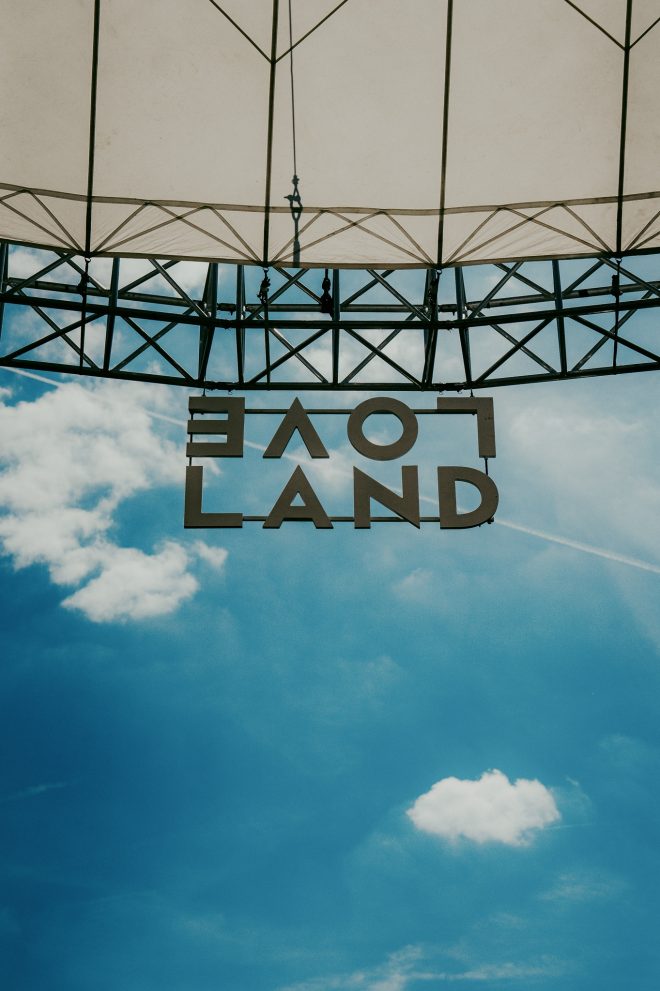
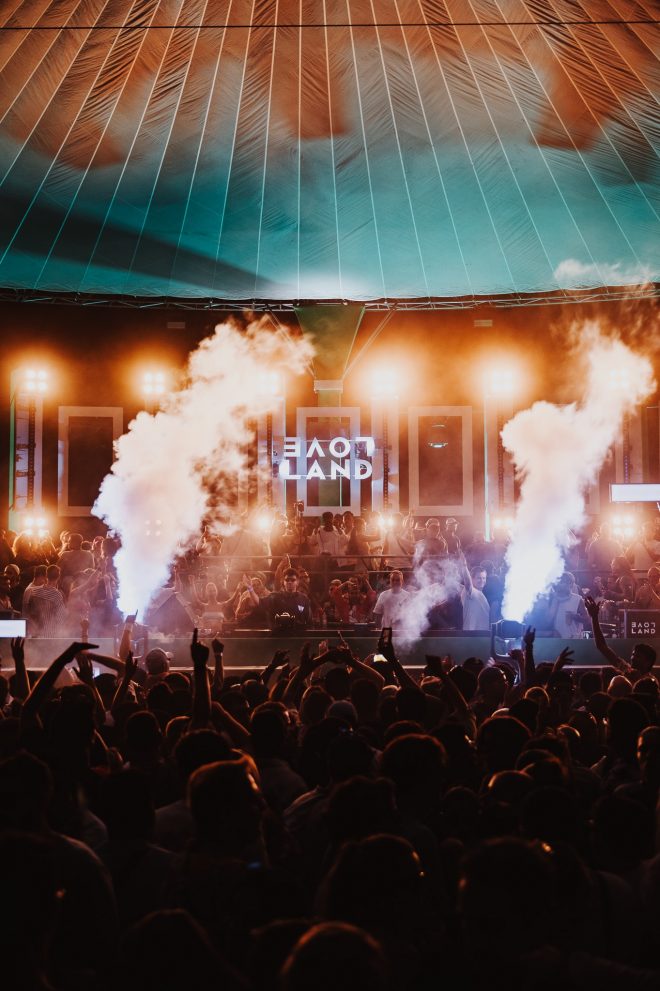
There is something especially relaxed about Loveland. Perhaps it is the setting, perhaps the people, or simply the combination of small details that make the experience feel intimate, free, and particularly warm, even at a large-scale festival.
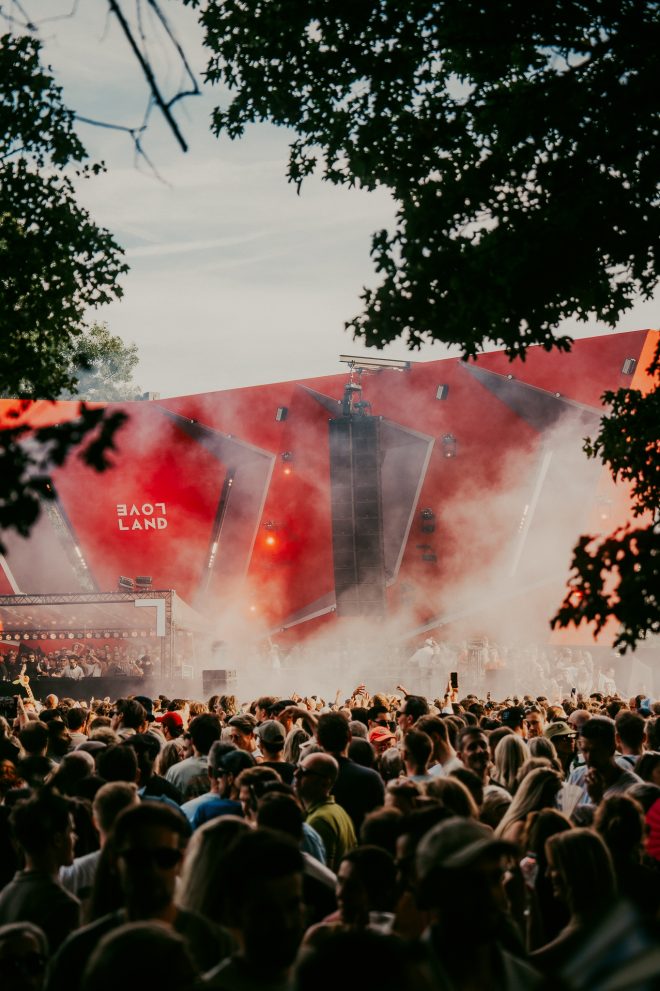
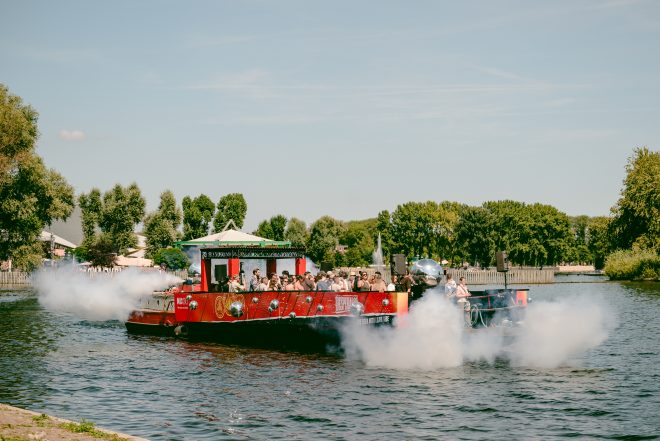
On August 8 and 9, Loveland Festival once again took over Sloterpark, one of the major green spaces in Amsterdam Nieuw-West. The park stretches around the Sloterplas, a vast lake that becomes an essential part of the landscape and of the festival experience itself.
Here, Loveland does not simply seem to be set up on a piece of land: it interacts with it. Stages emerge among trees and green spaces, paths run along the water, and moving from one point to another becomes part of the experience.
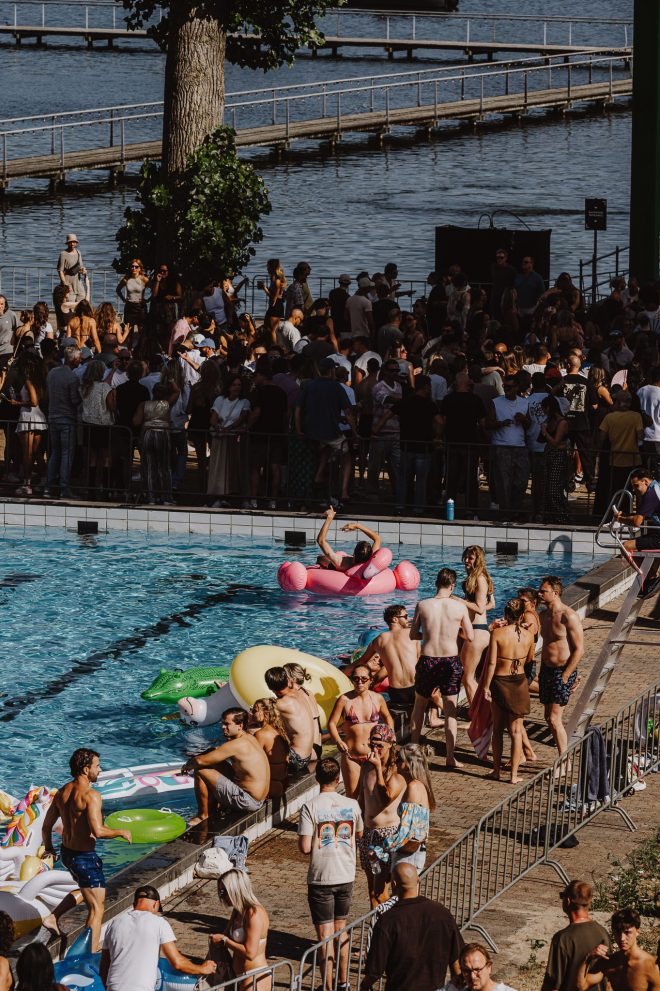
At one moment, you are standing in front of a packed dance floor; a few minutes later, you are walking along the lake, watching people rest, socialize, or take part in one of the activities on the water.
Sloterpark allows Loveland to breathe.
Between the Forest and the Lake
There are festivals that seem to be designed around a single mission: running from one stage to another in an attempt to stick to a timetable. Loveland offers a different pace.
The lake introduces a unique dynamic. Activities on the Sloterplas, the green spaces, and the areas where you can simply sit and watch what is happening around you create moments of pause between one set and the next.
You can dance for hours, step away for a while, walk down to the water, and then return to the music.
Nature does not function merely as a backdrop. It becomes part of the experience and helps create a festival where you do not constantly need to be doing something to feel like you are making the most of the day.
Then there are the small details.
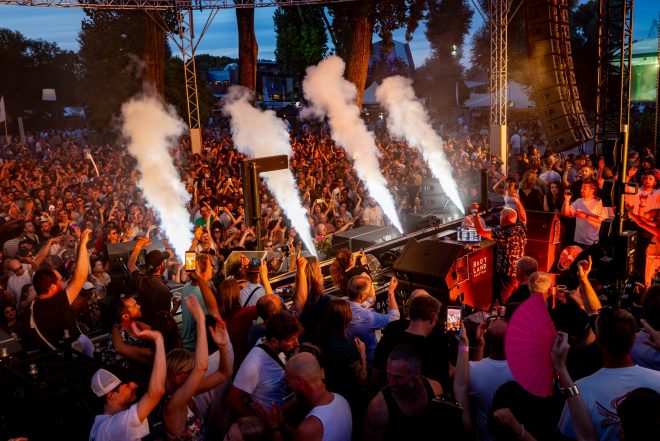
Loveland incorporates decorative elements throughout the park that appear almost unexpectedly as you make your way around. Among them, something as simple as bubbles floating through the paths while hundreds of people move from one stage to another becomes one of those images that stay with you.
It is not necessarily the monumental installations that give the festival its personality. More often, it is these small gestures that make the space feel thoughtfully curated.
Loveland’s Musical Pulse
Of course, one of Loveland’s greatest strengths remains its lineup.
The festival showcases different sides of electronic music across its stages, making every journey through the site feel almost entirely different depending on where you decide to go.
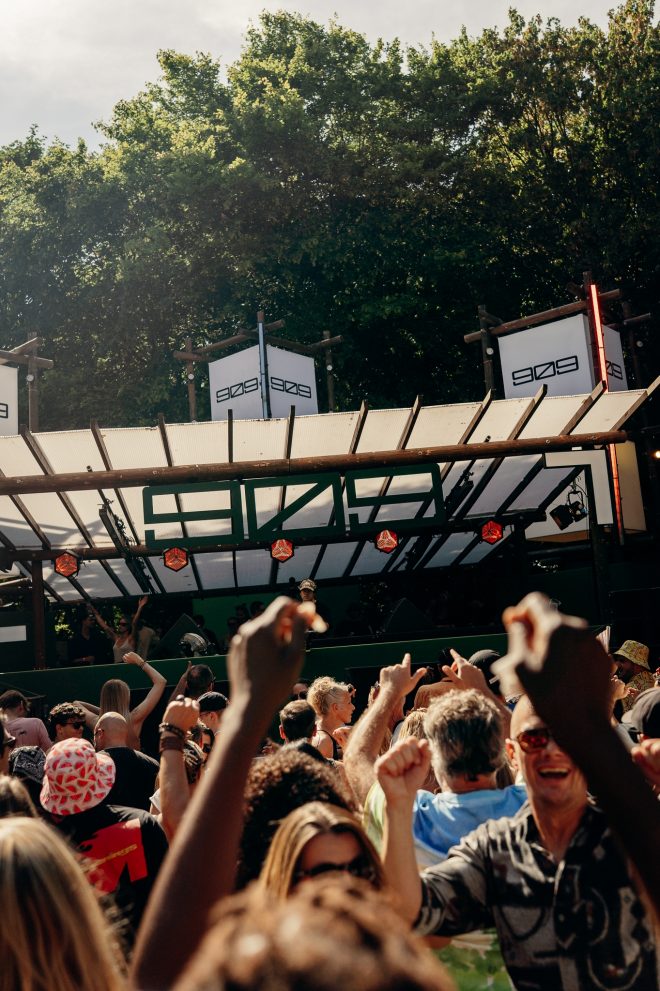
For those looking for the rawest and most powerful techno sounds, the 909 Stage delivered some of the most intense moments of the day.
Rødhåd, Ben Sims, Freddy K, and Daria Kolosova were part of a journey that kept the dance floor moving for hours, while Collabs 3000—the joint project of Chris Liebing and Speedy J—brought two of the genre’s key figures together in the same booth.
But the defining moment came at the end.
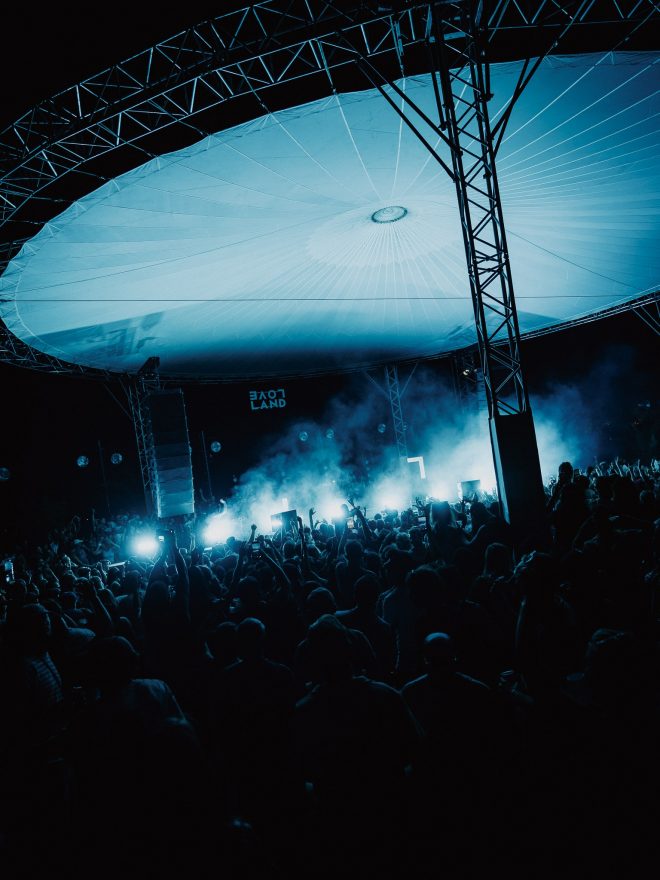
Ben Klock took over the 909 for the final set and delivered one of those closings capable of condensing everything experienced throughout the day. Hypnotic, precise, and powerful, he built a set that kept growing until it completely took over the dance floor.
Surrounded by darkness, the forest, and a crowd that seemed unwilling to stop, Klock ultimately delivered, from this perspective, one of Loveland’s defining moments—and the set that stole the festival.
However, reducing the lineup to techno would mean overlooking a significant part of its offering.
On other stages, Kevin de Vries b2b Enrico Sangiuliano delivered another of the standout encounters of the lineup, while names such as Colyn and a historical figure like Sven Väth expanded the programming’s sonic and generational spectrum.
That contrast is also part of Loveland’s appeal. You can build an entire journey around techno, or abandon your original plan and simply follow whatever happens to be playing at the next stage.
In that sense, the lineup does not function merely as a list of names: it also determines how you move through Sloterpark. Following the music means walking through the forest, following the lake, stopping along the way, and discovering that part of the experience happens precisely between one set and the next.
A Particularly Warm Vibe
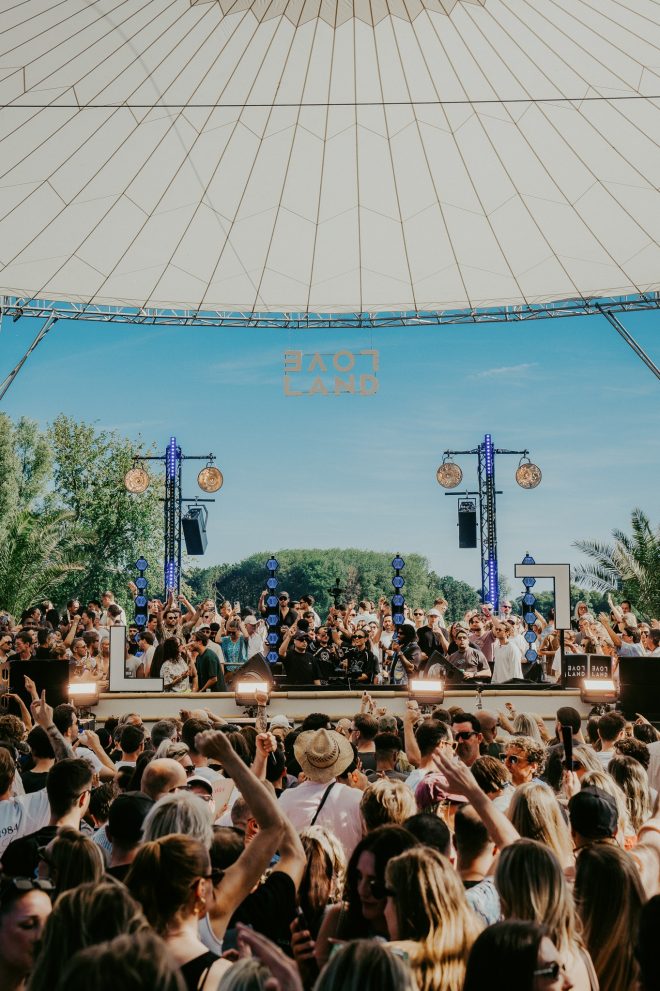
If Loveland’s energy had to be described in one word, it would probably be chill. But after spending several hours walking through the festival, another word comes to mind: loving.
There is a particular warmth in the way people inhabit the festival. They dance, talk, rest, and share the space without the atmosphere losing any of its intensity in front of the stages.
There does not seem to be much urgency to get there first, claim the front row, or be everywhere at once.
And that feeling eventually carries over onto the dance floor.
There is room to dance intensely in front of a DJ booth, but also to sit by the lake, meet up with friends, or simply wander through the park. They are different ways of taking part in the same experience.
A Dance Floor Without an Age Limit
One of the most interesting images at Loveland emerges simply by observing its crowd.
The generational diversity is unmistakable.
There are young attendees, but there is also a notable presence of older festivalgoers who continue to connect with electronic music with complete naturalness. You can even come across families—parents and their adult children—sharing the dance floor and enjoying the same artists together.
The image says a lot about a scene with decades of history.
Many of the names on the lineup have spent decades building their careers, while their audiences have grown alongside them.
Loveland makes that continuity visible.
Here, going out dancing does not seem to have an expiration date. Electronic music is not necessarily perceived as a phase exclusively associated with youth, but as a culture capable of accompanying people through different stages of their lives.
Seeing parents and adult children sharing a festival, or simply different generations dancing in front of the same booth, transforms the dance floor into more than just a party space: it also becomes a meeting point.
A More Accessible Experience
That diversity does not appear only in generational terms.
Throughout the festival, it is also possible to see people in wheelchairs or with different mobility needs taking part in the dance floors and moving around the site.
In a natural and expansive space like Sloterpark, where getting around the festival involves covering long distances, accessibility for people with reduced mobility takes on particular importance.
Beyond using the word “inclusion” as part of a statement, seeing it reflected in the crowd reinforces one of the feelings present throughout Loveland: the possibility of sharing the experience from different realities and perspectives.
Because a culture built around the dance floor also means asking who has access to it.
Another Way of Experiencing Festivals
Perhaps the most interesting thing about Loveland becomes apparent when you look at it as part of something much larger.
The festival reveals something that goes beyond its lineup, its stages, or even Sloterpark itself: the way electronic music is experienced in the Netherlands.
In a country where this culture has been part of the musical and nightlife identity for decades, festivals seem to follow a different logic. It is not simply about seeing the artist of the moment or making it to the front of a stage; there is a much more relaxed way of inhabiting these spaces, moving through them, discovering music, resting by the lake, and returning to the dance floor.
The generational diversity also speaks to that history. People who began attending parties decades ago continue to find a place of their own in these spaces, while new generations become part of a culture that was already there before them.
Perhaps that is one of the great differences when experiencing a festival in the Netherlands: music remains at the center, but it is not the only thing that matters.
The space, the community, the freedom, and the way each person chooses to enjoy it matter too.
Loveland brings all these layers together: a lineup capable of crossing generations and different sides of electronic music; a park transformed into a dance floor; a vast lake around which the festival also unfolds; small details that transform the journey; diverse crowds; and a particularly warm atmosphere.
Loveland is a glimpse into a scene that has not only learned how to organize large-scale festivals, but also how to turn them into a very particular way of experiencing electronic music.
