


LINDS: THE INSTINCT TO FOLLOW
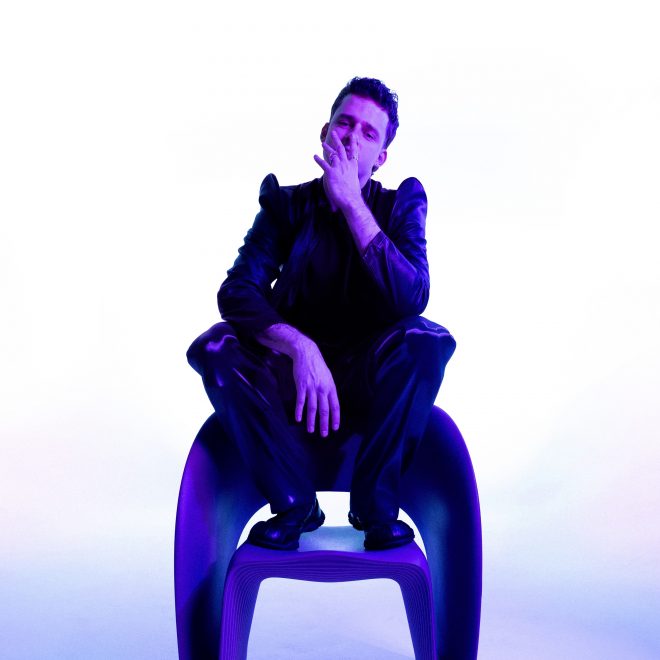
From the guitars of his childhood to the melodic urgency of contemporary trance, LINDS has followed an evolving musical instinct. With ‘Destiny’ landing on A State of Trance and a four-track EP taking shape on TRIBE, he reflects on the experiences that formed him, the freedom of collaboration and making music that stays with people long after the night ends.
Beyond the dancefloor’s physical response, Linds is interested in what remains after the intensity fades. him relationship with music began long before electronic production, shaped by an instrument whose influence still surfaces in unexpected ways.
“My dad was a guitarist in a famous rock band in the ’80s, and he passed that passion on to me. I spent six years playing acoustic guitar and another three playing electric, so that was a big part of my musical background before production.”
The transition from strings to synthesizers did not erase those instincts; electronic production offered another way to explore them. His process still begins with an almost physical relationship to melody, before technical decisions turn it into a finished arrangement.
“When I’m working on a loop, I often find myself humming a melody, then translating it into notes in the piano roll. Even though I’ve moved from guitars to synthesizers, melody remains the foundation of my music.”
That continuity explains why his productions retain a strong melodic identity even as their rhythms become faster and more direct. Musical memory and physical movement meet at the centre of his approach. His earliest experiences with electronic music were rooted in house, which still informs his rhythms. The move towards trance, acid and faster club sounds has been gradual, with each influence settling alongside what came before.
“My musical journey started in house music, and those influences still play a big role in the way I produce today. Even though my sound has evolved towards faster and more energetic styles, the groove and rhythm of house music remain at the core of many of my tracks.”
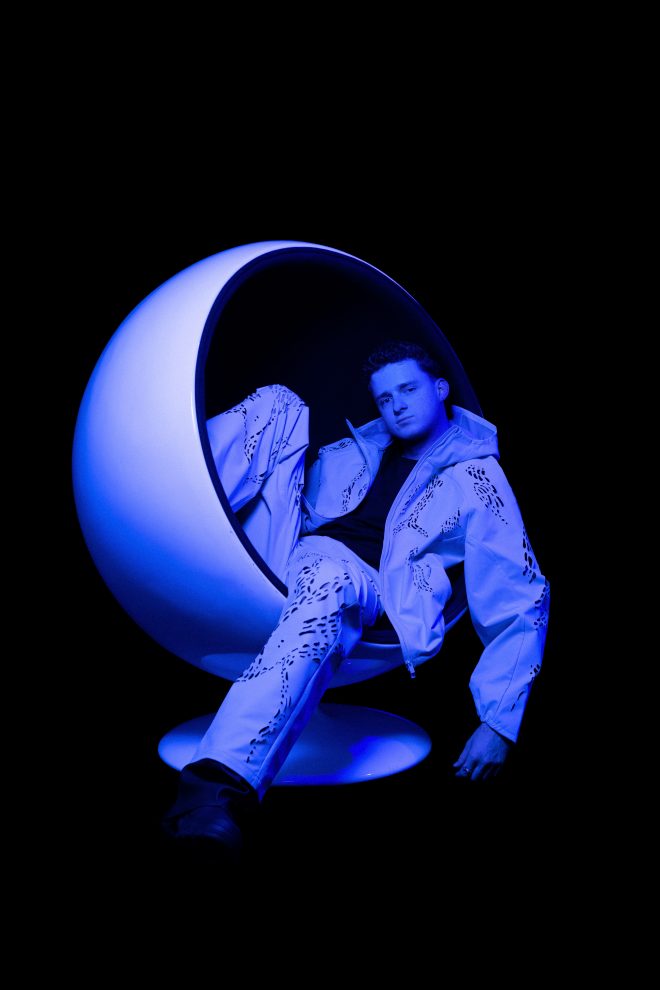
Across European club culture, house, trance and harder rhythmic forms have become increasingly fluid. References once tied to distinct scenes now coexist within the same sets, transformed by tempo and production. For younger audiences, they do not necessarily carry the divisions that once separated them. LINDS belongs to a generation working within that changing landscape, but he does not mistake popularity for creative direction.
“I’m inspired by what’s happening around me, but I’ve never wanted to chase trends for the sake of it. I’ve always felt that I should make music I personally connect with, making tracks that reflect my own taste and what I feel, even as that taste develops over time.”
His position is less about resisting change than deciding what feels natural. That distinction matters in trance, whose renewed visibility has introduced its melodic language to new audiences. Faster tempos and euphoric melodies have created space for new interpretations: some draw on the past, while others place familiar ideas within contemporary rhythmic frameworks. For LINDS, the attraction begins with the directness of the emotional response.
“I think younger listeners are drawn to how easy trance is to connect with and the positive emotions it brings. To me, it feels quite light and uplifting, even when it’s fast. That combination is a big part of its appeal: you have the energy of the tempo, but also melodies that you can immediately connect with.”
Speed and melodic openness are central to his understanding of trance: physically demanding yet light, emotionally accessible even as the production becomes more forceful. he is particularly interested in how older musical ideas persist within this movement.
“I see the current wave as a new chapter in trance. The genre still carries the DNA of its roots, but a new generation is reshaping it through its own experiences and influences. Personally, I’m especially drawn to tracks with an old-school touch.”
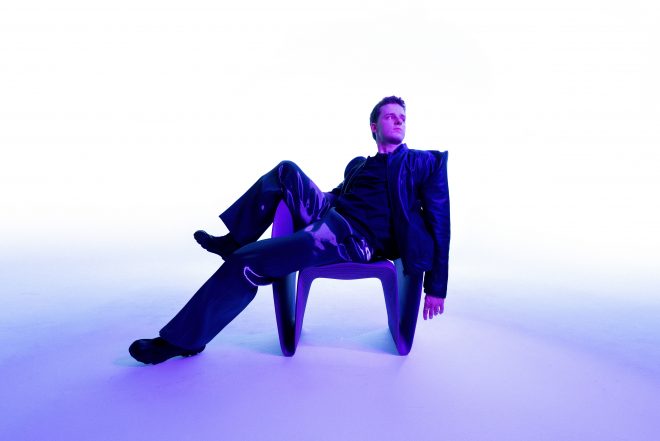
Drawing from the past while making music for contemporary clubs is no contradiction. What matters is what survives the transition: a decades-old melody can retain its emotional weight even when its rhythm and audience change completely. For LINDS, these questions become practical production decisions, often resolved only when the music leaves the studio.
One clear example emerged between Warsaw and Berlin. Five hours on a train produced the first version of ‘Destiny’, built around a melody that remained central to the finished record. That evening, LINDS played the demo at Lokschuppen, taking it directly from private composition to the physical conditions of a club.
“After playing the first version of ‘Destiny’ at Lokschuppen, the only change I made was adding more tension before the drops. Hearing a track on a proper club sound system reveals things you simply can’t notice in the studio, and in this case it showed me exactly what was missing.”
Rather than reconsidering the record’s identity, he adjusted the anticipation before its central moments. The melody stayed intact; the space surrounding it changed.
Club systems expose arrangements differently from studio monitors: low frequencies become physical, transitions fill larger spaces and tension and release feel more immediate. A technically complete track can still reveal structural weaknesses inside a DJ set.
In ‘Destiny’, the test confirmed the original idea while revealing where the arrangement needed more control. LINDS is attentive to the balance between immediate impact and a track’s life beyond the dancefloor.
“For me, a great melody is one that lingers in your mind long after you’ve left the dancefloor. Some of my favourite tracks are the ones I caught myself humming the next day, and that’s exactly the kind of emotional connection I try to create with my own productions.”
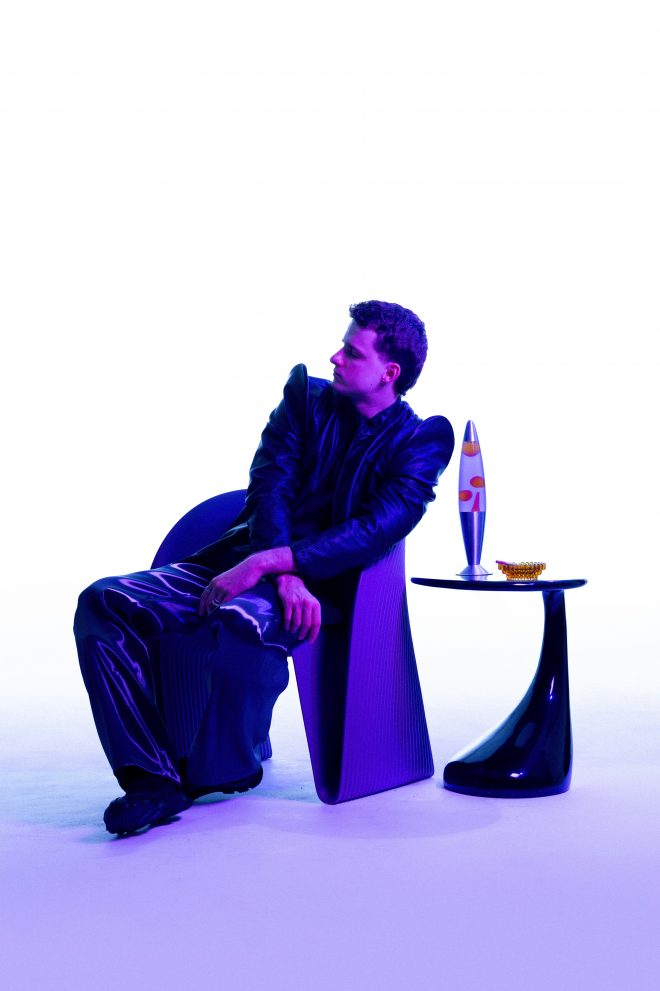
It is a revealing measure of success. A record’s memory is not always tied to its loudest moment or most elaborate detail, but to a phrase simple enough to remain after everything around it fades. That understanding has developed over nearly nine years of producing, as LINDS has grown more confident in his decisions.
Releasing ‘Destiny’ on A State of Trance marks a significant moment. Associated with Armin van Buuren, the label holds an established place in international trance history; for LINDS, its importance is also personal.
“I felt incredibly honoured to release on a label as iconic as A State of Trance. After nearly nine years of producing music, it’s a milestone I’m very proud of. Having ‘Destiny’ released there means a lot, especially because it’s a track I poured so much emotion into. More than anything, it has reassured me that staying true to my taste and creative vision is the right thing to do.”
Confidence need not mean attachment to a fixed method. LINDS continues to seek situations that challenge his ideas, particularly collaborations with producers whose perspectives differ from his own. Working with Funk Tribu, Mika Heggemann, Panteros666 and Trancemaster Krause has exposed him to different approaches, gradually expanding his creative vocabulary.
“I think every collaboration has expanded my perspective as a producer. Working with different artists exposes you to new ideas, workflows, and ways of thinking about music that you might never discover on your own. I enjoy having my ideas challenged and finding a balance between two creative visions. That process often pushes a track into places neither of us would have reached individually.”
That openness is evident in his forthcoming four-track EP on Funk Tribu’s TRIBE, his largest project so far. With its first chapter scheduled for October 23, the release offers more room than a standalone record, allowing him to explore contrasting moods across a connected body of music.
“What makes this EP so special to me is that it allowed me to tell a broader story than a single release ever could. Across the four tracks, I was able to explore different moods and ideas while keeping everything connected by the same vision.”
The project reveals different sides of his musical personality. Melody remains a reference point, but some tracks favour emotional development while others emphasise rhythm and immediate club function.
That variety resists the expectation that every release must reproduce the same qualities. The EP also features Tom Carroll, extending the creative exchange central to his process. And then there is the frog, among the project’s melodic concepts, one track builds its main hook around a sampled amphibian.
“Most of the tracks are built around strong melodic concepts, but one takes a completely different route, with a frog sample becoming the main hook. Hehe.”
The playful detail, within a deeply personal project, reflects his willingness to follow an idea without forcing it into an established identity. Rather than consolidating what LINDS has already achieved, the EP offers a broader picture of his interests as his relationship with production continues to change. That development is unfolding alongside an increasingly demanding schedule of releases and international touring. Forthcoming TRIBE appearances at RSO, Kompass and Garage Klub will bring the music into further club environments.
Frequent releases and international touring have brought his music into regular contact with different audiences, while forthcoming TRIBE appearances at RSO, Kompass and Garage Klub extend that activity into further club environments.
Production and performance form a continuous exchange: private ideas enter public spaces, where their behaviour can be assessed before the next studio session. Yet LINDS does not measure that activity primarily through numbers or career milestones.
“For me, success has never been about numbers or milestones alone. It’s about creating music that people genuinely connect with and remember. What keeps me motivated is the feeling that there’s always room to improve, to push myself creatively, and to make a better record than the last one.”
Travel is another part of that outlook. Different cities offer different musical environments, while unfamiliar audiences provide experiences the studio cannot replicate. For LINDS, those encounters form part of the education of an artist still developing his identity. He wonders where that process might lead over the next five years, but resists defining it by genre or fixed expectations.
“In five years, I hope people see me as an artist with a distinct identity rather than someone confined to a specific genre. The freedom to evolve, experiment, and follow my instincts is something I never want to lose.”
The ambition contains a productive tension: identity depends on continuity, while freedom requires movement beyond familiar territory. LINDS has negotiated that relationship throughout his musical life: from guitars to electronic production, then from house towards trance and faster sounds.
The forthcoming EP offers another test of those boundaries. Its contrasting tracks, collaborations and unexpected details suggest he is less concerned with defining what belongs within his sound. The more interesting question is what he might discover by allowing it to change. For now, the process stays open: another melody, another journey, another unexpected direction. And the instinct to follow it.
