


In conversation with the author of “Un pubblico meraviglioso [A wanderful audience] Andrea Lai
![In conversation with the author of “Un pubblico meraviglioso [A wanderful audience] Andrea Lai](https://mixmagnl.com/assets/uploads/images/_columns2/Agathiani-3.jpg)
A common thread connects turntables set up like antennas, community centers as laboratories of the future, and the whispered phrase “A Wonderful Audience” at the end of the set. That thread took shape in Agatha between 1998 and 2006 at the Brancaleone in Rome. Andrea Lai and the late Riccardo Petitti, two “soundonauts,” fused avant-garde sound with street culture. Now Lai’s book brings that forgotten legacy back to life. In today’s homogenized nightlife, revisiting that era is an act of cultural resistance. I spoke with Andrea to see what remains of that wonder....
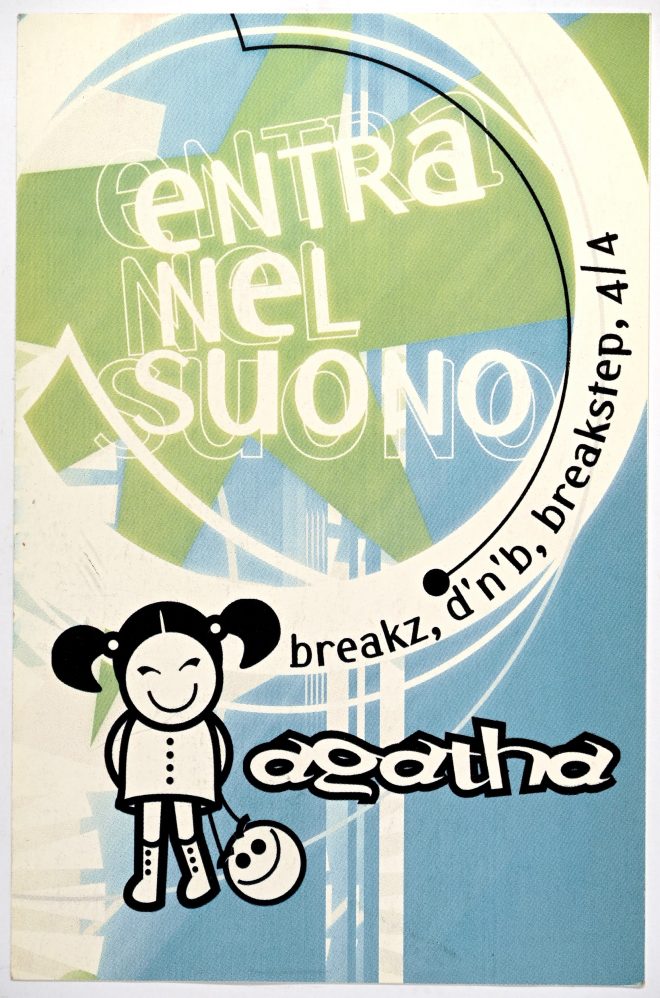
“Third places”, current but already relevant thirty years ago: where did need for Agatha, innovative format far from clubs, originate?
There are two birth moments for Agatha. The first is practical, almost accidental. Agatha is born out of Radio Città Futura, a left wing radio station in the Radio Popolare Italian network, that in those years looked a lot like a London pirate radio with little money and a lot of passion. Throwing a night at a club seemed the most direct way to bring that sound into the city in physical form and scrape together something to pay the bills.
The second birth is an awakening, an artistic determination. We wanted to research rhythms and sounds, hunt for the future and sub frequencies, and to do that we needed a space that wasn't just a container but part of the meaning of the night. Not a commercial club, not a militant social centre in the twentieth-century sense of the word, something in between. A place where sound could be the main political and cultural act of the night. We had no theory, we just needed a space that didn't ask us to choose between rigour and pleasure, between culture and dancing, between commitment and lightness. Agatha is born out of that impossibility of choice. Riccardo Petitti came from years of official clubs he had grown tired of. I felt that the sounds that had taken me (jungle, acid jazz, trip hop, leftfield) had nothing to do with anything that existed until then. The English raves had just been outlawed by the British government, the European ones were at their sunset, reduced to drug dens playing music for white people. The official clubs felt like an old model that needed to be grafted with street culture and with bass that demanded systems built specifically for it. The magazines and pirate radios were talking about a new culture, a different kind of club. When Agatha arrived at Centro Sociale Brancaleone everything aligned with the sound, the people, the records, Rome. The new sounds of the night, amplified by the Branca's system and its posture different from the other social centres, open to experimenting with new forms of celebration, triggered a chemical reaction that was about to infect everything.
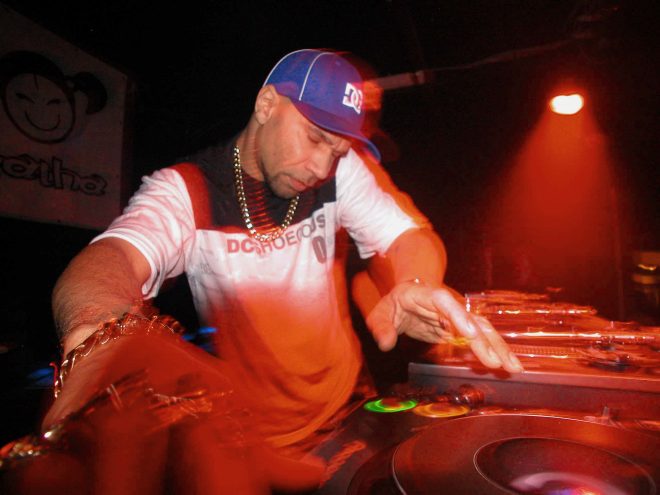
How do ‘soundonauts’ turn creative goofing off into avant-garde at social centres?
We were very serious while in the console. Fun, or at least pleasure, that somewhat erotic element I believe is a constitutive part of the creative act. Curating a party in all its details so that it's unique and up-to-date, and playing the music we had searched for, chased, and imagined, was never separable, for us, from a dose of fun. Creative goofing off isn't the opposite of rigour; it's keeping in mind that we're not that important. For those of us born in Rome, the city itself teaches you that, reminds you on every corner, every cobblestone, every capital, every Renaissance building. The image of the 'soundonaut' appealed to me because it works on the border between the seriousness of listening and the pleasure of play. It transcends the sharp boundary between organiser, player, and dancer. At Brancaleone, at Leoncavallo, and in many other small and large places, legal and illegal, in those early years, the idea came before the economy. The erotic element I mention has to do with desire as the driving force: the desire for the sound itself. The urge to discover a sound, to discover oneself dancing to it, then to let others hear it and see them respond. The dancing body is an infallible gauge. We had a demanding audience precisely because they were moved by the same desire as us; they were there because they had chosen to be. This quality of attention turned every night into a very difficult experiment, done together. DJs make people dance without taking themselves too seriously, but with a precise idea of sound and style. The 'goofing off' is like the valve that regulates the pressure between experimentation, the audience, and success.
How did counter-clubbing become a political act, filling a historical void? And what’s your vision of Italy’s clubbing and counter-clubbing today?
The idea of counter-clubbing came to me while writing an article for il Manifesto a few months ago. I was describing a new generation of DJs and organizers trying to imagine and spread a different way of clubbing, driven not by profit but by the desire to feel good together. The definition didn't exist when Riccardo and I were running Agatha but the practice was already there. Politics is any action generated by a vision of how to be together, of how to share life. A political act is the implementation of a choice, the transformation of an idea into a practice that can produce a different form of reality. At Agatha, the political and cultural vision passed through the dancefloor, through the fair price at the door, through the meticulously curated sound respectful of the music, through bodies, through possible economies, through the refusal to turn the night into a money-making machine. It was political because it nurtured a community different from the one available outside, far from clubs with podium dancers and VIP areas, but also an alternative to free parties held up by drugs. The new generation I see knows that spaces must be conquered and defended, that clubbing can be an act of cultural resistance even before being a format.
In October 2001, you danced against the war at Brancaleone and Leoncavallo with Agatha. How did uncertain streaming turn that night into a public gesture, so repressed today?
I was stuck in New York on September 11th. I was there for the Red Bull Music Academy, which was obviously cancelled due to the attack. During the nine days I waited for planes to fly again, Bush had already declared the War on Terror. Hearing him repeat 'Global War on Terror' on unified American TVs, knowing Blair was with him, made everything more and more absurd. Absurd to wake up in Manhattan with the Towers on fire, and absurd a war on terror that itself produces terror. As soon as I returned to Rome, with Flipper from Leoncavallo, we needed to do something: a political action in the sense I mentioned earlier: a practice that proposed a different idea of reality. We wanted the thousands of people dancing at Agatha and Leoncavallo (an occupied place in Milano) to know that there weren't just TVs peddling a single truth, that one could think something different, and that music could communicate alternative feelings to war and revenge. Those were days when everyone seemed obsessed with the eye for an eye thing. Riccardo, Flipper, and I didn't share that feeling as well as so many people in Italy and Europe. So we invented a maybe naive but immediate name, related to what we were doing: playing turntables. So, Turntables Against the War was born, a night held simultaneously at the Brancaleone in Rome and Leoncavallo in Milan, streamed via an, at the time, unstable ADSL connection. Thousands of people participated; the pioneering streaming was a way to spread a grassroots idea shared with many people across Italy. This kind of self-organisation is the basis of clubbing. Sometimes it seems like without venues there's no dance music, but in reality, the best parties were born from below, from people organising around a desire, as often by the lack of possibilities. That night's stream was frail; it kept glitching and restarting. But the gesture was public and widespread.
At Brancaleone, space shaped identity beyond labels. What do you think is missing today of that ideological freedom to exist on the threshold?
It's hard to compare those years to today; cultural movements belong to the time in which they exist and operate. Squatted places in Italy had begun to change from the early 1990s, with the Pantera protest movement bringing people not born in militant politics into squats, people who went there just to drink, smoke, and be together through music. Back then, the music was hip hop. Then, after the peak of the rave scene, clubbing in squats in the mid-90s was the next step. It was the form of clubbing most respectful of the roots and stylistic elements of dance culture: Jamaican, African, American, and English roots which carried the essence of promiscuity, freedom, conscious substance use, rhythmic research, and countercultures.
What made that movement special wasn't isolationism; it was quite the opposite. There was a desire to share with as many people as possible. Within the movement were journalists pushing new dance music sounds on RAI Radio frequencies (the national Public Italian Radio), DJs working in record distribution or promotion, producers already building their own personal sonic language, organisers with clear and divergent ideas. Together, we sniffed the air and reacted. At night we pushed music; during the day we smuggled words. It was a network fully immersed in society, trying to change it from within. What's missing today from that freedom to be on the threshold without labels? Nothing is missing in terms of possibilities; there are incredible means to hack and use in search of a supranational clubbing alternative. Perhaps what's lacking is the desire to be in the middle, to not choose an affiliation before understanding what one is looking for and feeling. The threshold is an uncomfortable space, and today's culture – including social media culture – rewards defined identity, clear positioning, identity and identicality. But the most interesting things for me lie in the indistinct, in the not-yet-classified, in the different and the utterly normal. Gotta be brave and stand on the threshold.
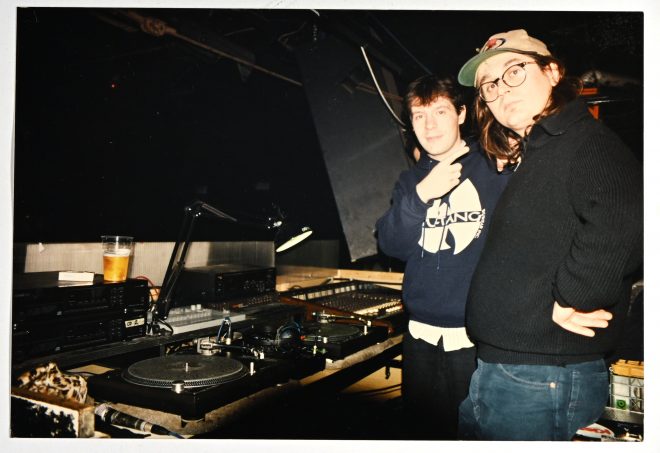
Riccardo Petitti would thank the dancefloor saying ‘A Wonderful Audience’. Reviving him and your friendship through this book – more than a decade on – is that also a political act?
It's a personal act. An attempt to put a story in order, even if I haven't found a sense or an order to it. Riccardo was a foundational encounter for me, he allowed me to legitimise the thinking and reflection on music and culture that until that moment I had been doing alone. Together we wrote a grammar of our own, made of ideas, ideals, ethics and freedom of thought, high and low, irreverent and respectful. We had arrived at having things you can and cannot do behind the decks. For instance, I don't know why, but to this day I never pitch a track beyond +2 on a turntable or a CDJ. It's a rule born in those years. Told like this it sounds like a technical matter. But behind it was a respect for the music and for those who had made it. If you need to pitch a record beyond plus or minus 2 for it to fit in a set, it means that record has no business being there. Sound changes with pitch, it loses dynamics and body, and sound for us was the king of the club. You go to a club to listen to music, without staring at the booth, not to watch the DJ or shoot videos of him. Sound is also a political act. I'm not sure this book is, for me it remains strictly personal, but I hope it gets picked up by those who can draw something from it, ideas and practices. Even examples of what not to do.
Your book arrives at a historical moment of great turmoil for Italy, for social centres, and for gathering spaces in general…
There are people behind movements and spaces – people who think, talk to each other, meet, and act. If recent generations lose the desire for human progress, for a social future, for cultural advancement, I think it's hard to imagine an alternative. Believing in the future has never been easy; the future has been uncertain for generations. Changing things has to do with the urgent and inevitable search for the never-before-seen. The never-before-seen lives in the future; it's the place where there is something no one has thought of yet, some sound no one has ever created. Media and the culture peddled by social networks do nothing but promote the past: 'everything was better before.' But the past is a trap; it's the opposite of action. Moving backwards, returning to a reassuring or idealised past, is the opposite of progressive culture; the return to the local cultures, so trendy these days, is the opposite of supranational culture; the local, the particular, are the opposite of the universal. We are one, mankind. Dressing in 90s brands is the opposite of searching for new codes to identify with. Wearing your parents' clothes is the refusal to surpass them, to go beyond their legacy. It seems to me that the message – also reinforced by the simultaneous, eternal presence of all music ever existed online, always available – is promoting an eternal present where people only have to consume, which eliminates generational dynamics that might want to change things.
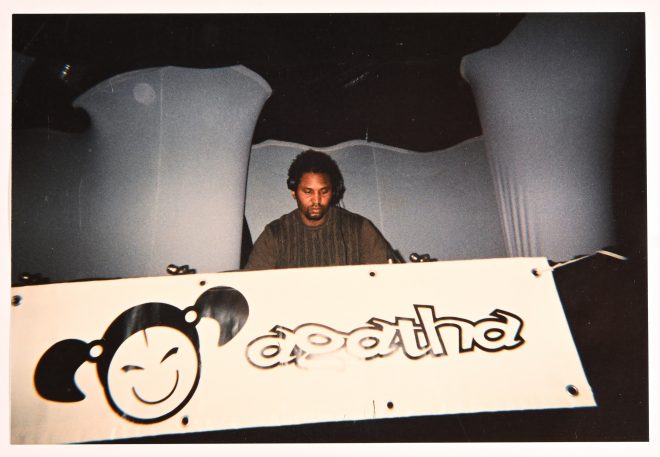
In the ’90s, Agatha injected avant-garde into the system with popular resonance. Now politics co-opts fashion. What changed? Why today’s shadows and grey areas?
Dance music is functional music; it's music to dance to, and dancing isn't always fashionable. Dancing hasn't always been the way youth energies express themselves. For years it was rock, other years punk, or soul, rap, funk, or disco. No music is always present in culture; there are cycles. In some periods, dance has been the fascination of generations, their affirmation; in other periods, it's remained hidden in the underground. When a sound disappears from the media, from the market, and from public opinion, it often regenerates and prepares for a new cycle. Perhaps club culture, after being depleted, weeded out, and exploited, needs rest – to return to the darkness and feed on something else, to gather new instances and find a new generation that sees dance as its own energy, that 'dance and defend' made of new forms and new ideas. The fact that today bars, butcher shops, and piazzas mimic clubbing tells us that clubbing must change. Those forms of appropriation that the mainstream imposes on dance music scream the exhaustion of a culture that must rediscover ideas, ethics, aesthetics, and above all must find dance music not trapped in clichés and trends, but made of personal ideas that find meaning among others, oriented only by urgency and expressive need. Drum and bass, 2-step UK garage, broken beat, dubstep, breakbeats, and many other small ways of writing dance music were born on the threshold between two millennia, at a moment when music production became mass, easy for professionals who until then had struggled enormously to create sounds and grooves. Technology expanded the expressive possibilities, visions of rhythms and sounds never heard before but deeply awaited. Sounds that screamed future for a generation hungry for the future. Perhaps simply, for many people now, there's no need to dance.
Organising an event like Agatha in Italy today feels impossible. What advice for a young Andrea and Riccardo of 2026?
I would tell them to start by listening. First and foremost, to their own desire – unique and different from others – in order to find their own sound, their own style, their own recognisable way of being on the console. Not to build an ego, but to have something precise to bring to others, something that contributes to the building of the present, to generational expression.
And then I'd tell them to listen again, this time outward – towards the world around them, the feelings in the air, and towards people very different from them. DJs are antennas that receive and transmit, giving meaning to the nights and days of those who listen to them. They play records made by other people to compose their own sound. They organise different instances, putting them in order. To do that, they need to be bidirectional. They need to know how to receive before transmitting. Perhaps our time only promotes listening to ourselves, not listening to ourselves among others.
