HEDDA STENBERG
Finding Her Own Frequency
After a summer of firsts, from Ibiza to Burning Man, Hedda Stenberg arrives in Amsterdam with a debut release on Mind Against’s Habitat, a growing vision for her own events and four very different sets ahead at ADE. We caught up with the Berlin-based DJ and producer about finding her sound, building a community around the dancefloor and why the next chapter means taking more risks.
There is a lot happening around Hedda Stenberg right now. This summer alone brought debuts at UNVRS, Akasha and Nomade in Ibiza, a return to Loveland, an intimate appearance on the Turkish coast and four sets at Burning Man. Somewhere between all of it, another part of the project has started moving just as quickly.
Her debut release on Mind Against’s Habitat marks a significant step forward as a producer, while her own curated event at Amsterdam’s Het Sieraad points towards ambitions that stretch beyond her individual DJ career. Now, with ADE approaching and another four shows packed into one of electronic music’s most relentless weeks, Stenberg finds herself at an interesting point: the stages are getting bigger, but her ideas about what she wants to do with them are becoming more personal.
Mixmag caught up with Hedda ahead of ADE to talk about the summer that brought her here, the making of “Breathe”, creating spaces of her own and where she wants to take things next.
Looking back on the summer, what stood out from playing your gigs across Europe? What are the core memories?
This has probably been the best summer of my career so far. I had some very exciting debut gigs in Ibiza: Velum at UNVRS, Akasha and Nomade. Then I got to come back to Loveland, which is always a highlight.
Two other moments really stayed with me. One was a very intimate festival at Bonjuk Bay in Turkey, where I played right under the palm trees by the beach for such a warm and engaging crowd.
The other was returning to Burning Man to play four shows, which was a true dream. I got to play on an art car for the first time, with Waffles and House on the Smile High art car, and then a special b4b set together with LP Giobbi, Julia Sandstorm and Riche at Playground.
How would you describe the sound you’re building for yourself right now, and where do you want to take it from here?
Melodic house mixed with some indie dance is definitely my foundation, and I keep my sets versatile depending on the gig. But what stays consistent is groovy sounds combined with driving basslines. That’s what I’m going for in my own productions too, I want it to fit naturally into my sets.
Going forward, I want to push it further and take more risks: pulling in influences from outside house music, experimenting more in the studio and collaborating with producers who challenge me. I want my music to feel as personal as my sets, so when people hear a track, they know it’s me.
How does it feel to be releasing your debut on Mind Against’s Habitat, and how did that connection come about?
It’s a huge milestone for me. I’ve looked up to Mind Against for a long time, and Habitat has put out so many incredible records, so having my first release there is a real honor.
I really felt “Breathe” could work in their sets, so I was determined to get it to them. I asked one of the agents at my agency who knows them well to help, and after a few attempts they finally listened. They played it at their Habitat show in London, and a while later they came back and asked to include it on Metaflora IV Vol. 2.
I love that Freddie and Alex keep giving new producers a chance. I think it’s exciting for the Habitat community too, getting introduced to new names alongside the artists they already love.
What inspired “Breathe”? Was there something specific you wanted the track to do?
Until then I’d mostly made tracks for opening sets, the kind of music I could play when I had a big opening slot at a festival. With “Breathe,” I wanted to try something for a packed dancefloor, a track that would really work in a club at peak time.
I wanted to create a high-energy track with a big drop, but still with a groovy feel, and I think that’s how the percussive build-up and the mystical vocal that just sneaks in came about. It was a really fun process, because it pushed me towards a much more peak-time sound, and now it’s a track I can play in all kinds of settings.
What does your studio setup look like? Are you more software or hardware based, and how important are the tools themselves to you?
I work in Ableton Live 12 and mostly produce in the box as I travel a lot, so my setup is nothing too complicated. I think you can go really far just by being creative with good sounds and plugins and keeping things clean and intentional.
The final mixing and mastering happens in studios with proper analog equipment. Before that, I test my tracks on as many different sound systems as I can to get the clearest picture, so I arrive at the studio with my to-do list ready.
I’ve just started investing more though, and I recently got a MIDI controller for example. It’s very easy to rent studios in Berlin, and I love sitting in with friends in theirs and getting inspired, but I’d love to build out my own studio further, because I want to experiment more with analog sounds.
You’re taking over Het Sieraad on October 10. Why did that venue feel right for your own curated night, and what can people expect?
Het Sieraad is probably the club in Amsterdam that feels most like home to me. I’ve played there around ten times now, and it’s always such a great experience. The venue is so unique and massive, it has a great sound system, the people who work there are so sweet, and the crowd is really there for the music.
For my party, I wanted to bring in some of my favourite artists who haven’t played there before, so I invited Emanuel Satie and Ivory. Then I wanted to tie it all together with strong local support, which is where Tonco and Arc came in.
To make it extra special, we’re bringing the stage closer to the crowd for a more intimate feeling, and doing it during the day so the space, with its high ceilings, fills with natural light. Most of all, I want to bring together a dancey, happy and curious crowd, and that’s been on my mind the whole time.
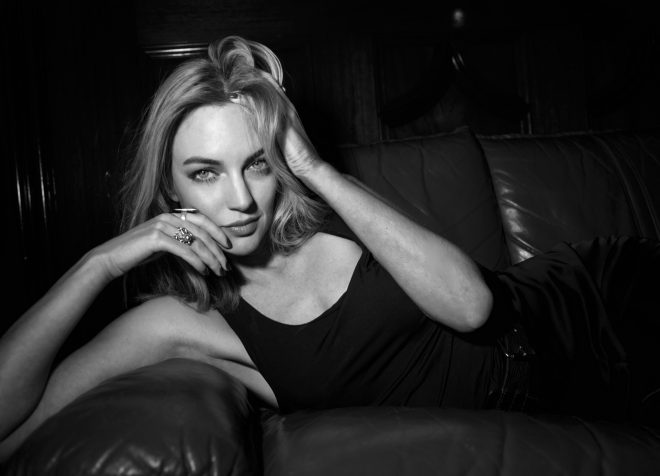
There’s also a bigger concept and community developing around these events. What do you want to build with it?
I’ve always loved connecting people, and I think the best nights happen when people from completely different worlds end up on the same dancefloor. That’s what I want this concept and community to be about. I want it to feel like an escape for a few hours, somewhere people can really be present, open and free, and walk out feeling a bit more inspired. The visuals, the setting and the atmosphere are all part of the experience, and I love thinking about every detail.
Having my own space also means I get to shape the whole musical journey and curate a lineup that fits together. I love pushing new talent, coming up with unexpected b2bs and making collaborations happen, and this gives me the freedom to do all of that.
You have a busy ADE ahead, including KSA at The Other Side, Gardens of Babylon and a show with NTO. How do you play that many sets in one week without them starting to feel like versions of the same thing?
ADE is always a bit of madness, so intense but so much fun. I’m playing four shows again this year, just like last year, so preparation is everything. I come in with my music really well prepared, but I also think a lot about the details and logistics around each show, so I can arrive at every set feeling calm and present, not rushed.
What keeps it fresh is how different every show is. Going from a solo set at KSA’s show at The Other Side to b2bs at Gardens of Babylon and at the NTO show, the venues, crowds and set times are all so different that each set naturally becomes its own thing.
In between, I try to take some time for myself, catch up with friends and go see other artists play. That’s usually where I get recharged and inspired for the next one.
Once ADE is over, what comes next?
Right now I’m fully focused on my show at Het Sieraad and ADE. After that, I’m heading back into the studio, which feels like the perfect way to spend the autumn.
And when it gets way too cold and dark here in Berlin, I’m escaping on a tour outside Europe. I can’t say too much yet, but think of places like Africa and Asia. They’re completely new places for me to play, so I’m really excited.