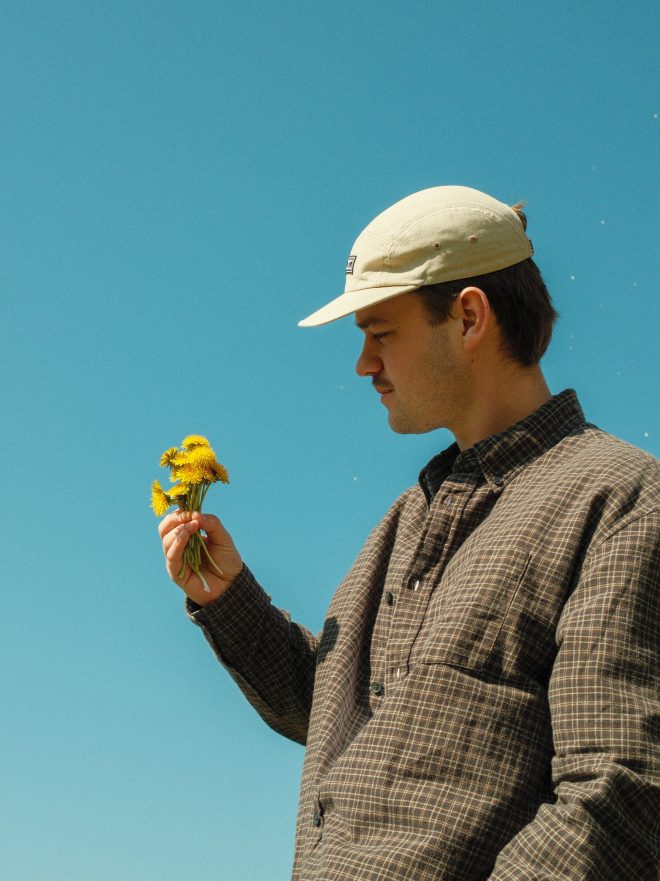


Freddi: move before you think
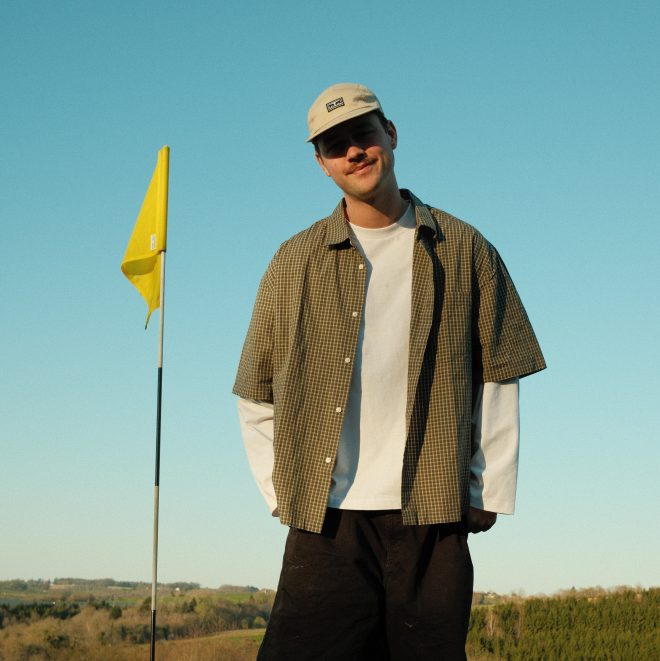
Where the groove lives
“If I had to point to a moment, I was at the Armada studios, maybe 30 minutes before Kara Okay came in for a session. I’d started something the evening before and that morning I found exactly the percussion and toms I was hearing in my head, before we even had any melodics down. When he walked in and heard it, we both knew immediately that was it. That became Say My Name.”
That moment did not create the shift, but it made it visible in a way that could not be ignored. Rhythm had already begun to move to the center of the process, no longer supporting the track but defining its direction from the outset. What changed was the speed of recognition, the clarity with which instinct began to resolve decisions before they could be overworked. From that point on, the work leaned more heavily on what felt immediate, rather than what could be explained.
The change is easier to feel than to describe, but it carries through everything that followed. What once moved through hesitation now arrives faster, more directly, without the same internal negotiation between ideas. There is less distance between instinct and execution, less need to justify a direction before committing to it. What remains is a sound grounded in the body before it reaches language, shaped less by structure and more by movement itself.
“I started out writing and releasing classical piano pieces, where everything revolves around melodics and harmonies. When I got into electronic music, largely through Nils Frahm, I genuinely disliked programming drums. Now, the percussion and bass groove is often one of the first things I aim to nail.”
Time spent inside clubs accelerated that recalibration, forcing a different relationship with energy and structure. Early productions leaned toward dramatic arcs, shaped by the logic of composition rather than the logic of a dancefloor. Over time, that approach began to feel disconnected from what actually worked in a room. The focus shifted toward something more continuous, where momentum holds rather than peaks.
“I had basically no DJ experience when I started producing house, and in my early work everything built toward the break. But after a year and a half of actually playing on actual dancefloors, I realized the groove can also define the moment. Not always the drop, not the breakdown. The pocket, where the groove lives.”
That realization coincided with a growing awareness of repetition across the wider scene. Certain sounds began circulating faster than identity could keep up with them, flattening distinction into familiarity. It was not a rejection of those influences, but a recognition that something more specific was needed. The question became less about what worked and more about what actually belonged within the project.
“There was a moment where I noticed a sound I’d been working on suddenly showing up everywhere. The promos started flooding in and they all had the same energy, same stabs, same structure. DJs were talking about it too, everything was starting to blend together.”
What followed was not a clean break, but a process of refinement shaped by accumulation and removal. Entire phases of work remained unreleased, tracing periods where fascination overtook identity and direction blurred. The distinction between influence and authorship sharpened gradually, becoming easier to recognize in hindsight than in the moment. Progress came less from adding ideas and more from learning what to leave behind.
“I’ve got a whole catalog of unreleased stuff ranging from hardgroove to garage and hard dance, but most of those tracks either lacked character or came from phases where I was hooked on a sound and trying to replicate parts of it rather than adding to it.”
Certain tracks marked that transition more clearly, not because they were designed as statements, but because they allowed something new to emerge without constraint. The absence of expectation created space for risk, and with it, a different kind of clarity around what felt personal. What began as experimentation revealed itself as direction. From that point on, the process carried a different kind of weight.
“The shift was learning to tell the difference between ‘I’m into this’ and ‘this actually sounds like me.’ A track that really marked that was Drum’s Dance, a B-side I did with Benwal. Because it was the B-side we could be more experimental, and that was the first time I really let the heavy percussion lead and put it out into the world.”
THE LOGIC OF MOVEMENT
Rhythm now operates less as a framework and more as a conversation, built through interaction rather than alignment. Layers are introduced not to fill space, but to respond to what is already there, creating movement through tension and release within the groove itself. The process unfolds gradually, allowing relationships between elements to form before locking them into place. What emerges is something fluid, where structure is felt rather than imposed.
“It starts with call and answer. That’s what makes a groove alive, the percussion needs to be having a conversation. I usually work additive, layering percussion and finding where the hits complement each other.”
The foundation is built without a kick at first, leaving space for rhythm to define itself before being anchored. This inversion shifts the entire dynamic of the track, placing groove ahead of impact and forcing each element to earn its place. Only once that internal conversation feels resolved does the rest begin to take shape. The result is a system where movement is established before weight is introduced.
“I have a sample library called West Africa that I keep coming back to for toms and percussion. Once the drums are talking, I grab the Minimoog or FEM BASO and get the bass locked into that same conversation. If the bass and the drums groove together, only then do I find a kick and work it out further.”
The test remains instinctive, almost disarmingly simple in its execution. There is no external metric that replaces the body’s response, no analytical framework that confirms whether something works. If it moves, it works, and that reaction becomes the only validation that matters. Everything else follows from that initial response.
“I’ll have a loop running of the breakdown into the drop, and I know it’s working when I catch myself bumping my head harder and harder until I have to turn up the volume, stand up and just dance in my bedroom studio.”

That same awareness translates directly to the dancefloor, where the response becomes collective rather than individual. The signs are not always immediate, but they become undeniable once they align. Distractions fall away, attention narrows, and the room settles into a shared pulse. It is less about spectacle and more about disappearance.
“I think you can tell when a track truly hits a dancefloor by what disappears. There’s always people talking, navigating through the crowd, checking phones. But when the groove locks in, all of that stops, everyone’s on the same pulse.”
Tension is constructed with similar intent, beginning from the release rather than building toward it blindly. The endpoint defines the journey, and everything leading up to it is shaped in relation to that moment. This reverses the traditional structure, placing intention ahead of progression. It becomes less about escalation and more about control.
“I almost always build the drop first, the hook of the track, that’s the release. Once I know what that feels like, I work backwards to figure out how to earn it.”
Repetition becomes a tool rather than a limitation, narrowing the listener’s focus until anticipation begins to take over. Fragments loop, patterns shorten, and the absence of variation becomes its own form of pressure. The body starts to anticipate resolution before it arrives. That tension, sustained just long enough, defines the impact of what follows.
“A vocal chopped to one phrase on repeat, a small piece of the bass looping, just a fragment of the percussion cycling. The shorter and more repetitive it gets, the more the tension builds because your body starts anticipating the full thing coming back.”
Recent experiments push that idea further into abstraction, using sound itself as a form of perception rather than structure. The Shepard tone operates as a continuous rise, a signal that never fully resolves yet never stops moving. It extends tension beyond arrangement into something more psychological. The effect is subtle, but persistent once it takes hold.
“Lately I’ve been using the Shepard tone as a riser, it’s essentially a tone that sounds like it’s rising forever and never resolves. That’s tension in its purest form.”
INSULA
The Insula EP brings these ideas into a more unified form, consolidating the shift toward sustained movement. Rather than building toward a singular peak, the tracks hold energy in a continuous loop, allowing the groove to define the experience from start to finish. This approach removes the need for dramatic contrast, replacing it with consistency that feels immersive rather than static. The result is less immediate in structure, but more absorbing in effect.
“These tracks weren’t built around one big moment. The intention was to keep the groove steady throughout. There are drums going in almost every section, even in the breaks. The energy doesn’t really spike and dip, it just stays locked in.”
At the center of that approach sits a phrase that functions as both method and philosophy. It simplifies the process without reducing its complexity, offering a way to move forward without overthinking the outcome. The instruction is direct, but its implications run deeper than it first suggests. It reflects a broader shift in how decisions are made.
“Move before you think. Does the music make you move without thinking about it? That’s the check.”
Beyond the studio, the trajectory remains open, shaped as much by personal decisions as creative ones. The balance between uncertainty and clarity continues to define the process, moving between doubt and conviction without fully resolving either. What holds it together is not certainty, but direction. The work continues inside that tension, expanding without forcing resolution.
“A year from now, success for me isn’t just specific gigs, it’s more about whether people have this clearer image of what Freddi is about. That they recognize the sound, that they feel invited to be part of it.”