


Dj Sportschuh: House Music For Techno Lovers.

There is a particular point where house music stops moving through the body in the way you expect. The swing is still there, the vocal still carries its warmth, the bassline still suggests something loose and social, but the body has been forced to reconsider its response. At 140 BPM, the familiar two step starts to disappear. Something more direct takes over.
DJ SPORTSCHUH has built a project inside that change.
"DJ SPORTSCHUH is basically just me as a person. I have always been surrounded by friends who love techno, while I was always the house guy. The project gave me a natural way to connect those two worlds."
That connection began without much ceremony. Before DJ SPORTSCHUH became an identity with its own audience, silva dee had been the outlet through which he spent years digging and playing house music after starting to DJ in 2018. It remains active, representing a more progressive and considered side of his relationship with the genre. DJ SPORTSCHUH appeared because another instinct needed somewhere else to go.
"I never really left that identity behind. It still exists in the background. DJ SPORTSCHUH happened because I discovered a different energy that did not fit silva dee. I wanted complete freedom to experiment without changing what the old project stood for. In the end, both projects come from the same love for house music, but they express two very different sides of it."
The new identity arrived almost accidentally. He had made a speedhouse mix, uploaded it privately and sent it around to friends. Their reaction convinced him to release it publicly, but connecting the experiment to silva dee felt wrong. A different name was needed.
DJ SPORTSCHUH was not devised with future marquees in mind.
"DJ SPORTSCHUH started as a joke. 'Schuh' means 'shoe' in German, so it basically refers to a sports shoe. I am a sports teacher, and the name also fitted the physical energy of the music."

The joke stayed. As the project grew, its unserious name became an unexpectedly useful counterweight to a scene that can occasionally take its own codes very seriously. Not everybody reads it that way.
"Sometimes promoters who do not know me yet assume that I play trashy music because of the name, which honestly annoys me a little. But whenever I mention changing it, people around me strongly disagree. They say the name fits perfectly, and I feel that people have developed a surprisingly deep connection to it."
There is something fitting about that resistance to tidying the project up. DJ SPORTSCHUH works because the contradictions remain visible. House is accelerated without abandoning its softness. Humour sits beside increasingly serious bookings. The physical discipline implied by the name meets music built around release.
The musical idea became clearer through SoundCloud. Discovering Cybersex and billydoes offered early evidence that house could retain its character at tempos normally associated with something harder. From there, experimentation became more deliberate.
"I started experimenting a lot with different speeds and eventually realised that around 140 BPM the music develops a completely different groove. It is not simply the same track played faster. The rhythm suddenly feels different and the whole song gets a new character. The emotion, vocals and playfulness of house are still there, but they shift slightly through the speed."
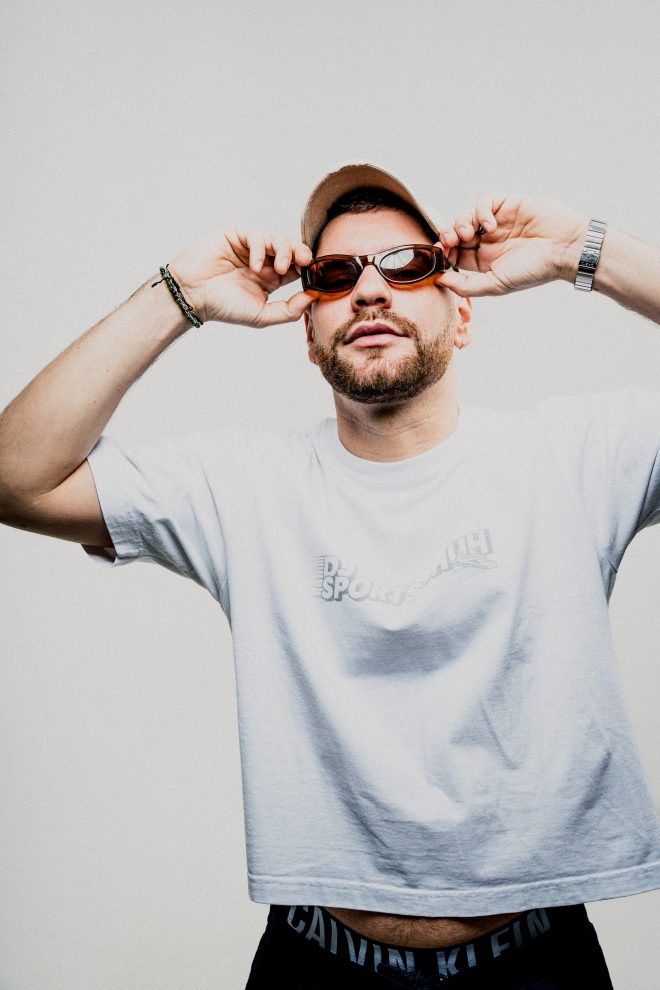
For a while, there was uncertainty about what that acceleration was doing to the records themselves. Playing house at that speed could initially feel almost improper, as though the original material was being pushed beyond the conditions it had been designed for. Eventually, that discomfort became part of the project's logic.
"At first, I sometimes felt like I was mistreating house tracks by playing them so fast. Over time, that changed. I realised I was actually bringing house music closer to people who mainly come from techno. DJ SPORTSCHUH lets me express the playful, energetic and less serious side of myself without losing the emotion and warmth I love about house music. That is still the core of it for me: 'I play house music for techno lovers.'"
Speed, in this context, is not the destination. It is a way of altering familiar material until another physical possibility emerges.
Not every record survives the process. Simpler arrangements tend to leave more room for acceleration. Dense percussion can become abrasive; crowded high frequencies begin fighting for space. A strong kick, a clean hi hat response, a bassline with enough movement and a restrained melodic idea can withstand the pressure without losing the looseness that made the record feel like house in the first place.
DJ SPORTSCHUH also switches Master Tempo off, allowing pitch to rise with speed. The decision changes more than velocity. Records become sharper, sometimes stranger, their original proportions subtly distorted. Vocals require particular judgment. Push an already high voice too far and tension becomes comedy.
But the most consequential transformation happens below the booth.
"At around 125 to 130 BPM, house is often danced with a classic two step movement. At around 140 BPM, that movement is no longer really possible, so the body shifts into a more direct, full body bounce that feels closer to techno."
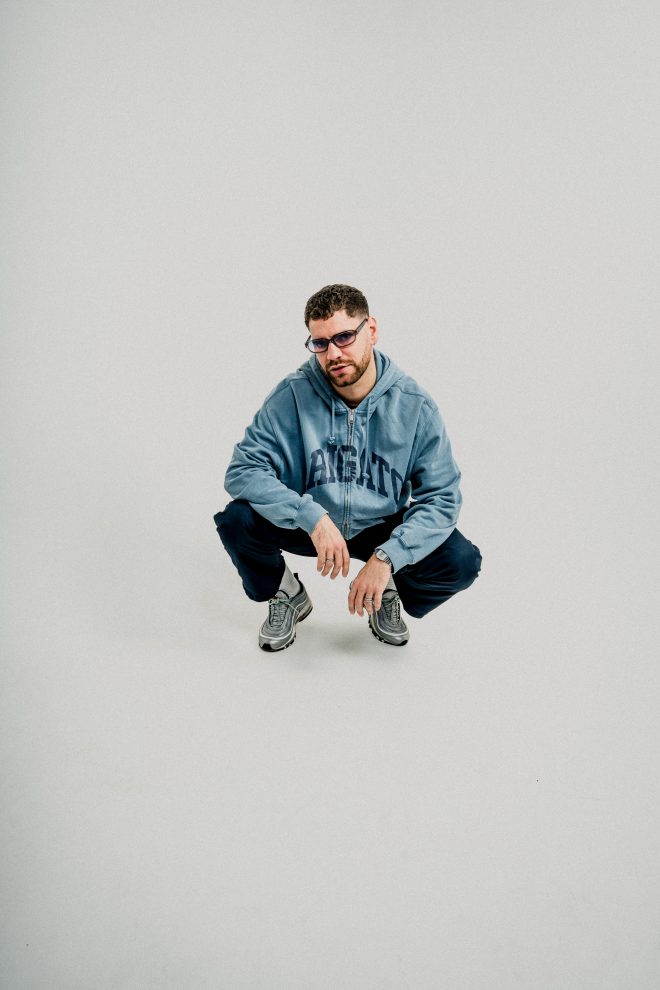
His compact definition of the project becomes less like a slogan when seen from the dancefloor. The connection between house and techno is not simply being argued through selection. It is visible in the way people move.
House retains its social character, its vocals, playfulness and sense of collective release. The additional speed changes the physical grammar around those qualities. Instead of choosing between the two traditions, DJ SPORTSCHUH allows one to interfere with the other.
"House is warm, playful and collective. It is music people celebrate together. Techno has a different physical quality. The groove can make you feel powerful and sexy. Speedhouse brings those two feelings together. People can dance with the intensity and physical movement of techno, while the atmosphere still has the joy, openness and emotion of house music."
The audience for that idea assembled online before it became visible in clubs. More speedhouse mixes followed the original upload and the response kept expanding. The earliest bookings came through Cologne's nonchalancemusic, run by close friends. Paul, who emerged from that circle, eventually became his long term booker.
An outdoor appearance at Bootshaus became an early point of transition.
"I had a good slot, but most people there did not know me yet. After that day, I felt like I was suddenly on the map. More importantly, I had the feeling that I had shown people something new."
The project subsequently moved through rooms and platforms including RSO, Else, Übel & Gefährlich, GOTEC, Artheater, Teletech and Boiler Room. The settings changed, but one of the more revealing tests came considerably further away.
Face2Face took DJ SPORTSCHUH to Medellín and Bogotá alongside Alaba Franch and Wost. He already knew the platform from Germany and had met Kai Gehlen and Adrian Mills early in the project's development. Colombia removed the familiarity surrounding the sound. Many of the people in front of him were encountering speedhouse for the first time.
"Seeing them understand the energy so quickly showed me that the sound does not need much explanation. If the groove works and the emotion translates, people connect with it."
That experience offered one kind of test: whether the idea could travel without the context that had formed around it in Germany. Longer sets have posed another. They ask whether the project can sustain itself once immediacy is no longer enough.
Ninety minutes can present a sound efficiently. An entire night exposes whether there is actually a musical world behind it.
For DJ SPORTSCHUH, that world predates speedhouse. Being the house DJ among techno friends frequently meant taking the opening slot, and empty rooms became part of his education. As silva dee, he would sometimes begin with ambient music before introducing rhythm at all.
"I learned that building a floor from nothing is one of the hardest parts of DJing. For me, it is an art form in itself."
That patience has become increasingly important as DJ SPORTSCHUH has developed. Once speed is available from the beginning, restraint becomes more valuable. Progression cannot depend indefinitely on making everything faster. Pressure has to come from timing, density and knowing when not to force the room forward.
The principle becomes clearest in his extended sets with BNZN, his regular B2B partner and one of his closest musical collaborators. Their relationship has developed outside the booth through constant conversations about production, performance and the mechanics of a set.
"He brings his own perspective to house and speedhouse and has helped me take both my sound and my performances to another level. He is probably the only B2B partner who understands exactly what I am looking for in the DJ SPORTSCHUH sound."
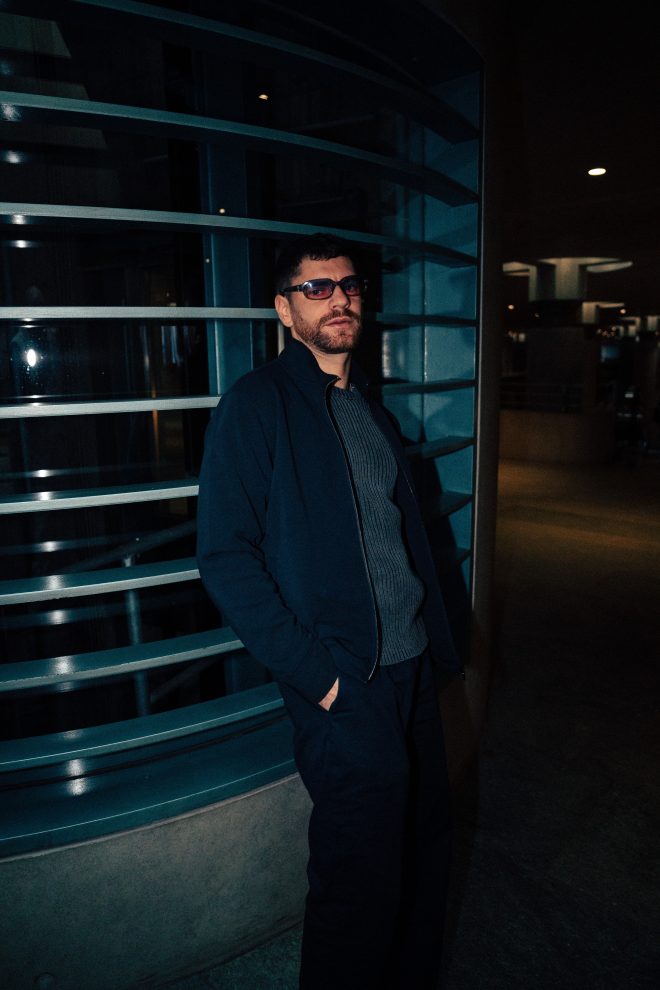
That familiarity removes some of the territorial instinct that can make B2Bs feel like negotiations. Neither has to protect a fixed position. One can disturb the direction established by the other and trust that the set will survive the detour.
An all night session in Berlin made that freedom particularly visible. Familiar faces filled the room, including people who had travelled several hundred kilometres to be there. The significance was not simply the loyalty surrounding the project. The longer format allowed DJ SPORTSCHUH and BNZN to move beyond the version of speedhouse most immediately associated with them.
They could begin around 128 BPM, or lower when necessary, and allow the room to establish itself before increasing the pressure. House comes first. Speed arrives as part of an arc rather than an opening demand.
"With BNZN, we try not to rush anything. We let the room develop with us, which makes the final hours much more powerful. The last half hour always stays a little cheesy when I play. I like ending on something emotional and uplifting and sending people home with a smile."
The detail says something about the project that BPM alone cannot. DJ SPORTSCHUH's sets are not organised around maximum intensity. They depend on contrast. The harder moments gain their force because something lighter, slower or stranger has been allowed to exist beside them.
That interest in controlling the full shape of a night is now moving beyond the booth. Independent parties in Berlin and Cologne have allowed him to develop a recurring all night long series around a deliberately uncomplicated principle.
"The concept is simple: one floor, no unnecessary backstage culture, and the dancefloor stays at the centre of the night. I want everyone to share the same musical journey instead of separating artists and crowd too much."
It is a natural extension of what DJ SPORTSCHUH has been testing through the music. Not the removal of difference, but the removal of unnecessary distance. Between house and techno. Between the DJ and the floor. Between the seriousness required to build a night properly and the absurdity of doing it under a name that translates, more or less, as sports shoe.
There is also a useful tension in taking greater control just as the project moves into larger contexts. Scale tends to produce separation almost automatically: bigger booths, backstage hierarchies, shorter sets, more rigid expectations about when impact should arrive. DJ SPORTSCHUH's own parties move in the opposite direction. They give him time.
"Long term, I want it to become a distinctive and sexy space for house and speedhouse. Even if DJ SPORTSCHUH moves into bigger rooms, I want to preserve what going out is really about for me: dancing with your friends, sharing the same energy and getting lost in the music together."
The project began by speeding up records until they behaved differently. Its next stage appears to be concerned with something slower: learning how much space can exist around that intensity.
At 140 BPM, the old step may no longer work. The instinct behind it remains.
