


Bella Claxton: Built with Cadence
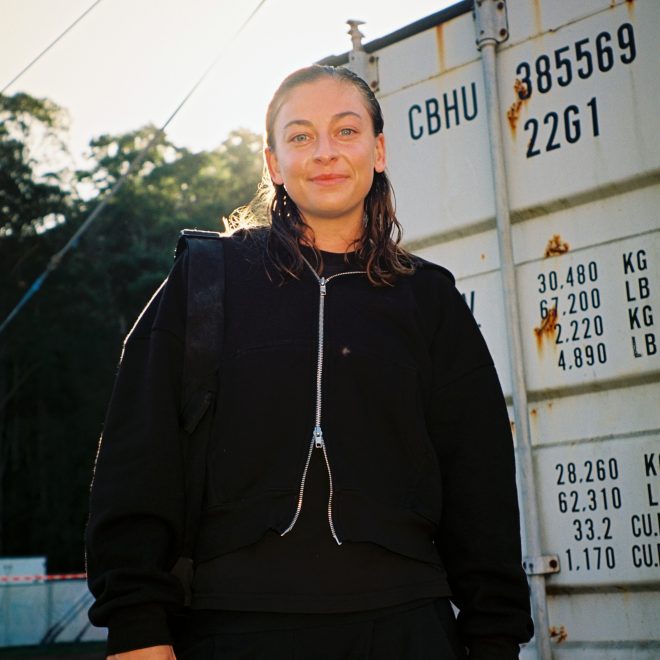
There is a particular clarity that comes when an artist stops racing the room and starts listening to it. Bella Claxton’s recent rise, from Australian festival stages to the tight circuitry of European club culture, has not been defined by spectacle. It has been defined by calibration.
Now based in Amsterdam, Claxton operates between hemispheres, between open-air summer festivals and low-ceilinged winter basements. The distance between those spaces has sharpened her instincts. What has emerged is a DJ and producer increasingly committed to duration, groove, and the long arc of a night.
Learning the Hard Way
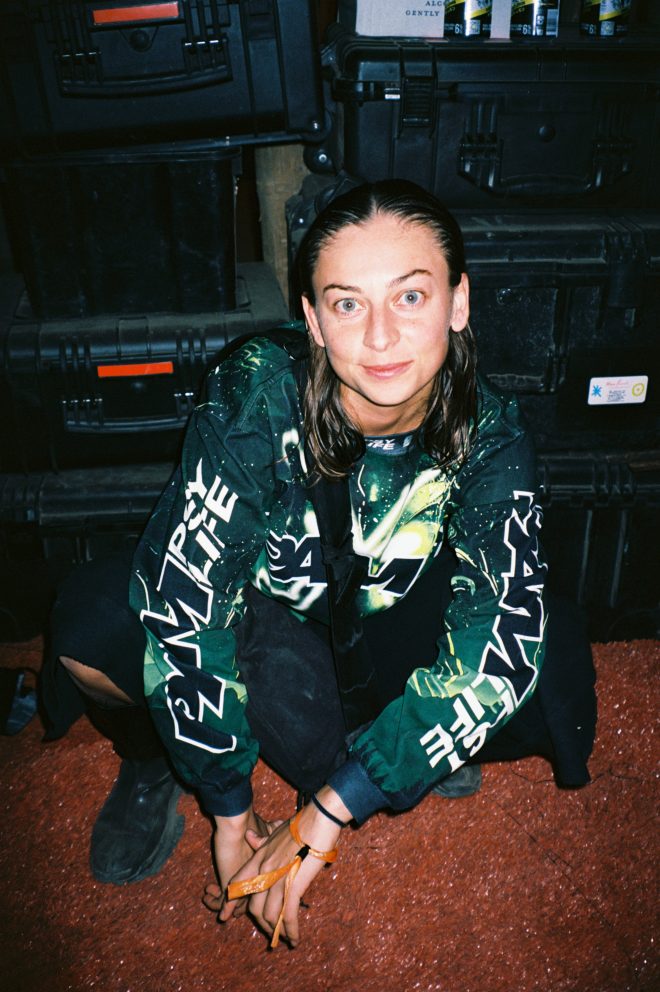
In a landscape where DJs can reach global visibility in a single season, Claxton’s development feels deliberately earned. She does not romanticize the process, but she does value it.
“Not comparing my career to others has been huge. I’ve learned the hard way, through the clubs, building experience properly. Especially now, when DJs can blow up overnight through social media, I’m grateful I’ve had the time to evolve and develop into my own artist. That kind of growth can only come with patience.”
The statement lands without defensiveness. Her growth has come through repetition, through nights that demanded adaptation rather than applause. That patience now anchors her sound. It has insulated her from the volatility of trend cycles and allowed her to build something steadier.
The move from Australia to Europe marked a structural shift. In Melbourne, her sets leaned toward peak-time intensity, often techno-driven and high impact. In Europe, context mattered differently.
“Europe gave me a chance to reset. I was coming from playing more peak-time, techno-leaning sets in Australia, which didn’t always translate to opening or longer club slots. Being a house and hard-house fan from my early DJ years, it allowed me to reconnect with my roots and really clarify where I wanted to take my sound.”
“Post-COVID, being more limited to what was accessible in the time in the Australian scene, I thought I preferred heavier and faster music. But returning to the European club circuit, I fell back in love with the sounds that got me into electronic music in the first place, and my DJing naturally followed that passion.”
“That shift has directly influenced my productions. I’m focused on making clubbier tracks with a ’90s feel, rollers that I can actually use in my own sets.”
The emphasis on rollers is telling. Tracks built to travel, not explode. Designed to function within a mix rather than dominate it.
Structure Before Climax
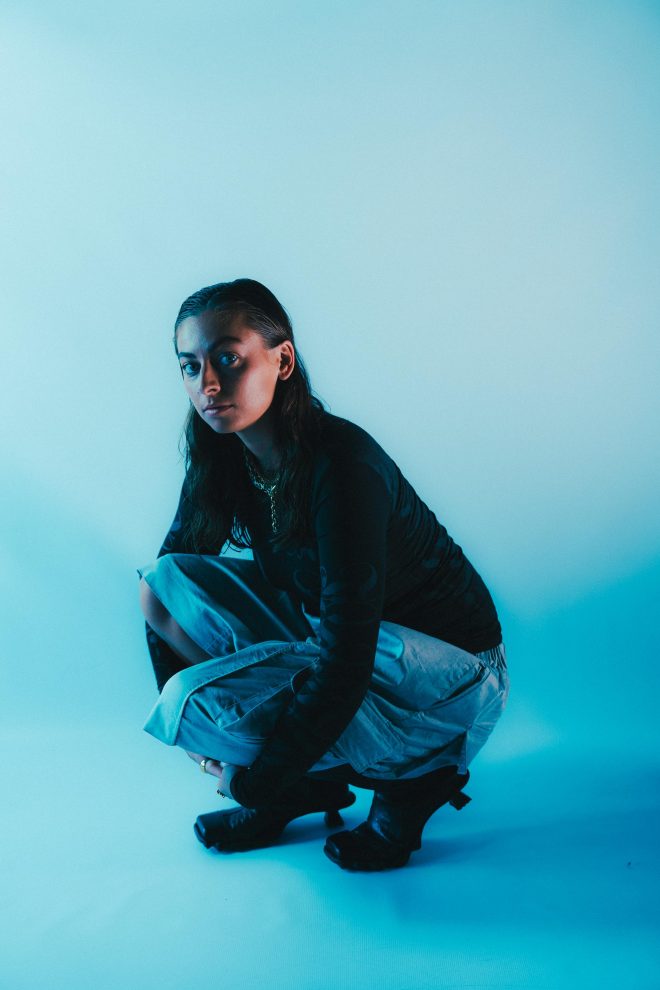
Claxton speaks about DJing in architectural terms. Sets are not sequences of highlights. They are constructions.
“The best moments in a set need patience and structure behind them. Social media pushes DJs toward constant big moments, but real DJing is about laying foundations and building tension properly. When I’m in a club, I love getting locked into rhythm and groove for long stretches, it makes the peaks feel sweeter. Too many breakdowns and builds can actually drain a crowd and have the opposite intended effect.”
This philosophy positions groove as the central mechanism. Energy is accumulated, not scattered. Peaks are earned, not inserted.
The name of her label is not metaphorical. It is literal.
“Cadence literally refers to steps per minute. The idea came to me after a night in Berlin where a friend and I both clocked 100,000 steps dancing. The label is inspired by that feeling, music that keeps your body moving over long periods of time. When music is constantly grooving and has momentum, you can really enjoy a full club night. I don’t think clubbing should be a quick in and out, it should be experienced over a long period of time, and music with a constant cadence is what sustains that.”
The anecdote captures her priorities. Movement as metric. Endurance as value. Cadence is less about branding than about physiology. It asks what kind of music allows a room to keep going.
Entering the European club circuit as an outsider has given Bella Claxton a vantage point she is careful not to romanticize. The continent’s density of festivals, labels, and club institutions can be overwhelming, but for her it has functioned more as a field of study than a blueprint to copy.
“What I’ve adopted is the openness of the European scene,” she says. “The wider range of artists, sounds, and festivals, and the way new music is discovered in unique environments, whether that’s a beach at Kala Festival or at NachtDigital or Dekmantel Selectors.” What stands out to her is not simply scale, but diversity. The ability for a single circuit to hold contrasting aesthetics without forcing uniformity. She also highlights the social fabric behind it. “I’ve also been inspired by how supportive the community is, especially seeing friends lift each other up.”
At the same time, she is intentional about preserving her own coordinates. “What I haven’t adopted is being fully absorbed by it,” she notes. The regular return to Australia is less a retreat and more a recalibration. “Going back to Australia lets me recalibrate and gives me space, both creatively and physically. It allows my sound to retain a sense of Australian summer, rather than being shaped entirely by the European winter club circuit.”
That movement between hemispheres has become part of her method. Exposure without assimilation. Influence without dilution. Her sound carries traces of both contexts, yet remains anchored in a sensibility that predates either.
Pressure, Ambition, and Perspective
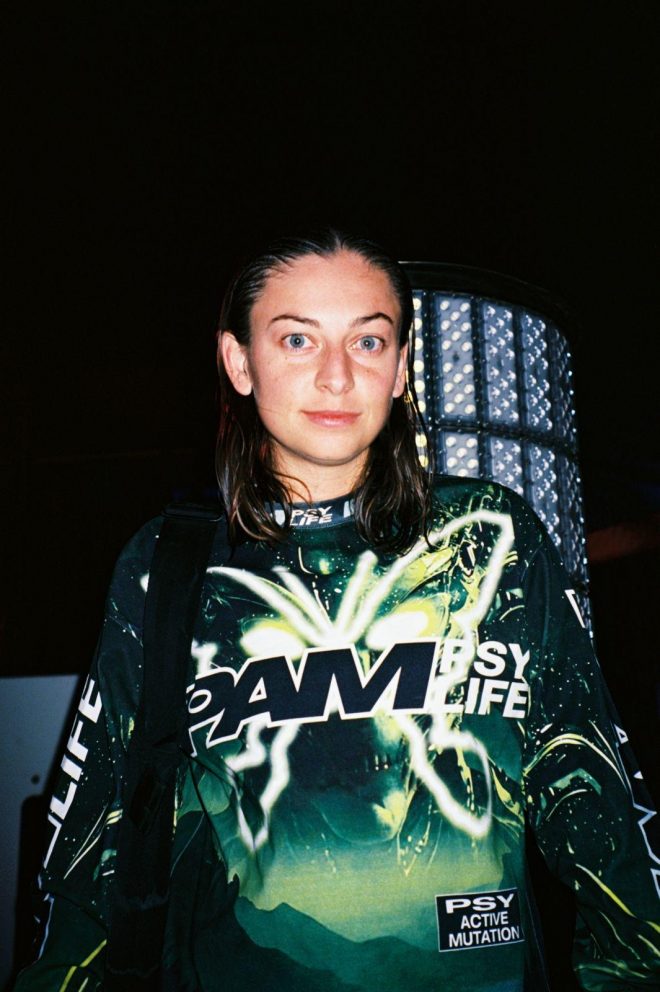
As Bella Claxton’s profile expands, so does the intensity of the spotlight surrounding her. The trajectory from club regular to major festival billing inevitably alters the stakes. She is aware of the shift and does not downplay it. For Claxton, DJing has never been a side pursuit; it has been central to her life. Seeing years of work translate into tangible milestones has sharpened her focus rather than softened it. What once felt aspirational now feels concrete. Dream slots have become lived experiences, and that reality has reinforced her commitment to the craft.
Her recent return from an Australian tour, which included prominent festival appearances, has only amplified that sense of momentum. There is excitement in her voice when she speaks about what lies ahead, but it is measured. Growth, in her framing, is not a finish line but an invitation to push further.
Increased scale, however, carries increased expectation. Larger stages bring broader audiences and louder external opinions. Claxton recognizes the pressure that accompanies higher visibility, particularly in a climate shaped by constant digital commentary. Yet she resists being governed by it. Gratitude remains her anchor. The fact that DJing has evolved into a career still registers as something slightly surreal.
Her perspective is pointed. In Australia especially, she notes, the volume of online discourse can intensify scrutiny. Against that backdrop, she offers a simple counterweight: music is an art form, not a scoreboard. In an industry increasingly driven by metrics, rankings, and visible numbers, her insistence on treating it as something to be experienced rather than measured reads as both pragmatic and quietly defiant.
“I hope the music I’m playing and releasing feels timeless. Some of my favourite records are from the ’90s and still sound just as powerful today. That kind of longevity comes from music being made to be felt, not just consumed. It’s tempting for producers to focus on big bangers with huge moments, but that’s only a small part of a DJ set. I hope Cadence becomes a home for the art form of the roller.”
Claxton’s ambitions for Cadence are both technical and deeply personal. She speaks about the label with the precision of a DJ who understands the mechanics of a mix and the instincts of a selector who thinks in decades rather than seasons. For her, longevity is not accidental. It is engineered.
With Cadence, she is focused on releases that can endure. Records that integrate effortlessly into DJ sets, tracks built with clear structure, careful mixing and mastering, and a sense of balance that allows them to breathe in a club environment. The benchmark is not hype, but durability. Music that feels as relevant in ten years as it does in its first month.
In an industry shaped by rapid cycles and short attention spans, Claxton’s approach is notably steady. Her sets are constructed to evolve rather than erupt. Her productions are designed to move through a room, not dominate it. Cadence, as a platform, reflects that philosophy. At its core is a simple belief: if the groove is strong enough to sustain the floor, everything else aligns around it.
