


AKORIZ: THE HUMAN INSTINCT BEHIND THE MACHINERY

Between the precision of the studio and the unpredictability of the dancefloor, Akoriz reflects on techno’s physical language, the culture evolving around it and his determination to keep music at the centre of the experience.
The kick comes first, but one sound is rarely enough. In Akoriz’s studio, the low end emerges through layers, adjustments and hours of close listening. He separates frequencies, balances elements and refines the relationship between kick and bass until the movement feels right. The process is meticulous, yet the final judgement has little to do with technical measurements.
“I love building kicks and basses from scratch, using up to five or six layers for the kick and a couple for the bass. Balance is key: every element must sit in the right place, stay in key and be properly EQ’d, levelled and saturated. I use only a few carefully chosen plugins. After working for hours, I step away to rest my ears. A couple of hours later, I listen again at low volume with fresh ears. If it immediately makes me want to turn it up and dance, I know I’ve done a good job.”
That final test is revealing. After hours spent controlling individual elements, Akoriz steps back and listens for the instinctive response he hopes to provoke on the dancefloor. The work may be technical; the result must be physical.
This devotion to process shapes his relationship with technology. Electronic music has always evolved alongside new equipment, but the rapid growth of software and artificial intelligence has raised fresh questions about authorship. Akoriz embraces digital tools while remaining committed to a studio where the artist’s hands shape the composition.
“Technology is a great support, but it shouldn’t replace the human touch. While many are moving towards laptops and AI, I continue to invest in my hardware studio. I love composing melodies on keyboards and expressing what I feel in the moment. I use AI only to process vocal samples. To me, music must have a soul: a flat, manufactured hit lasts a couple of months and disappears, while a classic such as Jeff Mills’ ‘The Bells’ still drives clubs wild because it conveys authentic emotion.”

By invoking Jeff Mills, Akoriz places the conversation within techno’s longer history. “The Bells” has endured successive shifts in production technology and club aesthetics without losing its command of a room. Its staying power embodies what he wants to protect as the creation and distribution of electronic music evolve.
Beyond the studio, sound becomes less predictable.
From closing the Club Room at Hï Ibiza and performing at Printworks to playing clubs across Asia and festival stages, Akoriz has faced audiences with distinct expectations and relationships to techno. Before choosing a direction, he studies the room.
“Before getting behind the decks, I look people in the eyes and watch how they move. They come to clubs to forget stress and unwind. A visceral, almost spiritual connection forms between me and the dancefloor, an aura beyond science. It’s like coming home in the evening: you don’t immediately start at full speed; you take a moment to relax before picking up the pace. I guide the crowd in the same way, sensing whether they need more energy or a gradual transition.”
Rather than arriving with an intensity to impose, he begins each set by observing. The pace grows from the people in front of him, and its direction shifts with their response.
That instinct leaves little room for predetermined tracklists. Preparation matters, but Akoriz arrives with possibilities rather than a fixed sequence.
“I hate rigid tracklists; I love improvising and feeling the room. Of course, I consider the context before a set: Hï Ibiza at the height of summer is completely different from Suicide Circus in Berlin in winter or a daytime festival in April. I prepare my folders, but the crowd decides where we go. On the dancefloor, we become one. Over the years, I’ve produced what I felt inside, following my mood rather than trends and moving between peak-time techno, hardgroove, hard techno and schranz. That allows me to adapt without compromising my identity.”

These shifts reveal an artist unwilling to confine himself to one interpretation of techno. His continuity lies not in tempo or production conventions but in the freedom to follow a musical impulse.
Hardware brings the same freedom to his performances, allowing him to reshape tracks in the moment.
With delays, reverbs and sampling, Akoriz alters arrangements in real time, especially when playing his own productions. Familiar passages become openings for unexpected turns rather than replicas of the recorded version.
“I love using delays, reverbs and the Pioneer sampler during transitions, especially on my own tracks. They often feature long breaks, dark pads and intense atmospheres. Because much of the crowd already knows them, adding effects or rhythmic elements live creates a unique suspense. It turns passive listening into an exclusive, three-dimensional experience that headphones cannot reproduce.”
Audiences may know a track long before hearing it in a club, but live manipulation restores uncertainty. They recognise the material without knowing where Akoriz will take it next.
His belief in direct experience now reaches beyond productions and DJ sets.
In Rome, Akoriz founded Selective, a daytime event series staged in intimate spaces beyond the conventional nightclub. By bringing artists and audiences closer, it creates new conditions for interaction.
“My goal is to keep growing as an artist and expressing myself through new music, maintaining a contemporary sound without losing my identity. Beyond clubs and festivals, I created Selective in Rome: a daytime format in intimate spaces, born from my need to reconnect closely with people. I want to expand the concept and take it abroad while continuing to tour my music and strengthen my bond with Artcore.”

Selective changes the scale of his work. Smaller daytime gatherings offer an alternative to the intensity and anonymity of larger clubs, extending his interest in the bond between music and those experiencing it.
That bond also informs his view of techno’s increasingly visual culture.
Masks, choreography, elaborate staging and recognisable personas now occupy a prominent place in the scene. Social media amplifies these visual identities, allowing brief performance clips to circulate independently of the music.
Akoriz does not reject this shift. Performance can accommodate many forms of expression, he believes, provided the visuals support rather than compete with the music.
“Today, image and showmanship are part of the overall experience, and everyone should be free to express themselves through masks, visuals or anything else. For me, the limit is simple: music must remain at the centre. Visual elements can enrich a performance, but they should never overshadow the sound. I grew up with pure club culture, so my goal behind the decks will always be to let the music speak first.”
The dancefloor has undergone its own transformation.
Phones rise almost automatically at recognisable moments, especially as a track nears its drop. Recording now shapes how club experiences are remembered and shared, placing another layer between the event and its audience.
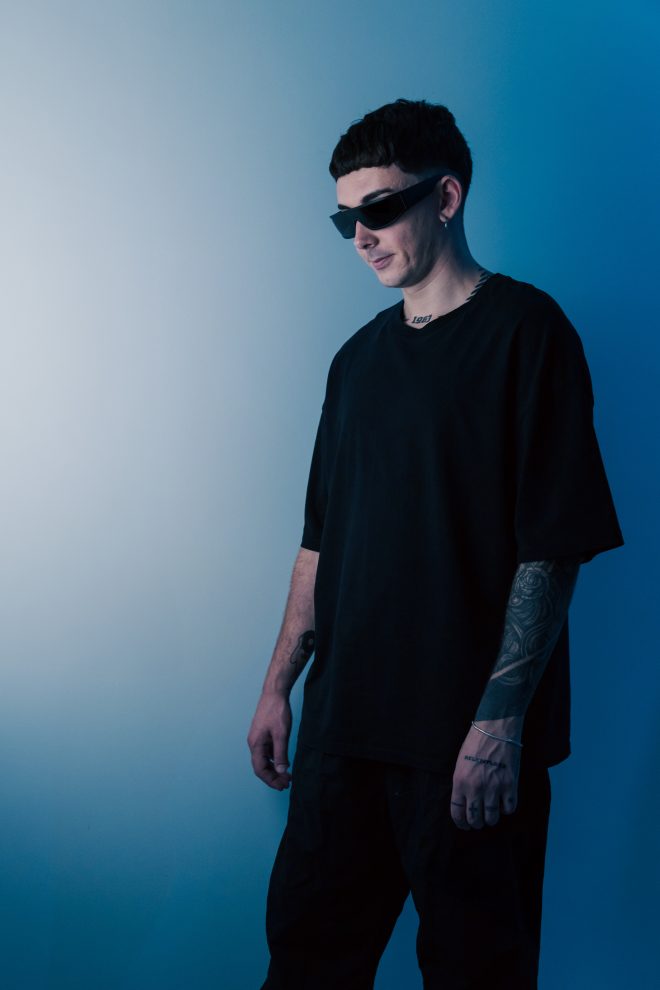
Akoriz does not dismiss younger audiences for filming. His concern begins when preserving the moment replaces living it.
“Going to a club is like taking a trip: it’s natural to bring home a memory, an emotion or a short video. But when visiting a city of art, you don’t spend the entire day filming monuments instead of experiencing them. A video should bring back the goosebumps and magic of a track, not collect likes on social media. The essence of clubbing is surrendering to the present and the raw energy shared on the dancefloor.”
He neither places himself outside the contemporary scene nor dismisses its changes. Instead, he navigates them without losing sight of the club culture that first shaped his relationship with music.
As he develops new productions, expands Selective and deepens his connection with Artcore, Akoriz continues testing how those values can take new forms.
The setting may shift, from hardware-filled studios to festival stages and intimate daytime gatherings, but his focus remains on what happens when music enters a room, preparation gives way to instinct and every decision becomes immediate.
For an artist who spends hours refining the exact weight of a kick, the decisive moment still depends on what cannot be programmed.
