


A.N.I. Breaking The Boundaries
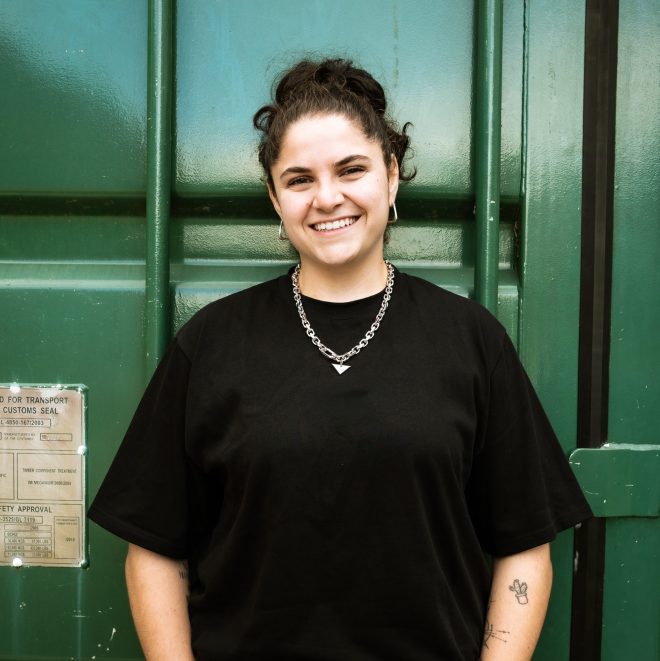
Classical piano, perfect pitch and Audio Engineering might seem like an unusually formal foundation for an artist working at the faster edges of contemporary electronic music. For Berlin-born DJ and producer A.N.I., though, that background is less about demonstrating musicianship than changing how she hears the world around her. A track is not techno, trance, psytrance or hardstyle first. Before those definitions arrive, she hears notes, frequencies, rhythms, harmonies and fragments that might belong somewhere else entirely.
“That background gives me a lot of advantages, both in the studio and behind the decks. Perfect pitch means I can immediately recognize keys and individual notes within a track, so I instinctively hear which elements will work together or clash. Classical piano gave me an intuitive understanding of harmony, rhythm and phrasing, while Audio Engineering made me more conscious of frequencies, dynamics and how sounds interact. That combination is a big reason why I enjoy mixing genres. I don’t necessarily hear a track as techno or psytrance. I hear its individual musical elements and how they might connect with something completely different. A lot of that happens instinctively now. I’m not thinking about theory while I play. I just hear when something feels right.”
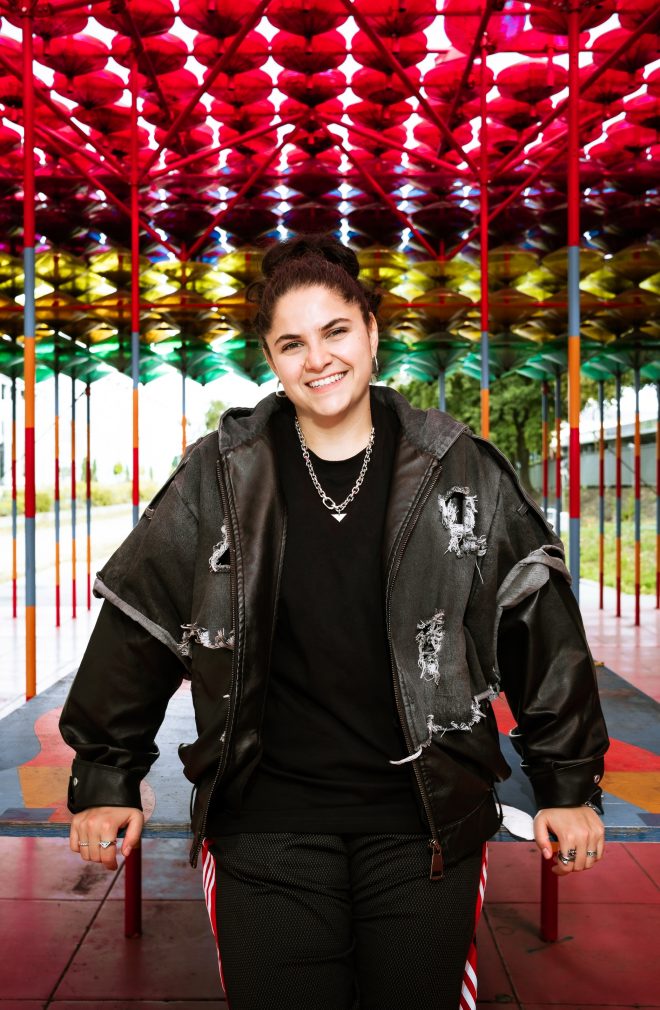
That refusal to treat genre as a fixed boundary started before A.N.I. fully understood those boundaries existed. When she began DJing, everything she liked lived together in one playlist, from hard techno and trance to psytrance, hardstyle and rock. Faced with her first gig, the obvious question arrived: which genre was she supposed to play? Her answer was to reject the question.
“My approach partly came from not understanding genre boundaries when I first started DJing. I had one playlist with everything I loved, including hard techno, trance, psytrance, hardstyle, rock and more. Before my first gig, I wondered which genre I was supposed to play. Eventually I thought, why not all of them? Since then, I’ve focused more on finding connections between tracks than labels. That could be a rhythm, synth, vocal, harmony or simply a similar energy. Two tracks can come from completely different worlds but still have something that connects them.”
That freedom doesn’t mean randomness. A.N.I. likes taking a set somewhere unexpected, but those moments have to be earned. “I love unexpected moments, but they shouldn’t feel random. You have to build towards them. If everything is surprising all the time, nothing is surprising anymore. That unpredictability is a huge part of what makes DJing exciting for me.”
It also explains why her sets can resemble live arrangements rather than straightforward sequences of records. Vocals, drums, melodies, loops and synths can be separated from their original context and rebuilt around something else. For a few seconds on a dancefloor, those records can become music that exists nowhere else.
“I wouldn’t say DJing and producing are the same thing, because I’m still working with existing material. But there are moments in my sets that feel more like live arranging than simply transitioning between finished tracks. I often combine tracks in ways that change how you experience the originals. I might replace an expected drop with another one, use a vocal from one track over the drums of another, or introduce synths and loops from completely different genres. That’s where DJing becomes most creative for me. I’m selecting music, but I’m also taking it apart and putting it back together in a new context. Sometimes that creates a musical moment that only exists for 30 seconds in that particular set. I wouldn’t call it producing from scratch, but it feels like creating something new in real time.”
Transition Tuesdays has made that process visible outside the club. Some ideas arrive almost involuntarily, while others come from pulling two records apart until their components make sense together. The transition can be rehearsed, but its position inside a set depends on what is happening in the room.
“Sometimes I’m lying on the couch and suddenly hear a combination in my head, then run to the decks to see if it works. Other times, I start with one track I love and experiment until I find the right drop, vocal or synth to connect with it. I might try the same two tracks five or ten ways, changing the timing and phrasing until one version creates the strongest moment. Inspiration can also come from something unexpected, like a random TikTok or a 2000s song playing somewhere. The club is another test entirely. A transition might work perfectly at home, but in front of a crowd, timing and context matter just as much. I might extend something or wait longer depending on the energy. The transition can be prepared, but the moment around it never really is.”
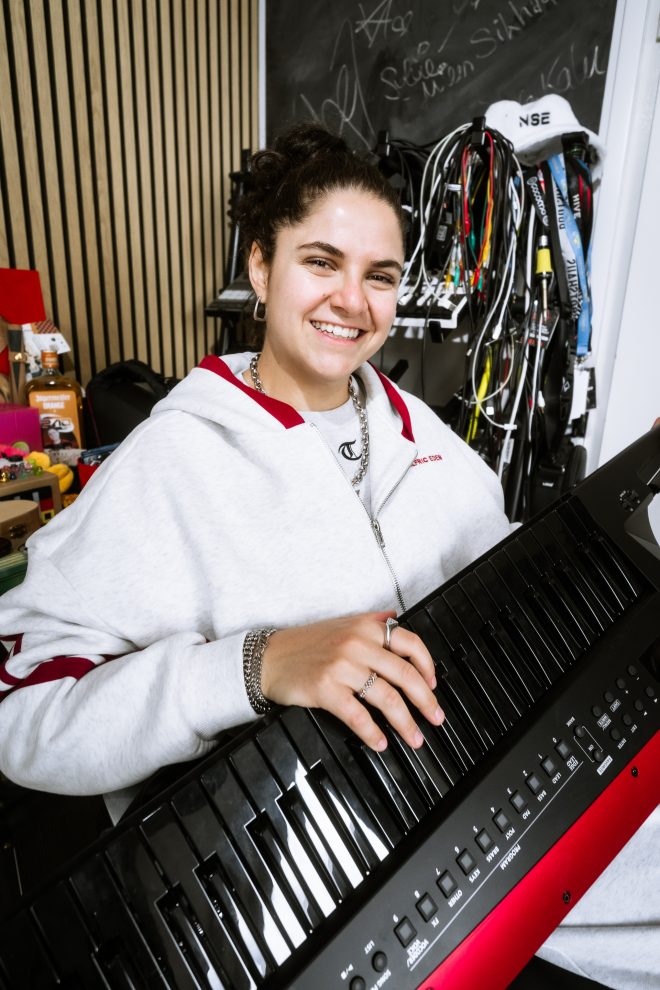
That desire to pull apart conventional formats now extends beyond the decks. A.N.I. has started experimenting with instruments inside her performances, with the keytar offering an early glimpse of a direction she intends to develop. For her, however, adding an instrument only works if it contributes to the music.
“I approach the keytar in a similar way to mixing genres. I see it as another musical layer that can interact with everything already happening in the set. I’m still discovering how and when I want to use it, but one thing is important to me. It needs an actual musical purpose. I don’t want to add an instrument simply because it looks good on stage. It has to change the music, create a moment or allow me to do something I couldn’t do with the decks alone. At the same time, I don’t want people to read too much into the keytar specifically. It was just a small first glimpse into a much bigger direction I’m exploring. There are other ideas I haven’t shown yet. I’m less interested in defining whether something is a DJ set or a live show than in questioning why those boundaries have to exist at all.”
The next chapter will move more of that experimentation into A.N.I.’s own productions. Touring has made dedicated studio time difficult, particularly when work around the artist project continues long after the set finishes. Going into 2027, making that time is a priority.
“I needed time to understand what I wanted an A.N.I. production to sound like. I never wanted to pick one genre and follow its formula. I wanted to bring together genres I love in a way that feels coherent rather than forced. That can be technically challenging because every genre treats kicks, basslines and dynamics differently. That’s what I think will define the A.N.I. sound: not one BPM or type of kick, but unexpected musical worlds working together naturally. There’s a lot of unreleased music coming, and I think people will understand that side of A.N.I. more clearly going into 2027.”
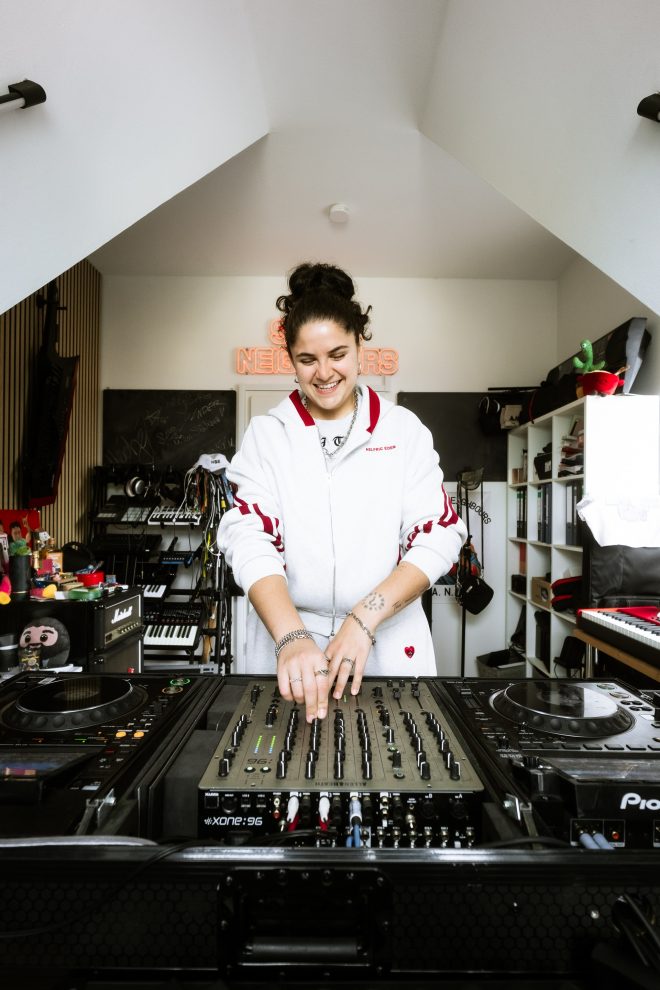
For all that technical ability, A.N.I. is equally interested in knowing when to leave the machinery alone. Complexity has value only when the person on the other side of the booth can feel its effect. The technical difficulty behind the decks is secondary to what happens in front of them.
“Technique is always a tool, never the point. Someone on the dancefloor probably doesn’t care how many decks I used or how difficult a transition was. They care about what it made them feel in that moment. My musical background gives me more possibilities, but I don’t need to use all of them constantly. If adding another element or making a transition more complex creates a stronger emotional moment, I’ll do it. But sometimes the best decision is to let a great track play and give it space. I think complexity only works because simplicity exists around it. If every transition is technical and every drop is unexpected, those moments stop feeling special. The same is true in production. If a simple melody creates the strongest emotion, the simple melody wins. For me, real skill is also knowing when doing less will have more impact.”
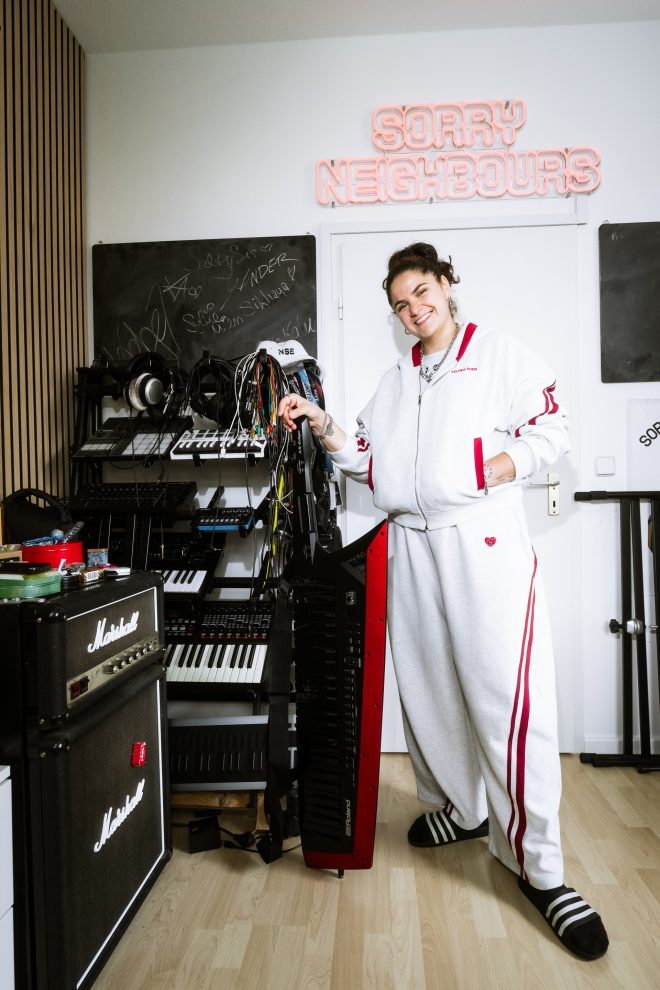
The same instinct extends beyond her own sets through Sorry Neighbours. The concept brings around 60 DJs together for one continuous B2B2B2B performance, with each artist playing a single track before passing the decks to the next person. Established artists and newcomers are placed on the same level, temporarily stripping away follower counts, billing positions and other hierarchies surrounding DJ culture.
“Sorry Neighbours comes from the same philosophy I bring into my sets. The idea is that there don’t have to be so many boundaries. With this project, I wanted to apply that beyond genres and to the people within the scene. It shouldn’t matter how established you are, how many followers you have or how many shows you’ve played. For that moment, everyone stands behind the same decks, contributes one track and becomes part of the same set. That’s what I love most about it. Once everyone is in that room together, many things that usually create hierarchy within the industry become less important. It becomes about the energy each person brings. Sorry Neighbours is a real passion project for me. I want it to represent collaboration rather than comparison, and this is still only the beginning.”
Across A.N.I.’s world, the same instinct keeps resurfacing. Genres become individual sounds, finished tracks become raw material, DJing begins to touch live performance, and hierarchy between artists can disappear for the length of a shared set. As her own productions occupy more space in 2027, those ideas will no longer exist primarily through the records she selects. They will increasingly live inside music carrying her name.
